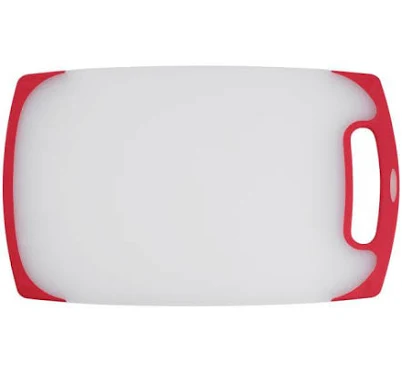
Cuisinart · Silicone Cutting & Prep Boards
Cuisinart 13" Semi-Transparent Polymer Cutting Board, Is It Non-Toxic?
Lower concern. Polymer cutting board with no coating on record.
Material as recorded is semi-transparent polymer, likely polyethylene or polypropylene. No water-repellent finish or nonstick coating on record. Cuisinart has no PFAS statement on record for this product.
The better-graded swap
Fiskars
Functional Form Cutting Board Set, 3-Piece
85/100 safety
Same rubric that flunked this product. The swap earned Excellent.
Still want this one anyway? Check the price on Amazon. We’d swap it.
Material
semi-transparent polymer (likely polyethylene or polypropylene)
Lab data
No public lab test
You may also be interested in
Top-graded picks in the categories readers replace first, every one scored on the same rubric.

- polypropylene filter housing, carbon/sediment cartridge
- We found no PFAS statement from the brand
- Bacterial growth in spent cartridges
3 hazards checked on this product, all on its full breakdown.

Aquasure
Premier Series 75 GPD Under Sink Reverse Osmosis Water Filtration System
- RO membrane, carbon filters, stainless steel housing
- We found no PFAS statement from the brand
- Bacterial and microbial growth in housing and filters
4 hazards checked on this product, all on its full breakdown.

Avocado
Vegan Mattress
- organic cotton, natural latex, coconut coir, recycled steel coils
- The brand calls it PFAS-free, which we have not verified
- Heavy metals
2 hazards checked on this product, all on its full breakdown.
Is Cuisinart 13" Cutting Board non-toxic? What it is made of
This cutting board is made from semi-transparent polymer, most likely high-density polyethylene (HDPE) or polypropylene (PP), both approved food-contact plastics in the US and EU. These polymers are chemically stable at room temperature and do not leach harmful compounds during normal cutting and food preparation. Semi-transparent appearance suggests the polymer has minimal colorant or filler load, reducing the theoretical risk of heavy metal pigments. Unlike melamine or phenolic boards, food-grade PE and PP have no known formaldehyde binders and do not release volatile organic compounds under normal kitchen use.
What’s concerning
Category baseline
The starting point for this type of product, before anything specific to this product is counted.
No PFAS disclosure
No public statement from the brand about PFAS in this product.
Plastic polymer leaching under heat stress
HDPE and PP are stable at room temperature and during normal food contact. Sustained exposure to temperatures above 70°C or repeated dishwasher cycles may cause minor stress-cracking, though acute toxicity is not established for food-grade PE/PP. Degradation risk is low under normal kitchen use.
Bacterial colonization in surface damage
Like all plastic cutting boards, deep scratches or gouges can trap bacteria and are difficult to fully sanitize. This is a mechanical wear issue, not a material toxicity issue, but replacement is warranted when damage becomes visible.
What’s reassuring
Base material not linked to PFAS
The main material recorded for this product is not one associated with PFAS.
Heavy metals
Semi-transparent appearance suggests minimal dye or pigment load. No recalls or test reports of lead, cadmium, or chromium contamination in Cuisinart polymer cutting boards have been documented. Standard food-grade polymers do not require heavy metal binders.
Source, FDA ↗BPA & bisphenols
Food-grade PE and PP do not contain bisphenol compounds; BPA is used in polycarbonate (hard clear plastics) and some epoxy linings, neither of which is typical in basic polymer cutting boards. No documented BPA or BPS reports in Cuisinart polymer boards.
Source, FDA ↗Formaldehyde / VOCs
Formaldehyde resins are found in melamine, phenolic, or engineered wood boards, not in polyethylene or polypropylene. This Cuisinart board material does not use formaldehyde binders.
Source, ATSDR ↗How is this PFAS grade calculated?
The brand's record and disclosure
Cuisinart is owned by Groupe SEB and manufactures a broad cookware and kitchen product line. The company does not publish material safety disclosures or independent certifications (such as NSF or FDA) for this specific cutting board model in public sources. No recalls or contamination incidents have been reported for Cuisinart cutting boards. The brand maintains a typical consumer kitchen product profile without distinctive safety transparency, but also without documented violations in this category.
How it compares in its category
Polymer cutting boards (PE, PP) show lower concern for food contact compared to bamboo (potential pesticide residues, inconsistent standards) or chemically treated wood. Glass cutting boards avoid plastic leaching entirely but are breakage hazards. The 13-inch size and semi-transparent material indicate a standard consumer-grade board designed for domestic kitchen use, without claims of antimicrobial coatings that could add undisclosed additives. Semi-transparent polymer boards are generally preferred over opaque colored boards because dyes or pigments may contain trace heavy metals.
If you buy it
Hand wash in warm soapy water; dishwasher use presents lower concern for material degradation but may accelerate minor surface wear over years. Do not use as a cutting surface for very hot foods straight from the stove (above 70°C sustained heat can cause slow stress cracking over time, though not acute leaching). Replace the board if deep cuts or gouges develop, as they harbor bacteria and are difficult to sanitize. Store in a cool, dry place away from direct sunlight to slow polymer degradation; typical functional lifespan is 3-5 years with normal kitchen use.
What is not known about PFAS in this product?
- Basis
- Model estimate, 72% confidence, not a lab result
- Lab test
- None on record for this exact product
- Brand statement
- Cuisinart has made a specific claim
Formulations change between production runs, so check the current label. How we grade.
What are the PFAS-free alternatives to Cuisinart 13" Semi-Transparent Polymer Cutting Board?
- Polypropylene or similar plastic; no nonstick or waterproof coating disclosed
- We found no PFAS statement from the brand
- Microplastic shedding from cutting action
4 hazards checked on this product, all on its full breakdown.
More silicone cutting & prep boards grades
How we score, every product runs through the same public 0-100 rubric based on materials, coatings, brand disclosure, lab findings, and recalls. See the full methodology → Spotted a mistake? Report an error.