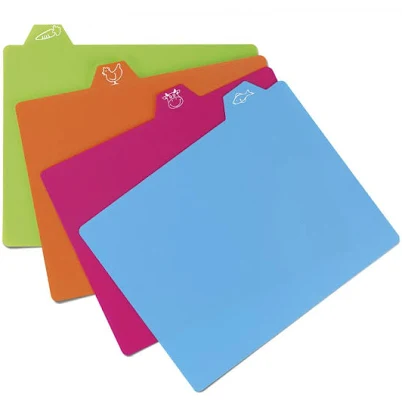
Cuisinart · Silicone Cutting & Prep Boards
Cuisinart 4 Piece Cutting Mat Set, Is It Non-Toxic?
Silicone with no coating described, and no PFAS statement from the brand.
The product information we reviewed describes rubber or silicone cutting mats, with no applied coating named. Silicone releases food on its own, so a non-stick claim on a silicone product describes the material rather than a coating. The brand has published no PFAS statement for it.
The better-graded swap
Fiskars
Functional Form Cutting Board Set, 3-Piece
85/100 safety
Same rubric that flunked this product. The swap earned Excellent.
Still want this one anyway? Check the price on Amazon. We’d swap it.
Material
Rubber or silicone cutting mats
Lab data
No public lab test
You may also be interested in
Top-graded picks in the categories readers replace first, every one scored on the same rubric.

- polypropylene filter housing, carbon/sediment cartridge
- We found no PFAS statement from the brand
- Bacterial growth in spent cartridges
3 hazards checked on this product, all on its full breakdown.

Aquasure
Premier Series 75 GPD Under Sink Reverse Osmosis Water Filtration System
- RO membrane, carbon filters, stainless steel housing
- We found no PFAS statement from the brand
- Bacterial and microbial growth in housing and filters
4 hazards checked on this product, all on its full breakdown.

Avocado
Vegan Mattress
- organic cotton, natural latex, coconut coir, recycled steel coils
- The brand calls it PFAS-free, which we have not verified
- Heavy metals
2 hazards checked on this product, all on its full breakdown.
Is Cuisinart 4 Piece Cutting Mat Set non-toxic? What it is made of
These are silicone or rubber cutting mats, materials chosen specifically because they are non-reactive with food and resistant to staining and odor absorption. Silicone itself is a synthetic polymer backbone of silicon and oxygen atoms that does not leach estrogens, BPA, or phthalates because it contains none of those compounds. The mat's utility comes from its flexibility, non-slip surface, and durability without chemical coatings needed on rigid boards.
What’s concerning
Category baseline
The starting point for this type of product, before anything specific to this product is counted.
No PFAS disclosure
No public statement from the brand about PFAS in this product.
Microplastic shedding
Prolonged abrasion or wear may gradually shed microscopic silicone particles; risk is low compared to rigid plastics but not zero. Normal hand-washing and gentle use minimize this.
Surface degradation and staining
Over time, silicone mats can absorb color from beets, turmeric, or highly pigmented foods; permanent stains do not indicate safety failure but signal loss of material integrity and warrant replacement.
What’s reassuring
Base material not linked to PFAS
The main material recorded for this product is not one associated with PFAS.
Thermal degradation / fume release
Silicone is stable well above typical kitchen use; no reports of off-gassing or fume hazard from Cuisinart silicone mats at normal food-prep temperatures.
Leaching of additives or fillers
High-grade silicone contains no phthalates, BPA, or heavy-metal pigments in standard formulations. Cuisinart does not disclose proprietary additives, but silicone-mat category has no documented leaching recalls.
Coating or non-stick treatment toxicity
Cuisinart's product context describes silicone with no added coating; no Teflon-type coating or PFAS-substitute non-stick layer is documented on this mat set.
How is this PFAS grade calculated?
The brand's record and disclosure
Cuisinart is a major kitchenware brand owned by Conair but has made no public statement about PFAS use or avoidance in silicone products. The company does not publish material safety disclosures for cutting mats as a category. No safety recalls or contamination incidents have been documented for Cuisinart silicone cutting mats in public databases.
How it compares in its category
Silicone cutting mats are linked to lower concern compared to some other cutting surface options. They avoid the ceramic-glaze and wooden-grain concerns (lead, cadmium, wood oils) and the synthetic plastic concerns (BPA, phthalates) that affect other prep boards. Within silicone mats, Cuisinart's uncoated design avoids the small risk of non-stick coatings (Teflon-type coating or substitutes) found on some branded variants.
If you buy it
Silicone mats tolerate temperatures up to roughly 220-240°C (430-450°F); do not use directly on high flame or stovetop burners. Wash by hand or gentle machine cycle; avoid abrasive scrubbing that may degrade surface texture. Replace if cracking, warping, or permanent staining occurs. Store flat or rolled in a dry place; silicone does not degrade quickly, so these mats typically last 3-5 years with normal kitchen use.
What is not known about PFAS in this product?
- Basis
- Model estimate, 35% confidence, not a lab result
- Lab test
- None on record for this exact product
- Brand statement
- Cuisinart has made a specific claim
Formulations change between production runs, so check the current label. How we grade.
What are the PFAS-free alternatives to Cuisinart 4 Piece Cutting Mat Set?
- Polypropylene or similar plastic; no nonstick or waterproof coating disclosed
- We found no PFAS statement from the brand
- Microplastic shedding from cutting action
4 hazards checked on this product, all on its full breakdown.
More silicone cutting & prep boards grades
How we score, every product runs through the same public 0-100 rubric based on materials, coatings, brand disclosure, lab findings, and recalls. See the full methodology → Spotted a mistake? Report an error.