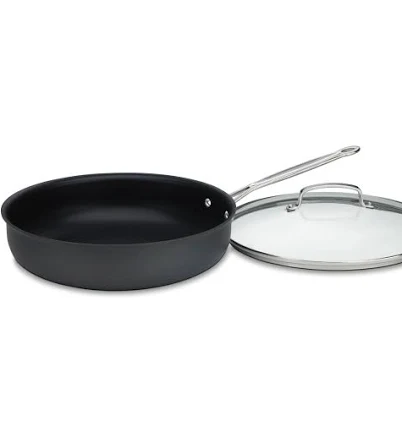
Cuisinart Chef's Classic Nonstick Hard Anodized Deep Frying Pan with Cover, Is It Non-Toxic?
Avoid until Cuisinart discloses nonstick coating identity or switches to Teflon-type coating-free.
Cuisinart pairs hard anodized aluminum with a nonstick coating of unknown chemistry. The coating type determines PFAS risk, but the brand provides neither testing nor a commitment to PFAS-free formulations.
The better-graded swap
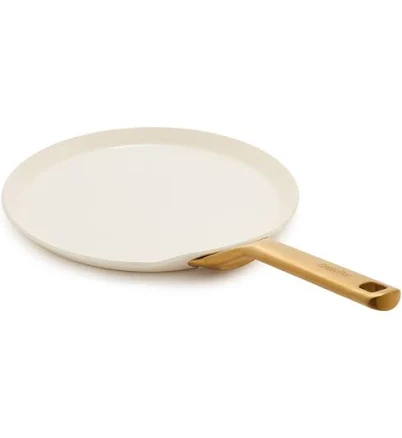
GreenPan
GreenPan Reserve Pro Crepe Frypan
70/100 safety
Same rubric that flunked this product. The swap earned Good.
Still want this one anyway? Check the price on Amazon. We’d swap it.
Material
Hard anodized aluminum with unspecified nonstick coating
Lab data
No public lab test
You may also be interested in
Top-graded picks in the categories readers replace first, every one scored on the same rubric.

- polypropylene filter housing, carbon/sediment cartridge
- We found no PFAS statement from the brand
- Bacterial growth in spent cartridges
3 hazards checked on this product, all on its full breakdown.

Aquasure
Premier Series 75 GPD Under Sink Reverse Osmosis Water Filtration System
- RO membrane, carbon filters, stainless steel housing
- We found no PFAS statement from the brand
- Bacterial and microbial growth in housing and filters
4 hazards checked on this product, all on its full breakdown.

Avocado
Vegan Mattress
- organic cotton, natural latex, coconut coir, recycled steel coils
- The brand calls it PFAS-free, which we have not verified
- Heavy metals
2 hazards checked on this product, all on its full breakdown.
Is Cuisinart Chef's Classic Nonstick Cover non-toxic? What it is made of
This pan uses hard-anodized aluminum, a material created by electrochemically thickening aluminum's natural oxide layer to increase hardness and corrosion resistance. The nonstick coating chemistry is not specified by Cuisinart, which is the primary safety concern, if it is Teflon-type coating-based (the industry standard), it carries fume risk above 500°F; if it is a newer polymer, the long-term safety profile may be less established. Hard anodization itself does not leach aluminum into food under normal cooking conditions, as the oxide barrier prevents contact.
What’s concerning
Category baseline
The starting point for this type of product, before anything specific to this product is counted.
No PFAS disclosure
No public statement from the brand about PFAS in this product.
Non-stick, chemistry undisclosed
Marketed as non-stick without stating the coating chemistry.
Nonstick coating thermal stability (Teflon-type coating or equivalent)
Cuisinart has not disclosed whether this pan uses Teflon-type coating or an alternative. If Teflon-type coating-based, temperatures above 500°F can produce perfluorooctanoic acid fumes and polymer breakdown byproducts; practical home cooking rarely exceeds this, but broiler use or empty preheating poses marginal risk.
Coating degradation and micro-flaking
Hard-anodized nonstick pans from all manufacturers show wear patterns over 2-3 years of regular use. Flaked nonstick particles in food are not proven toxic but are undesirable; dishwasher use and metal utensils accelerate this.
Aluminum leaching from damaged anodization
If the hard-anodized layer is scratched or chipped to expose bare aluminum, acidic or salty foods may leach small amounts of aluminum. This is a material flaw rather than a design flaw, but hard anodization is more durable than standard anodization and reduces this risk compared to non-anodized aluminum.
What’s reassuring
Lead
No lead or cadmium contamination has been reported in Cuisinart cookware covers or lids. Modern mass-market cookware undergoes routine compliance testing for these heavy metals in food-contact surfaces.
Source, ATSDR ↗How is this PFAS grade calculated?
The brand's record and disclosure
Cuisinart has not publicly disclosed the chemistry of its nonstick coatings or committed to PFAS-free alternatives. The brand does not appear in lists of companies making formal PFAS reduction pledges. No recalls or safety warnings specific to this product line are on record, but the silence on coating composition is notable given industry-wide scrutiny of PFAS in nonstick cookware since the 2000s.
How it compares in its category
Hard-anodized nonstick pans are mid-tier for safety transparency. Brands like GreenPan and Our Place explicitly market Teflon-type coating-free or ceramic coatings; all-clad and Le Creuset disclose more openly. Cuisinart's lack of specificity is weaker than premium competitors but typical of mainstream mass-market cookware, many of which still use traditional Teflon-type coating without advertised alternatives.
If you buy it
Keep cooking temperatures below 400-450°F to avoid potential Teflon-type coating degradation fumes (if that is the coating used). Hand-wash rather than dishwasher to extend coating life and avoid abrasion. Inspect the nonstick surface annually for chips or peeling; discard the pan if damage is visible, as a compromised coating poses higher leaching risk. Do not preheat empty for extended periods, as this can accelerate polymer breakdown.
What is not known about PFAS in this product?
- Basis
- Model estimate, 35% confidence, not a lab result
- Lab test
- None on record for this exact product
- Brand statement
- Cuisinart has made a specific claim
Formulations change between production runs, so check the current label. How we grade.
What are the PFAS-free alternatives to Cuisinart Chef's Classic Nonstick Hard Anodized Deep Frying Pan with Cover?
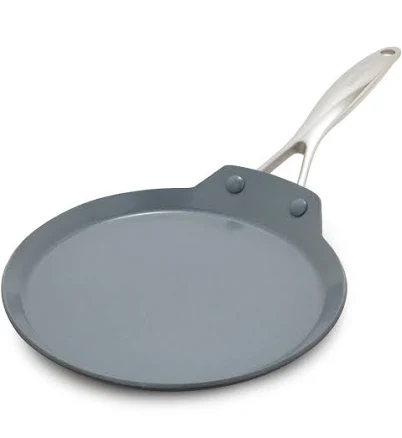
- Ceramic nonstick coating
- The brand calls it PFAS-free, which we have not verified
- Ceramic coating degradation over time
3 hazards checked on this product, all on its full breakdown.
- Thermolon™ ceramic nonstick coating (proprietary plant-derived composition)
- The brand calls it PFAS-free, which we have not verified
- Aluminum leaching
3 hazards checked on this product, all on its full breakdown.
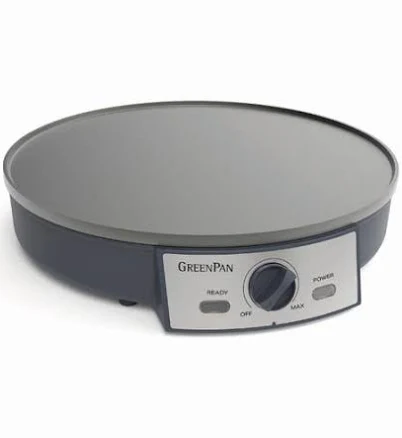
- Nonstick coating (unspecified type)
- The brand calls it PFAS-free, which we have not verified
- Teflon-type coating fume risk (if coating contains Teflon-type coating)
5 hazards checked on this product, all on its full breakdown.
Find an alternative on AmazonMore crepe pans grades
How we score, every product runs through the same public 0-100 rubric based on materials, coatings, brand disclosure, lab findings, and recalls. See the full methodology → Spotted a mistake? Report an error.