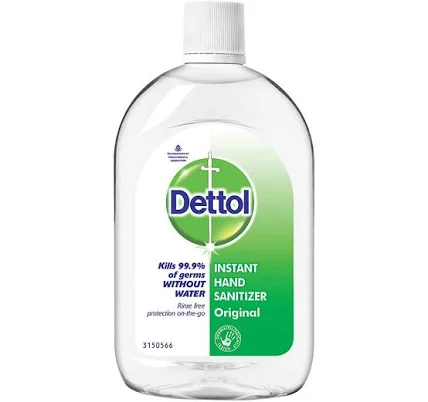
Dettol Sanitizer
Low concern; liquid antiseptic contains no known PFAS vectors, but brand offers no explicit assurance.
This water-based liquid disinfectant contains no known Teflon-family coating coatings, nonstick treatments, or waterproofing typical PFAS sources. The brand does not disclose PFAS use or absence.
We flunk more products than we pass. This one earned its grade. How we grade
Material
aqueous solution (water-based antiseptic liquid)
Brand disclosure
Brand is silent on PFAS
Lab data
No public lab test
You may also be interested in
Top-graded picks in the categories readers replace first, every one scored on the same rubric.

- polypropylene filter housing, carbon/sediment cartridge
- We found no PFAS statement from the brand
- Bacterial growth in spent cartridges
3 hazards checked on this product, all on its full breakdown.

Aquasure
Premier Series 75 GPD Under Sink Reverse Osmosis Water Filtration System
- RO membrane, carbon filters, stainless steel housing
- We found no PFAS statement from the brand
- Bacterial and microbial growth in housing and filters
4 hazards checked on this product, all on its full breakdown.

Avocado
Vegan Mattress
- organic cotton, natural latex, coconut coir, recycled steel coils
- The brand calls it PFAS-free, which we have not verified
- Heavy metals
2 hazards checked on this product, all on its full breakdown.
What Dettol Sanitizer is made of, ingredients and materials
Dettol Sanitizer is an aqueous (water-based) solution containing chloroxylenol (4.8% by typical formulation) as the active antimicrobial agent, plus humectants, fragrance, and preservatives. Unlike alcohol-based hand sanitizers, this formulation avoids the drying effect of high ethanol content and does not require heating during use. The chloroxylenol compound has a long safety history in topical antiseptics, though skin sensitization is possible in sensitive individuals.
What’s concerning
Category baseline
The starting point for this type of product, before anything specific to this product is counted.
No PFAS disclosure
No public statement from the brand about PFAS in this product.
Contact dermatitis (chloroxylenol and fragrance)
Chloroxylenol is a known skin sensitizer in susceptible individuals, particularly with repeated or prolonged contact. Fragrance compounds in this formulation (not fully disclosed) may compound irritation risk in atopic or sensitive skin.
Eye irritation
Aqueous antiseptic solutions are formulated to minimize but not eliminate eye contact hazard. Splashing or rubbing eyes after use without hand washing poses mild to moderate irritation risk.
Oral/ingestion toxicity
Chloroxylenol in high concentrations can cause gastrointestinal irritation and toxicity if swallowed; this is primarily a risk for young children or accidental ingestion. Poisoning cases are documented in medical literature but rare in intended-use scenarios.
Preservative-related sensitization
Water-based formulations require preservatives to prevent bacterial and fungal growth. Common preservatives in this category (e.g., methylisothiazolinone, parabens) can trigger contact allergies in susceptible individuals; specific preservative choice in Dettol Sanitizer varies by region and batch.
Microbial contamination if stored improperly
Water-based solutions are vulnerable to bacterial or mold colonization if caps are left loose, the bottle is stored in damp conditions, or the product approaches expiration. Opened bottles should not be stored for extended periods in bathrooms or near water sources.
What’s reassuring
Base material not linked to PFAS
The main material recorded for this product is not one associated with PFAS.
How is this PFAS grade calculated?
The brand's record and disclosure
Reckitt Benckiser (Dettol's parent company) publishes safety data sheets and ingredient lists but does not issue explicit PFAS-free claims or third-party certifications for this product line. No recalls specific to Dettol Sanitizer for toxic contamination have been documented in major databases. The brand's transparency is routine for the category but not exceptional; ingredient disclosure is accessible but marketing emphasizes antimicrobial efficacy over safety assurances.
How it compares in its category
Dettol Sanitizer sits in the middle tier of hand sanitizer safety profiles. It avoids the skin irritation risk of high-alcohol products (60-95% ethanol) and the residue concerns of gel formulations with acrylates. Alcohol-free formulations like this typically have lower volatility-related concerns than ethanol-based alternatives, though efficacy against some viruses is slower. No significant hazard advantage or disadvantage versus unscented alcohol-free competitors.
If you buy it
Use as directed on packaging; do not ingest. Store in a cool, dry place away from eyes and mucous membranes. For individuals with sensitive skin or fragrance allergies, patch-test on a small area first, as chloroxylenol and fragrance compounds may trigger contact dermatitis. Discard if the liquid separates, discolors, or shows signs of bacterial growth (cloudiness, odor change). Shelf life is typically 2-3 years when stored properly.
What is not known about PFAS in this product?
- Basis
- Model estimate, 72% confidence, not a lab result
- Lab test
- None on record for this exact product
- Brand statement
- Dettol has made none
Formulations change between production runs, so check the current label. How we grade.
More hand sanitizer grades
How we score, every product runs through the same public 0-100 rubric based on materials, coatings, brand disclosure, lab findings, and recalls. See the full methodology → Spotted a mistake? Report an error.