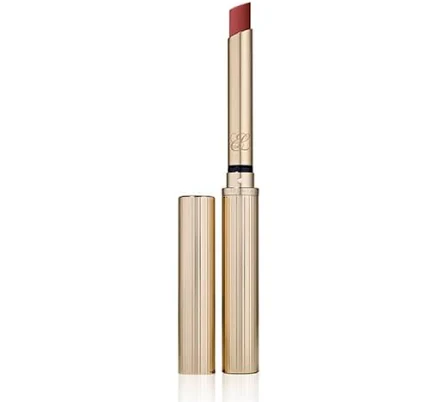
Estee Lauder Pure Color Explicit Silk Matte Lipstick
Lower concern. Lipstick formulations typically lack PFAS-typical additives.
Estée Lauder doesn't publicly disclose PFAS presence or absence. Lipsticks rarely require PFAS; standard wax and pigment bases pose lower risk.
We flunk more products than we pass. This one earned its grade. How we grade
Material
wax, oils, pigments, standard cosmetic base
Lab data
No public lab test
You may also be interested in
Top-graded picks in the categories readers replace first, every one scored on the same rubric.

Aqua Pure
3M Aqua-Pure AP802B Whole House Filter Housing
- polypropylene filter housing, carbon/sediment cartridge
- We found no PFAS statement from the brand
- Bacterial growth in spent cartridges
3 hazards checked on this product. See all of them.

Aquasure
Premier Series 75 GPD Under Sink Reverse Osmosis Water Filtration System
- RO membrane, carbon filters, stainless steel housing
- We found no PFAS statement from the brand
- Bacterial and microbial growth in housing and filters
4 hazards checked on this product. See all of them.

Avocado
Vegan Mattress
- organic cotton, natural latex, coconut coir, recycled steel coils
- The brand calls it PFAS-free, which we have not verified
- Heavy metals
2 hazards checked on this product. See all of them.
What Estee Lauder Pure Color Explicit Silk is made of, ingredients and materials
Pure Color Explicit Silk Matte is a wax-based lipstick formulation typical of prestige cosmetics, combining natural waxes (beeswax, candelilla), conditioning oils, and synthetic pigments for color and matte finish. The "silk" designation refers to a soft-focus optical effect from silica or talc-derived powders, not texture. Matte lipsticks inherently contain less emollient than shimmers, reducing migration of ingredients into the mouth, though some ingestion during wear is unavoidable and normal.
What’s concerning
Category baseline
The starting point for this type of product, before anything specific to this product is counted.
No PFAS disclosure
No public statement from the brand about PFAS in this product.
Talc or silica inhalation during application
Matte finish typically involves fine powders; inhalation during application is minor but cumulative with daily use. Estée Lauder does not confirm talc vs. synthetic silica content. Talc mining has asbestos contamination history, though modern cosmetic-grade talc is regulated. Risk is generally considered low for external topical use vs. body powder.
Fragrance allergens and undisclosed fragrance components
Pure Color Explicit line includes fragrance compounds for scent and sensory appeal. Estée Lauder lists fragrance as a single ingredient without component breakdown, masking potential allergens such as limonene, geraniol, or cinnamyl alcohol. Sensitive individuals may react but overall incidence is low.
What’s reassuring
Base material not linked to PFAS
The main material recorded for this product is not one associated with PFAS.
Heavy metals
No recalls or contamination reported for this product. Estée Lauder does not publish pigment-purity or lead/cadmium assay data, consistent with industry practice. Risk is assumed low given regulatory compliance and no adverse-event signals.
Source, FDA ↗1,4-dioxane (impurity in ethoxylated ingredients)
Matte lipsticks contain minimal surfactants, making 1,4-dioxane contamination less likely than in cleansers or creams. No specific testing results available for this product. Standard for prestige brands is distillation or vacuum stripping to remove dioxane, but not always disclosed.
Formaldehyde / VOCs
Wax-based formulations require minimal preservatives due to low water content. Estée Lauder formulations typically use preservative systems with lower concern (sorbic acid, benzoic acid) rather than formaldehyde releasers, but full disclosure is not public. No adverse events on record.
Source, ATSDR ↗The full breakdown
The brand's record and disclosure
Estée Lauder does not publicly disclose full ingredient safety testing or third-party certifications for lipsticks. The brand has no major recalls or regulatory actions against this specific product line on record. Estée Lauder maintains general safety compliance with FDA and EU cosmetic regulations but remains silent on PFAS use in formulations. The company does not publish heavy-metal testing results or independent audits for pigment safety, which is standard opacity in the luxury cosmetics sector.
How it compares in its category
Matte lipsticks as a class carry slightly lower ingestion risk than glosses because they are drier and less mobile on the lips. Estée Lauder's price point and distribution through regulated retailers (Sephora, department stores) means batches are subject to cosmetic manufacturing oversight, unlike direct-to-consumer or unregulated brands. Indie and budget brands often lack equivalent supply-chain transparency, though some offer better ingredient disclosure. Premium brands like this rarely undergo third-party heavy-metal screening, making direct safety comparison difficult.
If you buy it
Store lipstick away from heat and direct sunlight to prevent wax separation or oil leakage, which may increase staining and ingestion. Replace after 12 months of regular use to minimize bacterial or mold accumulation in the formulation. Avoid applying to broken or irritated lips. If you experience unexplained irritation, redness, or allergic reaction, discontinue and patch-test a small amount on your inner arm before reuse.
What we don’t know
- Basis
- Model estimate, 72% confidence, not a lab result
- Lab test
- None on record for this exact product
- Brand statement
- Estée Lauder has made a specific claim
Formulations change between production runs, so check the current label. How we grade.
More lipstick grades
How we score, every product runs through the same public 0-100 rubric based on materials, coatings, brand disclosure, lab findings, and recalls. See the full methodology → Spotted a mistake? Report an error.