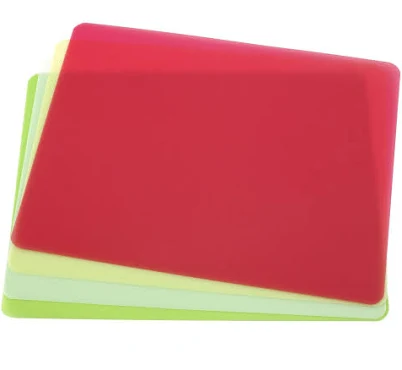
Good Cook · Silicone Cutting & Prep Boards
Good Books Good Cook Flexible Chopping Mats, Are They Non-Toxic?
Silicone with no coating described, and no PFAS statement from the brand.
The product information we reviewed describes flexible silicone or PVC chopping mats, with no applied coating named. Silicone releases food on its own, so a non-stick claim on a silicone product describes the material rather than a coating. The brand has published no PFAS statement for it.
The better-graded swap
Fiskars
Functional Form Cutting Board Set, 3-Piece
85/100 safety
Same rubric that flunked this product. The swap earned Excellent.
Still want this one anyway? Check the price on Amazon. We’d swap it.
Material
Flexible silicone or PVC chopping mats
Brand disclosure
Brand is silent on PFAS
Lab data
No public lab test
You may also be interested in
Top-graded picks in the categories readers replace first, every one scored on the same rubric.

- polypropylene filter housing, carbon/sediment cartridge
- We found no PFAS statement from the brand
- Bacterial growth in spent cartridges
3 hazards checked on this product, all on its full breakdown.

Aquasure
Premier Series 75 GPD Under Sink Reverse Osmosis Water Filtration System
- RO membrane, carbon filters, stainless steel housing
- We found no PFAS statement from the brand
- Bacterial and microbial growth in housing and filters
4 hazards checked on this product, all on its full breakdown.

Avocado
Vegan Mattress
- organic cotton, natural latex, coconut coir, recycled steel coils
- The brand calls it PFAS-free, which we have not verified
- Heavy metals
2 hazards checked on this product, all on its full breakdown.
Are Good Books Good Cook Chopping Mats non-toxic? What it is made of
Good Books Good Cook Flexible Chopping Mats are silicone-based or PVC, both non-porous elastomers designed to resist food contact without degradation. Silicone is a synthetic polymer with strong Si-O bonds that do not break down into monomers or leach into food under normal kitchen use. PVC, by contrast, can release plasticizers like phthalates if degraded, though rigid or flexible silicone formulations are not a material linked to PFAS and have lower concern for food prep surfaces.
What’s concerning
Category baseline
The starting point for this type of product, before anything specific to this product is counted.
No PFAS disclosure
No public statement from the brand about PFAS in this product.
Phthalate leaching (if PVC)
If the mat is PVC rather than pure silicone, prolonged contact with acidic or oily foods or exposure to heat above 140 degrees Fahrenheit could theoretically promote plasticizer migration. Good Cook does not specify the exact polymer; confirmation of silicone (vs. PVC blend) from the packaging or manufacturer is advisable.
Odor or off-gassing
New silicone mats may emit a mild rubbery or chemical odor for the first few uses due to manufacturing residues or volatile compounds. This is cosmetic rather than a health hazard and typically dissipates after hand washing and air exposure; it does not indicate toxicity.
Thermal stability and heat damage
Silicone mats are food-prep tools, not cookware; prolonged or direct exposure to heat above 450 degrees Fahrenheit can cause surface softening, color change, and loss of grip. Use only as a cutting surface or cold food-prep mat, not as a trivet or baking mat unless the product is explicitly rated for oven use.
What’s reassuring
Base material not linked to PFAS
The main material recorded for this product is not one associated with PFAS.
Microplastic or material shedding
Silicone mats are not known to shed microparticles during normal cutting or food contact. Degradation or visible pitting would be the first visible sign of material failure and a trigger for replacement.
BPA & bisphenols
Silicone does not contain bisphenol A or its analogs by composition. This hazard is irrelevant to silicone mats and only applies to polycarbonate or epoxy-lined products.
Source, FDA ↗How is this PFAS grade calculated?
The brand's record and disclosure
Good Cook is a long-established cookware and kitchen tool brand owned by National Presto Industries with no publicly documented safety controversies or product recalls for this mat line. The brand does not publicly disclose PFAS testing or avoidance statements, which is routine for silicone kitchen products since PFAS is not inherent to the material itself. No certifications (e.g., FDA food-contact compliance) are noted in available records, but silicone mats as a category are not regulated as food containers and do not require formal approval.
How it compares in its category
Silicone chopping mats have lower concern among mat options for food prep; they avoid the microplastic shedding risk of some rubberized surfaces and the thermal degradation concerns of PVC at high temperatures. Compared to glass or plastic cutting boards, silicone mats offer durability and pose no risk of glass breakage or BPA leaching. Good Cook's product sits in the mainstream mid-range; it is comparable in material safety to OXO, Mastrad, and other major brands selling similar silicone mats.
If you buy it
Hand-wash with warm soapy water and air-dry; silicone is dishwasher-safe but hand washing extends longevity. Do not expose to prolonged direct heat above 400-450 degrees Fahrenheit (silicone softens); it is not meant for stovetop or oven contact. Replace if the surface becomes pitted, sticky, or discolored, as these may indicate material breakdown. Store flat or rolled in a cool, dry place away from direct sunlight to prevent long-term color fading and material stiffening.
What is not known about PFAS in this product?
- Basis
- Model estimate, 35% confidence, not a lab result
- Lab test
- None on record for this exact product
- Brand statement
- Good Cook has made none
Formulations change between production runs, so check the current label. How we grade.
What are the PFAS-free alternatives to Good Books Good Cook Flexible Chopping Mats?
- Polypropylene or similar plastic; no nonstick or waterproof coating disclosed
- We found no PFAS statement from the brand
- Microplastic shedding from cutting action
4 hazards checked on this product, all on its full breakdown.
More silicone cutting & prep boards grades
How we score, every product runs through the same public 0-100 rubric based on materials, coatings, brand disclosure, lab findings, and recalls. See the full methodology → Spotted a mistake? Report an error.