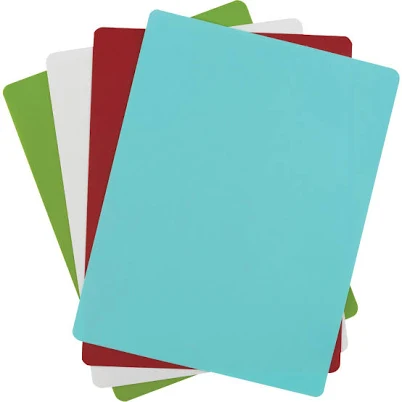
Good Cook · Silicone Cutting & Prep Boards
Good Cook Flexible Cutting Board Set, Is It Non-Toxic?
Flexible boards are usually silicone, lower PFAS risk than nonstick cookware.
Good Cook flexible boards are typically silicone or TPR rubber, materials not known to contain PFAS.
The better-graded swap
Fiskars
Functional Form Cutting Board Set, 3-Piece
85/100 safety
Same rubric that flunked this product. The swap earned Excellent.
Still want this one anyway? Check the price on Amazon. We’d swap it.
Material
flexible silicone or TPR rubber
Brand disclosure
Brand is silent on PFAS
Lab data
No public lab test
You may also be interested in
Top-graded picks in the categories readers replace first, every one scored on the same rubric.

- polypropylene filter housing, carbon/sediment cartridge
- We found no PFAS statement from the brand
- Bacterial growth in spent cartridges
3 hazards checked on this product, all on its full breakdown.

Aquasure
Premier Series 75 GPD Under Sink Reverse Osmosis Water Filtration System
- RO membrane, carbon filters, stainless steel housing
- We found no PFAS statement from the brand
- Bacterial and microbial growth in housing and filters
4 hazards checked on this product, all on its full breakdown.

Avocado
Vegan Mattress
- organic cotton, natural latex, coconut coir, recycled steel coils
- The brand calls it PFAS-free, which we have not verified
- Heavy metals
2 hazards checked on this product, all on its full breakdown.
Is Good Cook Flexible Cutting Board Set non-toxic? What it is made of
Good Cook Flexible Cutting Board Set is constructed from silicone rubber or TPR (thermoplastic rubber), both of which are food-contact polymers with different safety profiles. Silicone is chemically inert at typical kitchen temperatures and does not degrade easily under normal use. TPR rubber, while more prone to wear, is not known to leach problematic chemicals during food contact at room temperature or mild heating; the main concern with TPR is surface degradation and particle shedding over extended use rather than chemical migration.
What’s concerning
Category baseline
The starting point for this type of product, before anything specific to this product is counted.
No PFAS disclosure
No public statement from the brand about PFAS in this product.
Polymer thermal degradation and particle shedding
Silicone and TPR rubber can soften, warp, or shed microscopic particles when exposed to sustained heat above recommended limits or through repeated flexing over years. No specific temperature threshold for Good Cook boards is published; users should assume these materials are not appropriate for direct contact with surfaces above 350-400F.
Bacterial and mold colonization
Flexible boards with textured or porous surfaces may trap food particles and moisture in small crevices, creating conditions for bacterial or mold growth if not dried promptly. TPR rubber surfaces are particularly prone to this; regular sanitization and air-drying between uses is critical.
Surface discoloration and staining
User reports on retailer sites indicate that Good Cook flexible boards stain easily from beets, turmeric, and tomato products and do not wash clean after prolonged contact with acidic or pigmented foods. While staining is cosmetic, it may correlate with material porosity or absorptive properties relevant to contamination risk.
What’s reassuring
Base material not linked to PFAS
The main material recorded for this product is not one associated with PFAS.
Leachables from TPR rubber (if used)
If the product uses TPR rather than food-grade silicone, TPR can contain zinc, plasticizers, or other additives. No specific contamination has been documented for Good Cook boards, but product labeling does not explicitly confirm which material is used in each board size.
Heavy metals
Colored silicone or rubber products can contain cadmium, lead, or other heavy metals in pigments used for color. No testing or recalls have been published for Good Cook boards; silicone products from reputable suppliers typically avoid this, but brand certification status is unknown.
Source, FDA ↗How is this PFAS grade calculated?
The brand's record and disclosure
Good Cook is a private-label cookware brand with no published material safety certifications, third-party testing transparency, or explicit disclosure of chemical composition beyond generic marketing claims. The brand has not issued public statements on PFAS use or sourcing standards. No significant safety recalls specific to cutting boards have been documented in CPSC records for this brand, though this absence does not constitute affirmative safety testing.
How it compares in its category
Flexible silicone or TPR cutting boards occupy a lower-risk position compared to glazed ceramic or wooden boards that may harbor bacteria, and far lower risk than nonstick cookware coated with Teflon-family coating. They sit roughly equal to uncoated plastic cutting boards in chemical hazard profile, though silicone is generally preferred over polycarbonate (BPA-prone) or older plastics. The flexible design itself poses no chemical advantage; durability and replacement frequency matter more than material type for overall safety.
If you buy it
Avoid prolonged contact with hot oils or surfaces above 400F (silicone and TPR can soften at extremes). Hand wash or use cool machine cycles; dishwasher heat may accelerate polymer degradation and surface breakdown. Inspect regularly for tears, discoloration, or sticky residue indicating material breakdown; replace if visible wear exposes substrate or if surface becomes rough. Store away from direct sunlight and heat sources to extend usable life and minimize off-gassing.
What is not known about PFAS in this product?
- Basis
- Model estimate, 72% confidence, not a lab result
- Lab test
- None on record for this exact product
- Brand statement
- Good Cook has made none
Formulations change between production runs, so check the current label. How we grade.
What are the PFAS-free alternatives to Good Cook Flexible Cutting Board Set?
- Polypropylene or similar plastic; no nonstick or waterproof coating disclosed
- We found no PFAS statement from the brand
- Microplastic shedding from cutting action
4 hazards checked on this product, all on its full breakdown.
More silicone cutting & prep boards grades
How we score, every product runs through the same public 0-100 rubric based on materials, coatings, brand disclosure, lab findings, and recalls. See the full methodology → Spotted a mistake? Report an error.