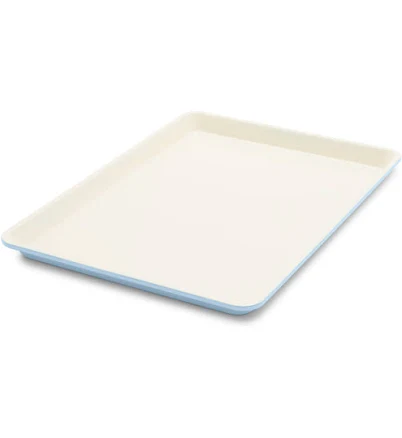
GreenLife Ceramic Nonstick Bakeware, Is It Non-Toxic?
Named ceramic non-stick coating, with a brand PFAS statement we have not verified.
GreenPan says its Thermolon coated food contact surface is free of PFAS, including Teflon-type coating and PFOA. We record that as an unverified brand claim.
Brand says: “GreenPan says its Thermolon coated food contact surface is free of PFAS, including PTFE and PFOA.”
We flunk more products than we pass. This one earned its grade. How we grade
Material
Ceramic nonstick coating
Brand disclosure
Brand claims PFAS-free
Lab data
No public lab test
You may also be interested in
Top-graded picks in the categories readers replace first, every one scored on the same rubric.

- polypropylene filter housing, carbon/sediment cartridge
- We found no PFAS statement from the brand
- Bacterial growth in spent cartridges
3 hazards checked on this product, all on its full breakdown.

Aquasure
Premier Series 75 GPD Under Sink Reverse Osmosis Water Filtration System
- RO membrane, carbon filters, stainless steel housing
- We found no PFAS statement from the brand
- Bacterial and microbial growth in housing and filters
4 hazards checked on this product, all on its full breakdown.

Avocado
Vegan Mattress
- organic cotton, natural latex, coconut coir, recycled steel coils
- The brand calls it PFAS-free, which we have not verified
- Heavy metals
2 hazards checked on this product, all on its full breakdown.
Is GreenLife Ceramic Nonstick Bakeware non-toxic? What it is made of
GreenLife ceramic nonstick uses a ceramic-type ceramic coating applied to a metal (typically aluminum) substrate. Ceramic coatings differ fundamentally from Teflon-type coating (Teflon) in that they bond directly to the base metal and do not emit harmful fumes at normal baking temperatures. The aluminum core itself poses minimal leaching risk in bakeware because the acidic or alkaline foods typical of baking (batters, desserts) spend limited contact time compared to stovetop cookware, and the ceramic layer acts as a barrier.
What’s concerning
Disclosed non-fluorinated coating
Coating is named and the brand states it is made without PFAS.
Category baseline
The starting point for this type of product, before anything specific to this product is counted.
Ceramic coating degradation over time
Ceramic nonstick coatings are known to wear faster than Teflon-type coating under repeated use and washing. GreenLife bakeware reports and consumer feedback indicate flaking or loss of nonstick function after 1-3 years; this is typical for the coating class, not unique to this brand, but occurs more rapidly than hard-anodized alternatives.
Aluminum core leaching
The underlying aluminum substrate can leach if the ceramic coating becomes damaged or porous. In baking (lower pH and shorter contact time than stovetop cooking), the risk is low, but users with significant coating wear should monitor for visible aluminum discoloration or pitting and consider replacement.
What’s reassuring
Brand-stated PFAS-free
The brand states this product is PFAS-free. We have not verified the claim.
Lead
No recalls or test reports documenting lead or cadmium in GreenPan's ceramic nonstick coatings have been published. Standard food-contact ceramics are regulated by FDA limits, but GreenPan does not publicly disclose third-party testing of this specific product for heavy metals.
Source, ATSDR ↗Teflon-type coating or PFOA residue
GreenPan's stated PFAS-free claim is based on ceramic (not Teflon-family coating) chemistry. No published evidence contradicts this claim for GreenLife bakeware, though the brand has not disclosed independent verification of PFOA or Teflon-type coating absence in the coating.
Thermal fume emissions at normal use temperatures
Ceramic coatings do not release toxic fumes at typical baking temperatures (up to 500F). Risk emerges only if the product is subjected to extreme overheating (>600F) or open flame, which is outside normal bakeware use.
How is this PFAS grade calculated?
The brand's record and disclosure
GreenPan has made explicit PFAS-free claims across its ceramic nonstick line since around 2017, positioning itself as an alternative to traditional nonstick. The brand has not disclosed third-party certification (e.g., GOTS, Cradle to Cradle) for this specific product, nor published independent testing of the coating composition. No major recalls of GreenLife bakeware for coating failure or contamination have been documented in public databases; the brand's warranty and customer service approach appear standard for the category.
How it compares in its category
Ceramic nonstick bakeware occupies the middle ground between traditional Teflon-type coating nonstick (faster heat transfer, more nonstick feel) and uncoated metal or cast iron (more durable, lower chemical concern). GreenLife ceramic performs similarly to other ceramic brands (Our Place, caraway, GreenPan's own competitors) in terms of nonstick longevity and heat tolerance. Ceramic coatings typically last 2-3 years with normal use before degradation; this is shorter than hard-anodized aluminum or seasoned cast iron but aligns with consumer expectations for nonstick bakeware.
If you buy it
Respect the manufacturer's stated maximum temperature (usually 400-500F for ceramic nonstick; check packaging). Avoid metal utensils, scouring pads, and harsh detergents, which accelerate coating wear. Hand wash rather than dishwasher to extend coating life. Replace the bakeware if the ceramic surface flakes, chips, or visibly degrades, as this compromises the nonstick function and may allow aluminum contact with food. Store in a dry place to prevent moisture damage to any seams or edges.
What is not known about PFAS in this product?
- Basis
- Model estimate, 78% confidence, not a lab result
- Lab test
- None on record for this exact product
- Brand statement
- GreenPan has made a specific claim
Formulations change between production runs, so check the current label. How we grade.
What are the PFAS-free alternatives to GreenLife Ceramic Nonstick Bakeware?
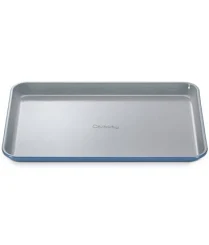
- ceramic nonstick coating
- A third party reports verifying it as PFAS-free
- Ceramic coating degradation over time
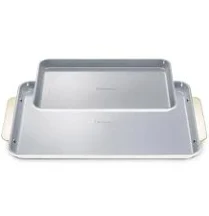
- ceramic nonstick coating
- A third party reports verifying it as PFAS-free
- Coating degradation and durability
2 hazards checked on this product, all on its full breakdown.
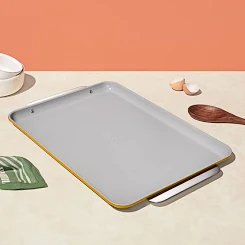
- ceramic nonstick coating
- The brand calls it PFAS-free, which we have not verified
- Ceramic coating degradation and particle shedding
3 hazards checked on this product, all on its full breakdown.
More bakeware grades
How we score, every product runs through the same public 0-100 rubric based on materials, coatings, brand disclosure, lab findings, and recalls. See the full methodology → Spotted a mistake? Report an error.