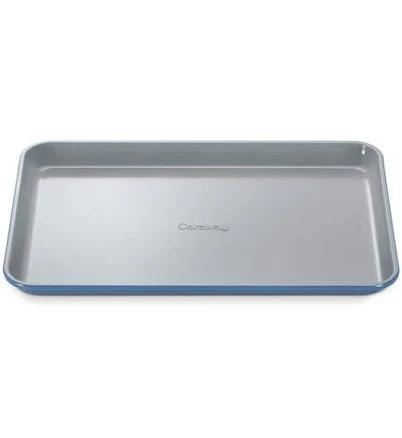
Caraway Ceramic Baking Sheet, Is It Non-Toxic?
Named ceramic non-stick coating, with a brand PFAS statement we have not verified.
Caraway says its ceramic non-stick coating is made without Teflon-type coating, PFOA and PFAS. We record that as an unverified brand claim.
Brand says: “Caraway says its ceramic non-stick coating is made without PTFE, PFOA and PFAS.”
We flunk more products than we pass. This one earned its grade. How we grade
Material
Caraway ceramic non-stick coating
Brand disclosure
Brand claims PFAS-free
Lab data
No public lab test
You may also be interested in
Top-graded picks in the categories readers replace first, every one scored on the same rubric.

- polypropylene filter housing, carbon/sediment cartridge
- We found no PFAS statement from the brand
- Bacterial growth in spent cartridges
3 hazards checked on this product, all on its full breakdown.

Aquasure
Premier Series 75 GPD Under Sink Reverse Osmosis Water Filtration System
- RO membrane, carbon filters, stainless steel housing
- We found no PFAS statement from the brand
- Bacterial and microbial growth in housing and filters
4 hazards checked on this product, all on its full breakdown.

Avocado
Vegan Mattress
- organic cotton, natural latex, coconut coir, recycled steel coils
- The brand calls it PFAS-free, which we have not verified
- Heavy metals
2 hazards checked on this product, all on its full breakdown.
Is Caraway Ceramic Baking Sheet non-toxic? What it is made of
Caraway baking sheets use a proprietary ceramic non-stick coating applied over a steel or aluminum substrate. Ceramic coatings are inorganic mineral-based alternatives to Teflon-family coating (Teflon-type coating), meaning they do not rely on PFAS "forever chemicals" (PFAS) for water or grease repellency. The actual glaze formulation, whether it contains lead, cadmium, or other heavy metals in colorants or binding agents, is not fully disclosed by the brand in public materials reviewed. Ceramic durability depends on coating adhesion and resistance to mechanical wear and thermal shock.
What’s concerning
Disclosed non-fluorinated coating
Coating is named and the brand states it is made without PFAS.
Category baseline
The starting point for this type of product, before anything specific to this product is counted.
Ceramic coating degradation and flaking
Ceramic non-stick coatings are inherently more prone to chipping and peeling than Teflon-type coating when exposed to mechanical wear, thermal shock, or acidic foods. If coating flakes into food, ingestion of ceramic particles or exposure of the underlying substrate becomes a concern; this is a material-class limitation rather than a Caraway-specific defect.
Aluminum substrate leaching
If the baking sheet substrate is aluminum (not disclosed in publicly available product specs), and the ceramic coating is compromised, acidic foods or alkaline cleaners may promote aluminum leaching. This is dependent on substrate composition and coating integrity, neither of which Caraway explicitly confirms in standard product documentation.
What’s reassuring
Brand-stated PFAS-free
The brand states this product is PFAS-free. We have not verified the claim.
Lead
No recalls or test reports of heavy metal leaching from Caraway ceramic bakeware are on record. However, the brand does not publish independent lab results for lead or cadmium in glazes, so hazard cannot be ruled out without verified testing by a third party.
Source, ATSDR ↗Thermal stability of ceramic coating above recommended temperature
Ceramic coatings do not emit fluorinated fumes like Teflon-type coating, but overheating beyond manufacturer limits may degrade the glaze or binder resins. Caraway does not publish thermal decomposition or fume data for their specific ceramic formulation at high temperatures.
Heavy metals
No recalls or contamination incidents tied to Caraway ceramic bakeware are documented. The brand sources from overseas manufacturers and does not disclose third-party audit or heavy metal screening protocols in public materials.
Source, FDA ↗How is this PFAS grade calculated?
The brand's record and disclosure
Caraway publicly claims PFAS-free and non-toxic ceramic cookware as core positioning, and the company has not faced major recalls or regulatory actions specific to heavy metal leaching in their ceramic cookware line as of available records. However, Caraway has not published detailed third-party test results (heavy metals, lead, cadmium in glazes) on their website or shared certificates of analysis with consumers. The brand's transparency on the complete ingredient list of the ceramic coating itself remains limited, which is common in the cookware industry but leaves end-users unable to independently verify glaze composition.
How it compares in its category
Ceramic non-stick baking sheets occupy a growing segment positioned as alternatives with lower concern regarding Teflon-type coating fume risks above 500°F, which is a hazard associated with traditional Teflon-type coating Teflon cookware. Unlike cast iron or stainless steel, ceramic coatings do not leach aluminum into food, but they also degrade faster with mechanical abrasion and acidic foods. Most ceramic bakeware brands (including GreenPan, Our Place, and Caraway) make PFAS-free claims; Caraway's main differentiation is brand reputation and design, not superior documented safety testing compared to competitors.
If you buy it
Hand wash only; dishwashers accelerate coating breakdown. Do not use metal utensils or abrasive scrubbers, as ceramic coatings chip or peel under mechanical stress and expose the substrate. Avoid sudden temperature changes (e.g., hot pan to cold counter) to prevent thermal shock cracking. Monitor the coating for visible wear, discoloration, or flaking; replace the sheet if non-stick properties diminish or coating integrity is compromised. Keep baking temperatures at or below manufacturer recommendations (typically 400, 500°F for ceramic).
What is not known about PFAS in this product?
- Basis
- Model estimate, 80% confidence, not a lab result
- Lab test
- None on record for this exact product
- Brand statement
- Caraway has made a specific claim
Formulations change between production runs, so check the current label. How we grade.
What are the PFAS-free alternatives to Caraway Ceramic Baking Sheet?
- ceramic nonstick coating
- A third party reports verifying it as PFAS-free
- Ceramic coating degradation over time
- ceramic nonstick coating
- A third party reports verifying it as PFAS-free
- Coating degradation and durability
2 hazards checked on this product, all on its full breakdown.
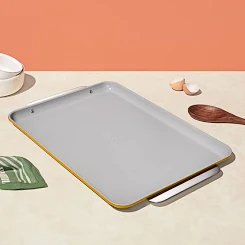
- ceramic nonstick coating
- The brand calls it PFAS-free, which we have not verified
- Ceramic coating degradation and particle shedding
3 hazards checked on this product, all on its full breakdown.
More bakeware grades
How we score, every product runs through the same public 0-100 rubric based on materials, coatings, brand disclosure, lab findings, and recalls. See the full methodology → Spotted a mistake? Report an error.