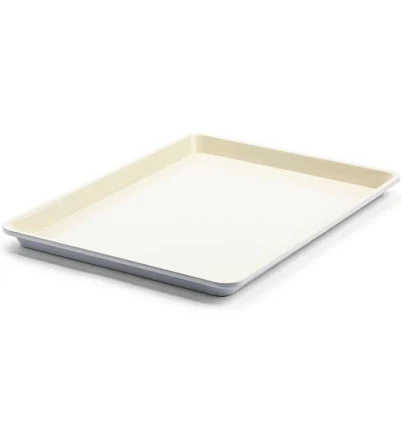
GreenPan GreenLife Ceramic Nonstick Cookie Sheet, Is It Non-Toxic?
Named ceramic non-stick coating, with a brand PFAS statement we have not verified.
GreenPan says its Thermolon coated food contact surface is free of PFAS, including Teflon-type coating and PFOA. We record that as an unverified brand claim.
Brand says: “GreenPan says its Thermolon coated food contact surface is free of PFAS, including PTFE and PFOA.”
We flunk more products than we pass. This one earned its grade. How we grade
Material
Ceramic nonstick coating
Brand disclosure
Brand claims PFAS-free
Lab data
No public lab test
You may also be interested in
Top-graded picks in the categories readers replace first, every one scored on the same rubric.

- polypropylene filter housing, carbon/sediment cartridge
- We found no PFAS statement from the brand
- Bacterial growth in spent cartridges
3 hazards checked on this product, all on its full breakdown.

Aquasure
Premier Series 75 GPD Under Sink Reverse Osmosis Water Filtration System
- RO membrane, carbon filters, stainless steel housing
- We found no PFAS statement from the brand
- Bacterial and microbial growth in housing and filters
4 hazards checked on this product, all on its full breakdown.

Avocado
Vegan Mattress
- organic cotton, natural latex, coconut coir, recycled steel coils
- The brand calls it PFAS-free, which we have not verified
- Heavy metals
2 hazards checked on this product, all on its full breakdown.
Is GreenPan GreenLife Ceramic Cookie Sheet non-toxic? What it is made of
GreenPan GreenLife uses a ceramic nonstick coating claimed to be PFAS-free, applied over a steel or aluminum substrate. Ceramic coatings rely on inorganic mineral compounds rather than Teflon-family coating like Teflon-type coating, which eliminates the thermal degradation risk associated with traditional nonstick. The underlying metal base matters more for leaching potential in acidic or salty foods; steel substrates carry minimal leaching risk, while aluminum can leach trace amounts under extreme conditions (prolonged contact with acidic dough or highly salty batters), though this is not established as a safety concern for typical cookie baking.
What’s concerning
Disclosed non-fluorinated coating
Coating is named and the brand states it is made without PFAS.
Category baseline
The starting point for this type of product, before anything specific to this product is counted.
Ceramic coating degradation and microflaking
Ceramic nonstick coatings are more prone to chipping and peeling than metal-based alternatives when subjected to metal utensils, abrasive cleaning, or thermal shock. While no widespread quality issue has been documented for GreenPan GreenLife, ingestion of small ceramic flakes is theoretically possible if coating fails; the health impact of trace ceramic consumption is not established but coating
Lead
Ceramic nonstick coatings perform well initially but may lose effectiveness faster than Teflon-type coating-based alternatives, especially if heat is too high or the surface is scratched. This can result in food sticking and users burning cookies or applying excessive oil, though this is a functional rather than direct health hazard. Proper heat management (medium to medium-high on ovens) mitigates this.
Source, ATSDR ↗What’s reassuring
Brand-stated PFAS-free
The brand states this product is PFAS-free. We have not verified the claim.
Aluminum leaching from substrate
If the underlying substrate is aluminum (common in this product category), trace aluminum can leach into acidic foods under prolonged contact, though risk is minimal for brief baking sessions with neutral or low-acid batters. The ceramic coating itself acts as a barrier. No specific leaching data for this product is publicly available, and aluminum leaching from cookware is not considered a primar
Teflon-type coating fume inhalation risk
Ceramic nonstick formulations eliminate the Teflon-type coating (Teflon) and associated perfluorinated compounds used in traditional nonstick. GreenPan's stated ceramic formula sidesteps the risk of fumes from polymer decomposition at high heat. No off-gassing incidents are documented for this product.
Lead
Ceramic coatings sourced from reputable manufacturers (as GreenPan claims) are produced to exclude lead and cadmium pigments, which were historically used in decorative glazes but are regulated out of food-contact ceramics in the US and EU. No test results or violations are on record for GreenPan products, and modern ceramic nonstick does not typically employ decorative pigments that would carry t
Source, ATSDR ↗How is this PFAS grade calculated?
The brand's record and disclosure
GreenPan has marketed itself as a PFAS-free nonstick brand since around 2009 and makes explicit claims about ceramic coatings. However, independent verification of the full formula composition is not publicly available, and the exact ceramic compound used is proprietary. No major safety recalls, coating failure complaints, or leaching incidents have been formally documented for this product line. GreenPan has faced general scrutiny common to the nonstick cookware market, but no specific health violations on record.
How it compares in its category
Ceramic nonstick cookie sheets occupy a middle ground, they avoid Teflon-type coating-based fume risk and long-term coating stability questions better than budget nonstick, but ceramic coatings are generally less durable than hard-anodized aluminum or seasoned cast iron over many years of use. Most ceramic nonstick products from reputable brands (GreenPan, Our Place, Caraway) perform similarly in safety profiles. Ceramic-coated bakeware is less prone to chipping than some ceramic cookware because cookie sheets see lower mechanical stress and temperature swings than stovetop pans.
If you buy it
Hand wash and avoid metal utensils and abrasive scrubbers to preserve the ceramic coating; this extends the product lifespan. Use at recommended temperatures (typically up to 400-450F for GreenPan products); do not preheat empty for extended periods, as rapid heating can stress ceramic. Replace the sheet if the coating visibly chips, flakes, or develops gray/dull patches, which signal coating degradation. Store flat or vertically with padding to avoid denting, which can compromise the coating integrity at edges.
What is not known about PFAS in this product?
- Basis
- Model estimate, 78% confidence, not a lab result
- Lab test
- None on record for this exact product
- Brand statement
- GreenPan has made a specific claim
Formulations change between production runs, so check the current label. How we grade.
More cookie sheets grades
How we score, every product runs through the same public 0-100 rubric based on materials, coatings, brand disclosure, lab findings, and recalls. See the full methodology → Spotted a mistake? Report an error.