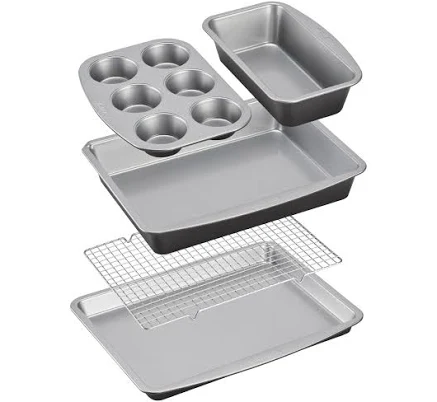
Cuisinart 5-Piece Stackable Ceramic Nonstick Bakeware, Is It Non-Toxic?
Lower PFAS concern than Teflon-type coating nonstick, though coating composition unspecified, proceed with modest caution.
Cuisinart markets this as ceramic nonstick bakeware but does not disclose the precise coating chemistry or PFAS status. Ceramic generally poses lower risk than Teflon-type coating, though some formulations have included Teflon-family coating.
The better-graded swap
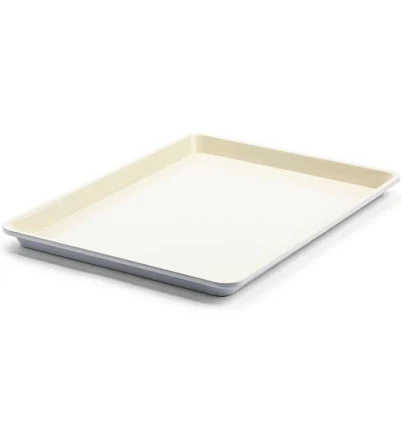
GreenPan
GreenPan GreenLife Ceramic Nonstick Cookie Sheet
70/100 safety
Same rubric that flunked this product. The swap earned Good.
Still want this one anyway? Check the price on Amazon. We’d swap it.
Material
Ceramic nonstick coating over aluminum baking pans
Lab data
No public lab test
You may also be interested in
Top-graded picks in the categories readers replace first, every one scored on the same rubric.

- polypropylene filter housing, carbon/sediment cartridge
- We found no PFAS statement from the brand
- Bacterial growth in spent cartridges
3 hazards checked on this product, all on its full breakdown.

Aquasure
Premier Series 75 GPD Under Sink Reverse Osmosis Water Filtration System
- RO membrane, carbon filters, stainless steel housing
- We found no PFAS statement from the brand
- Bacterial and microbial growth in housing and filters
4 hazards checked on this product, all on its full breakdown.

Avocado
Vegan Mattress
- organic cotton, natural latex, coconut coir, recycled steel coils
- The brand calls it PFAS-free, which we have not verified
- Heavy metals
2 hazards checked on this product, all on its full breakdown.
Is Cuisinart 5-Piece Stackable Bakeware non-toxic? What it is made of
This product uses a ceramic nonstick coating applied over aluminum baking pans. Ceramic coatings are inorganic compounds (typically silica-based polymers) that do not rely on fluorinated chemistry like traditional Teflon-type coating nonstick, making them inherently lower-PFAS-risk. However, Cuisinart does not publicly disclose the exact ceramic formulation, binder chemistry, or whether any proprietary additives are present. Aluminum substrates can leach into acidic foods if the coating degrades, though ceramic is more protective than bare metal.
What’s concerning
Category baseline
The starting point for this type of product, before anything specific to this product is counted.
No PFAS disclosure
No public statement from the brand about PFAS in this product.
Non-stick, chemistry undisclosed
Marketed as non-stick without stating the coating chemistry.
Aluminum leaching
If the ceramic coating degrades or chips, bare aluminum can contact acidic foods (tomato, lemon, vinegar) and leach into the food. Risk is low with intact coating but increases with age and mechanical damage.
Ceramic coating degradation over time
Ceramic nonstick coatings are durable but not permanent. Repeated washing, metal utensils, and thermal cycling gradually wear the surface, reducing nonstick performance and increasing leaching risk after 2-5 years of regular use.
Unknown proprietary additives in coating
Cuisinart does not disclose the exact binder, slip agents, or fillers in its ceramic formulation. Some manufacturers add heavy metals or organic compounds to enhance adhesion or durability; absence of public data means risk cannot be fully ruled out.
Thermal stress and binding integrity
Ceramic coatings on metal substrates can delaminate if exposed to rapid temperature changes or oven temperatures above the coating's rated threshold. Uneven heating of the aluminum base may cause the ceramic to crack over time.
What’s reassuring
Lead
No public reports or recalls of heavy metal contamination in Cuisinart ceramic nonstick bakeware. Modern ceramic cookware and bakeware rarely use lead or cadmium pigments, but brand does not provide third-party testing to confirm.
Source, ATSDR ↗How is this PFAS grade calculated?
The brand's record and disclosure
Cuisinart maintains a silent stance on PFAS and does not publish safety data sheets or detailed material composition for this bakeware line. The company has no public record of recalls or health incidents tied to this specific ceramic nonstick product. Cuisinart is a mainstream kitchen brand with longstanding market presence, but they do not lead in transparency around nonstick chemistry compared to competitors like Green Pan or Our Place. No formal certifications (e.g., GREENGUARD, NSF) are claimed for this product line.
How it compares in its category
Ceramic nonstick bakeware sits in the middle tier of nonstick safety. It avoids Teflon-type coating and related fluorochemicals entirely, placing it ahead of traditional Teflon cookware but behind uncoated stainless steel or cast iron in terms of simplicity. Unlike ceramic cookware, ceramic-coated bakeware is less prone to chipping because the coating is bonded to a thicker metal substrate. Price and performance are competitive with mid-range brands; ceramic nonstick bakeware generally shows good durability when used correctly.
If you buy it
Keep baking temperatures below 400°F to avoid accelerating coating degradation and potential leaching. Hand-wash rather than use a dishwasher, as harsh detergents and high heat can compromise the ceramic bond over time. Replace the pans if the coating visibly chips, flakes, or peels, as compromised coatings expose the aluminum base. Store stackable pieces with protective cloth or parchment between layers to prevent scratching that weakens the protective barrier.
What is not known about PFAS in this product?
- Basis
- Model estimate, 62% confidence, not a lab result
- Lab test
- None on record for this exact product
- Brand statement
- Cuisinart has made a specific claim
Formulations change between production runs, so check the current label. How we grade.
What are the PFAS-free alternatives to Cuisinart 5-Piece Stackable Ceramic Nonstick Bakeware?
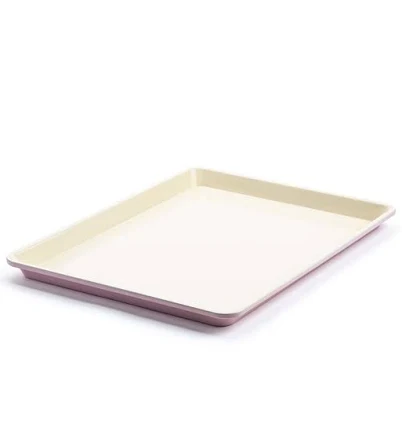
- ceramic nonstick coating
- The brand calls it PFAS-free, which we have not verified
- Ceramic coating degradation over time
3 hazards checked on this product, all on its full breakdown.
- Ceramic nonstick coating
- The brand calls it PFAS-free, which we have not verified
- Ceramic coating degradation and microflaking
2 hazards checked on this product, all on its full breakdown.
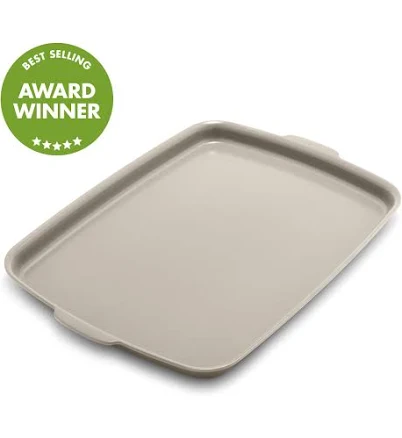
- Ceramic nonstick coating
- The brand calls it PFAS-free, which we have not verified
- Ceramic coating degradation and chipping
2 hazards checked on this product, all on its full breakdown.
More cookie sheets grades
How we score, every product runs through the same public 0-100 rubric based on materials, coatings, brand disclosure, lab findings, and recalls. See the full methodology → Spotted a mistake? Report an error.