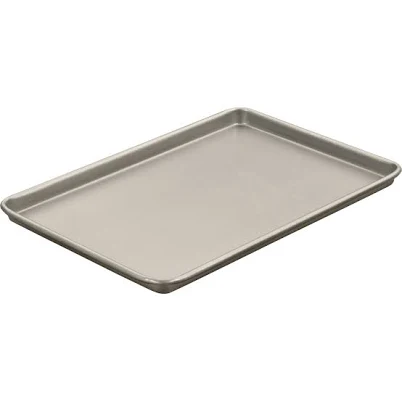
Cuisinart Chef's Classic Baking Sheet, Is It Non-Toxic?
Avoid until coating is disclosed, unspecified nonstick on cookware raises PFAS concern.
Cuisinart's Chef's Classic baking sheet uses an undisclosed nonstick coating. The brand does not specify whether Teflon-type coating, other Teflon-family coating, or alternatives are used.
The better-graded swap
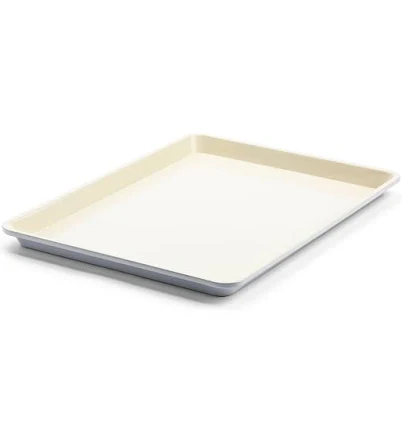
GreenPan
GreenPan GreenLife Ceramic Nonstick Cookie Sheet
70/100 safety
Same rubric that flunked this product. The swap earned Good.
Still want this one anyway? Check the price on Amazon. We’d swap it.
Material
steel with unspecified nonstick coating
Lab data
No public lab test
You may also be interested in
Top-graded picks in the categories readers replace first, every one scored on the same rubric.

- polypropylene filter housing, carbon/sediment cartridge
- We found no PFAS statement from the brand
- Bacterial growth in spent cartridges
3 hazards checked on this product, all on its full breakdown.

Aquasure
Premier Series 75 GPD Under Sink Reverse Osmosis Water Filtration System
- RO membrane, carbon filters, stainless steel housing
- We found no PFAS statement from the brand
- Bacterial and microbial growth in housing and filters
4 hazards checked on this product, all on its full breakdown.

Avocado
Vegan Mattress
- organic cotton, natural latex, coconut coir, recycled steel coils
- The brand calls it PFAS-free, which we have not verified
- Heavy metals
2 hazards checked on this product, all on its full breakdown.
Is Cuisinart Chef's Classic Baking Sheet non-toxic? What it is made of
Cuisinart Chef's Classic baking sheets use steel as the base substrate, which is chemically inert and does not leach metals under normal baking conditions. The unspecified nonstick coating is the critical unknown, Cuisinart has not publicly disclosed whether this is Teflon-type coating (Teflon-based), ceramic, silicone, or another formulation. Steel itself poses no lead or cadmium risk, but the coating's composition and durability determine overall safety.
What’s concerning
Category baseline
The starting point for this type of product, before anything specific to this product is counted.
No PFAS disclosure
No public statement from the brand about PFAS in this product.
Non-stick, chemistry undisclosed
Marketed as non-stick without stating the coating chemistry.
Teflon-type coating fume risk (thermal degradation)
If the unspecified nonstick coating is Teflon-type coating-based, heating above 500°F can release fluorinated compounds; home ovens typically max at 500°F, so risk is low in normal use, but unknown coating type prevents definitive ruling.
Coating degradation and ingestion of particles
Scratched or peeling nonstick coating can shed microscopic particles into food; steel substrate itself is inert, but flaking polymer particles are a legitimate food safety concern if the coating fails.
What’s reassuring
Steel substrate corrosion and rust migration
Cuisinart steel baking sheets show no documented rust-related recalls or complaints; the material is inherently corrosion-resistant if kept dry. Risk is negligible for typical domestic use.
Heavy metals
No public reports of lead, cadmium, or other heavy metal contamination in Cuisinart nonstick coatings; however, proprietary formulations are not independently tested and disclosed.
Source, FDA ↗How is this PFAS grade calculated?
The brand's record and disclosure
Cuisinart maintains marketing language about nonstick performance but does not provide detailed coating chemistry or PFAS-free certification on product pages or packaging. The brand has faced no major public recalls specific to this line, but the silent stance on coating composition reflects an industry-wide reluctance to disclose proprietary nonstick formulations. This opacity prevents independent verification of PFAS absence or presence.
How it compares in its category
Steel baking sheets are not a material linked to PFAS for the substrate; ceramic-coated and silicone-lined alternatives also exist but introduce different considerations around coating composition. Cuisinart's refusal to disclose coating type puts it behind competitors who explicitly market Teflon-type coating-free or ceramic alternatives. Uncoated steel sheets eliminate coating questions entirely but lose nonstick convenience.
If you buy it
Hand wash with soft sponges; abrasive scrubbers can degrade the nonstick layer and increase leaching risk. Do not heat above 400-425°F (manufacturer guidance typically silent, but standard Teflon-type coating limits apply if coating is Teflon-type coating). Inspect for scratches, flaking, or discoloration before each use; discard if coating shows visible wear. Store dry to prevent corrosion of steel edges.
What is not known about PFAS in this product?
- Basis
- Model estimate, 35% confidence, not a lab result
- Lab test
- None on record for this exact product
- Brand statement
- Cuisinart has made a specific claim
Formulations change between production runs, so check the current label. How we grade.
What are the PFAS-free alternatives to Cuisinart Chef's Classic Baking Sheet?
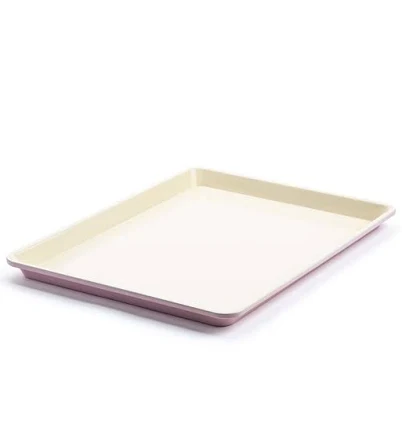
- ceramic nonstick coating
- The brand calls it PFAS-free, which we have not verified
- Ceramic coating degradation over time
3 hazards checked on this product, all on its full breakdown.
- Ceramic nonstick coating
- The brand calls it PFAS-free, which we have not verified
- Ceramic coating degradation and microflaking
2 hazards checked on this product, all on its full breakdown.
- Ceramic nonstick coating
- The brand calls it PFAS-free, which we have not verified
- Ceramic coating degradation and chipping
2 hazards checked on this product, all on its full breakdown.
More cookie sheets grades
How we score, every product runs through the same public 0-100 rubric based on materials, coatings, brand disclosure, lab findings, and recalls. See the full methodology → Spotted a mistake? Report an error.