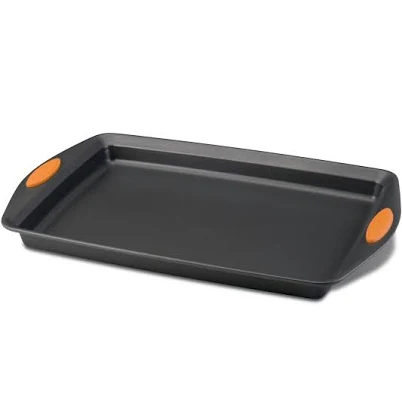
Rachael Ray Oven Lovin Cookie Sheet, Is It Non-Toxic?
Avoid until the brand clarifies what nonstick coating was used.
Rachael Ray makes no public statement about PFAS or nonstick coating type for this cookie sheet. The nonstick surface raises concern, but coating identity is unknown.
The better-graded swap
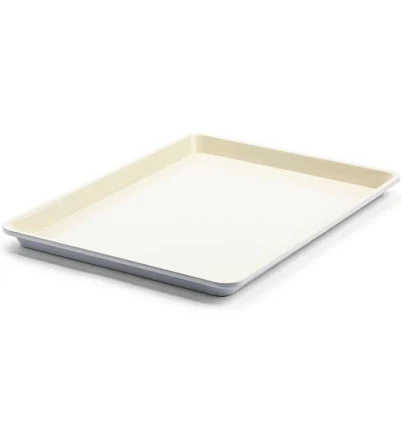
GreenPan
GreenPan GreenLife Ceramic Nonstick Cookie Sheet
70/100 safety
Same rubric that flunked this product. The swap earned Good.
Still want this one anyway? Check the price on Amazon. We’d swap it.
Material
Steel with nonstick coating (type unspecified)
Brand disclosure
Brand is silent on PFAS
Lab data
No public lab test
You may also be interested in
Top-graded picks in the categories readers replace first, every one scored on the same rubric.

- polypropylene filter housing, carbon/sediment cartridge
- We found no PFAS statement from the brand
- Bacterial growth in spent cartridges
3 hazards checked on this product, all on its full breakdown.

Aquasure
Premier Series 75 GPD Under Sink Reverse Osmosis Water Filtration System
- RO membrane, carbon filters, stainless steel housing
- We found no PFAS statement from the brand
- Bacterial and microbial growth in housing and filters
4 hazards checked on this product, all on its full breakdown.

Avocado
Vegan Mattress
- organic cotton, natural latex, coconut coir, recycled steel coils
- The brand calls it PFAS-free, which we have not verified
- Heavy metals
2 hazards checked on this product, all on its full breakdown.
Is Rachael Ray Oven Lovin Cookie Sheet non-toxic? What it is made of
This product is carbon steel with a nonstick coating of unidentified type. The coating chemistry is critical because most commercial nonstick bakeware relies on Teflon-family coating (Teflon-type coating-based formulas) that may contain PFAS compounds or their precursors. Steel itself is inert and food-safe, but the coating's durability and chemical stability under repeated heating determine actual safety in use. Rachael Ray has not publicly specified whether their coating uses traditional Teflon-type coating, ceramic, silicone, or alternative formulations.
What’s concerning
Category baseline
The starting point for this type of product, before anything specific to this product is counted.
No PFAS disclosure
No public statement from the brand about PFAS in this product.
Non-stick, chemistry undisclosed
Marketed as non-stick without stating the coating chemistry.
Nonstick coating degradation and particle ingestion
Unspecified coating type means you cannot assess whether it resists chipping or peeling. If the coating flakes during baking, particles could contaminate food. Steel substrate is not a material linked to PFAS, but coating integrity cannot be verified without manufacturer specifications.
Thermal fume release from nonstick layer
Teflon-type coating-based coatings can decompose and release fumes above 400-500°F. Without knowing this product's specific coating, safe heat limits cannot be definitively stated. Oven baking typically stays below 450°F, reducing but not eliminating this risk.
Lack of transparency on nonstick chemistry
Brand's silence on coating formulation means consumers cannot assess PFAS exposure or other chemical risks independently. This transparency gap is a known issue across mainstream cookware brands and complicates informed purchasing.
What’s reassuring
Lead
No published recalls or test reports indicate heavy metals in Rachael Ray nonstick bakeware coatings. Modern US cookware manufacturing has largely phased out these elements, but independent testing data for this specific product is not available in public sources.
Source, ATSDR ↗Aluminum leaching from substrate or adhesive layers
This is a steel cookie sheet, not aluminum, so direct aluminum migration is not a concern. Adhesive layers between steel and nonstick coating could theoretically contain leachable compounds, but no documented cases exist for this brand's products.
How is this PFAS grade calculated?
The brand's record and disclosure
Rachael Ray cookware has no documented recalls for nonstick coating degradation or chemical leaching in published safety databases. However, the brand has not issued public statements about PFAS content or coating formulation details, which is standard practice for many mainstream cookware manufacturers. No third-party certifications (GreenGuard, NSF, etc.) are noted for this specific product line. This silence leaves consumers without verifiable information about exposure risk from the coating itself.
How it compares in its category
Steel cookie sheets with nonstick coatings occupy the mid-range of bakeware safety. Uncoated steel or cast iron eliminate coating concerns entirely but require seasoning and careful handling. Ceramic-coated alternatives marketed as PFAS-free exist but may have durability trade-offs. Higher-end brands sometimes disclose coating composition; Rachael Ray does not, placing this product in a category where consumers must accept uncertainty about the nonstick layer's chemical profile.
If you buy it
Inspect the coating before first use and regularly during ownership; discard immediately if peeling, chipping, or visibly degraded. Do not preheat empty above 350°F, as nonstick coatings can begin releasing fumes above certain temperature thresholds when unloaded. Hand wash rather than dishwashing to extend coating life. Replace after 3-5 years or if coating shows any damage, since flaked material could enter food and internal damage accelerates chemical migration.
What is not known about PFAS in this product?
- Basis
- Model estimate, 45% confidence, not a lab result
- Lab test
- None on record for this exact product
- Brand statement
- Rachael Ray has made none
Formulations change between production runs, so check the current label. How we grade.
What are the PFAS-free alternatives to Rachael Ray Oven Lovin Cookie Sheet?
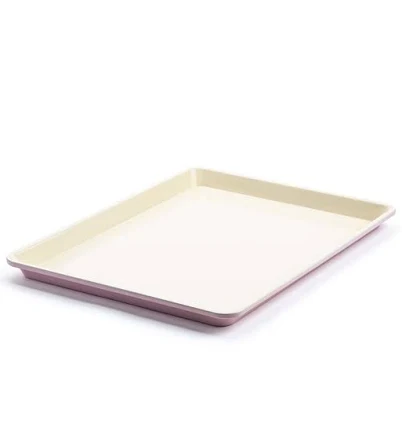
- ceramic nonstick coating
- The brand calls it PFAS-free, which we have not verified
- Ceramic coating degradation over time
3 hazards checked on this product, all on its full breakdown.
- Ceramic nonstick coating
- The brand calls it PFAS-free, which we have not verified
- Ceramic coating degradation and microflaking
2 hazards checked on this product, all on its full breakdown.
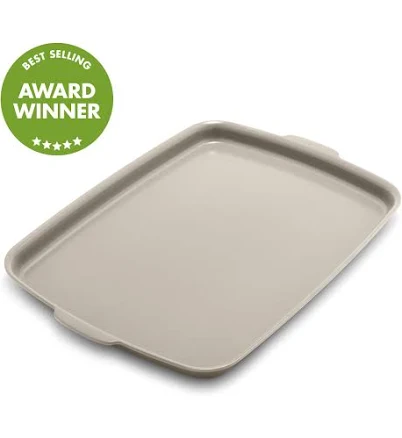
- Ceramic nonstick coating
- The brand calls it PFAS-free, which we have not verified
- Ceramic coating degradation and chipping
2 hazards checked on this product, all on its full breakdown.
More cookie sheets grades
How we score, every product runs through the same public 0-100 rubric based on materials, coatings, brand disclosure, lab findings, and recalls. See the full methodology → Spotted a mistake? Report an error.