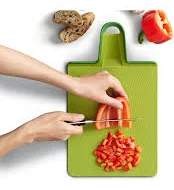
Joseph Joseph · Silicone Cutting & Prep Boards
Joseph Joseph Chop2Pot Board, Is It Non-Toxic?
Verify with Joseph Joseph whether coating is present.
This polypropylene board from Joseph Joseph has no apparent nonstick coating or PFAS claims available.
The better-graded swap
Fiskars
Functional Form Cutting Board Set, 3-Piece
85/100 safety
Same rubric that flunked this product. The swap earned Excellent.
Still want this one anyway? Check the price on Amazon. We’d swap it.
Material
Polypropylene (PP) cutting board with coloring
Brand disclosure
Brand is silent on PFAS
Lab data
No public lab test
You may also be interested in
Top-graded picks in the categories readers replace first, every one scored on the same rubric.

- polypropylene filter housing, carbon/sediment cartridge
- We found no PFAS statement from the brand
- Bacterial growth in spent cartridges
3 hazards checked on this product, all on its full breakdown.

Aquasure
Premier Series 75 GPD Under Sink Reverse Osmosis Water Filtration System
- RO membrane, carbon filters, stainless steel housing
- We found no PFAS statement from the brand
- Bacterial and microbial growth in housing and filters
4 hazards checked on this product, all on its full breakdown.

Avocado
Vegan Mattress
- organic cotton, natural latex, coconut coir, recycled steel coils
- The brand calls it PFAS-free, which we have not verified
- Heavy metals
2 hazards checked on this product, all on its full breakdown.
Is Joseph Joseph Chop2Pot Board non-toxic? What it is made of
The Chop2Pot Board is injection-molded polypropylene (PP), a thermoplastic that does not require protective coatings. Unlike ceramic or enameled cookware, PP boards contain no lead, cadmium, or ceramic glazes. The colored pigments are integral to the polymer rather than surface-applied, reducing chipping and leaching risk. PP with virgin resin has not been linked to PFAS migration during typical cutting-board use, including warm water washing.
What’s concerning
Category baseline
The starting point for this type of product, before anything specific to this product is counted.
No PFAS disclosure
No public statement from the brand about PFAS in this product.
Polymer degradation and microplastic shedding
Repeated cutting and washing can cause microscopic PP particles to shed into food, particularly if the board is old, scratched, or subjected to heat stress. No specific data on this product exists, but it is a general PP cutting board concern with low-to-moderate frequency of occurrence.
Allergen or irritant from manufacturing residues
Residual mold-release agents or processing oils may remain on new boards. A rinse with warm water before first use mitigates this minor concern. No specific allergic reactions to this product are documented.
What’s reassuring
Base material not linked to PFAS
The main material recorded for this product is not one associated with PFAS.
Pigment leaching (food-contact colorants)
FDA-approved colorants are typically used in food-contact PP products, and no leaching incidents have been reported for Joseph Joseph boards. Risk is low if virgin resin and certified pigments are used, but brand does not disclose pigment source or certification.
Lead
Lead and cadmium are not typical contaminants in modern PP food-contact applications. No recalls or test results for this product suggest contamination; regulatory standards in the US and EU restrict these metals in food-contact plastics.
Source, ATSDR ↗BPA & bisphenols
Polypropylene does not inherently contain BPA or BPS as it is not a bisphenol-based plastic. Cross-contamination during manufacturing is theoretically possible but highly unlikely in established food-product supply chains.
Source, FDA ↗How is this PFAS grade calculated?
The brand's record and disclosure
Joseph Joseph does not publicly disclose material sourcing, pigment origin, or third-party food-contact certifications on this product. The brand has no known major recall or chemical controversy on record for kitchenware lines. No transparency statement on PFAS, BPA, or manufacturing is readily available; the company treats product safety information as minimal disclosure standard rather than proactive communication.
How it compares in its category
Polypropylene cutting boards are middle-tier in chemical safety compared to alternatives. Wooden boards avoid plastic-leaching concerns but require more maintenance; glass or stainless steel boards are inert but heavier and noisier. PP boards are cheaper and more durable than wood but less inert than glass. The Chop2Pot's collapsible feature adds convenience with no documented safety downside for food-contact applications.
If you buy it
Use only for cold and room-temperature foods (salads, bread, cheese); do not cut hot items or expose to heat sources above 70C, as PP softens around 130C. Hand wash in warm soapy water rather than dishwasher heat cycles to extend product life. Inspect quarterly for visible cracks, discoloration, or warping; replace if deformation occurs (typically 2-5 years with normal use). Store in a cool, dry location away from sunlight to prevent pigment fading.
What is not known about PFAS in this product?
- Basis
- Model estimate, 72% confidence, not a lab result
- Lab test
- None on record for this exact product
- Brand statement
- Joseph Joseph has made none
Formulations change between production runs, so check the current label. How we grade.
What are the PFAS-free alternatives to Joseph Joseph Chop2Pot Board?
- Polypropylene or similar plastic; no nonstick or waterproof coating disclosed
- We found no PFAS statement from the brand
- Microplastic shedding from cutting action
4 hazards checked on this product, all on its full breakdown.
More silicone cutting & prep boards grades
How we score, every product runs through the same public 0-100 rubric based on materials, coatings, brand disclosure, lab findings, and recalls. See the full methodology → Spotted a mistake? Report an error.