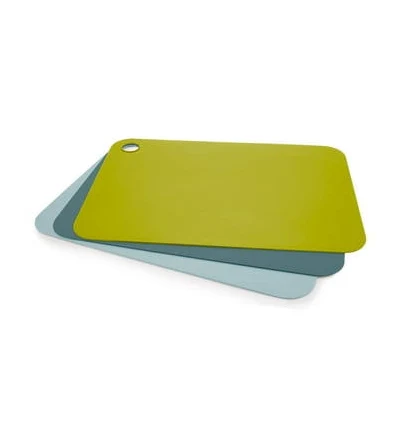
Joseph Joseph · Silicone Cutting & Prep Boards
Joseph Joseph DUO Set of 3 Double-Sided Colour Coded Chopping Board Mat Set, Is It Non-Toxic?
Lower concern. Bare plastic mats unlikely to contain PFAS.
Joseph Joseph polypropylene chopping board mats lack nonstick or water-resistant coating. No PFAS-prone treatments are identified; standard plastic mats pose lower risk than coated cookware.
The better-graded swap
Fiskars
Functional Form Cutting Board Set, 3-Piece
85/100 safety
Same rubric that flunked this product. The swap earned Excellent.
Still want this one anyway? Check the price on Amazon. We’d swap it.
Material
Polypropylene (PP) mats, colour-coded plastic
Brand disclosure
Brand is silent on PFAS
Lab data
No public lab test
You may also be interested in
Top-graded picks in the categories readers replace first, every one scored on the same rubric.

- polypropylene filter housing, carbon/sediment cartridge
- We found no PFAS statement from the brand
- Bacterial growth in spent cartridges
3 hazards checked on this product, all on its full breakdown.

Aquasure
Premier Series 75 GPD Under Sink Reverse Osmosis Water Filtration System
- RO membrane, carbon filters, stainless steel housing
- We found no PFAS statement from the brand
- Bacterial and microbial growth in housing and filters
4 hazards checked on this product, all on its full breakdown.

Avocado
Vegan Mattress
- organic cotton, natural latex, coconut coir, recycled steel coils
- The brand calls it PFAS-free, which we have not verified
- Heavy metals
2 hazards checked on this product, all on its full breakdown.
Is Joseph Joseph DUO Set of 3 Board Mat Set non-toxic? What it is made of
These are polypropylene (PP) plastic mats, a thermoplastic polymer chosen for flexibility, colour retention, and food-contact safety in most jurisdictions. PP does not leach BPA or phthalates under normal kitchen use because it is not formulated with those chemicals. The colour coding is achieved through plastic pigmentation, which is the primary chemical exposure risk if the pigment contains heavy metals, though this is rare in food-service grade plastics sold in developed markets. The mat's integrity depends on avoiding prolonged heat exposure above PP's softening point of approximately 100-130°C, above which leaching or degradation may occur.
What’s concerning
Category baseline
The starting point for this type of product, before anything specific to this product is counted.
No PFAS disclosure
No public statement from the brand about PFAS in this product.
Leaching from polypropylene at elevated temperatures
PP is stable below 100°C but may soften and leach oligomers (small plastic fragments) if exposed to boiling water or direct heat. Risk is low under normal cutting-board use but increases if mats are washed in very hot water or left in direct sunlight for extended periods.
Surface degradation and microplastic shedding over time
With repeated knife cuts and washing, PP mats can develop surface roughness and shed microscopic plastic fragments. The frequency and quantity are low compared to heavily worn items, but replacement every 2-3 years of heavy use is recommended to minimise cumulative exposure.
Bacterial growth and biofilm formation
Unlike wood, PP does not have natural antimicrobial properties. Mats with knife grooves and surface damage can trap bacteria and require active drying and regular sanitising with vinegar or dilute bleach to prevent cross-contamination.
What’s reassuring
Base material not linked to PFAS
The main material recorded for this product is not one associated with PFAS.
Heavy metals
No reports of cadmium, lead, or antimony in Joseph Joseph PP mat pigments. Food-contact grade plastics sold in EU, US, and UK are screened for heavy metal migration, though independent testing of this specific product is not publicly available.
Source, FDA ↗BPA & bisphenols
Polypropylene does not require plasticisers like BPA or phthalates to achieve its properties; these are exclusive to PVC and some other plastics. No evidence that Joseph Joseph uses these chemicals in this product line.
Source, FDA ↗How is this PFAS grade calculated?
The brand's record and disclosure
Joseph Joseph has no widely publicized material safety certifications, independent testing disclosures, or documented controversies regarding chopping board mats. The brand does not publicly position itself as leading on chemical transparency or sustainability. No recalls or health complaints specific to this product line have been reported in major safety databases. The lack of transparency is standard for this product category but means you rely on regulatory compliance (FDA food-contact approval in the US) rather than brand-level assurance.
How it compares in its category
Polypropylene mats have lower concern for food-contact use and are preferred over PVC or older acrylic boards for home use. Wooden or bamboo cutting boards avoid plastic leaching entirely but require more maintenance and harbor bacterial growth if not dried promptly. Glass cutting boards are chemically inert but prone to breakage and dulling knives. The colour-coded feature of this Joseph Joseph set is a practical design choice that poses no additional chemical risk compared to single-colour PP mats.
If you buy it
Do not use these mats on direct heat sources or place hot food/boiling water directly on them; transfer contents to cooler surfaces first. Replace mats if you observe visible discoloration, warping, or surface roughness, which signals potential breakdown. Hand wash only; avoid dishwasher if possible, as high heat and prolonged water immersion can weaken PP over 5-10 years of frequent use. Store flat in a cool, dry place away from direct sunlight to slow colour fading and material degradation.
What is not known about PFAS in this product?
- Basis
- Model estimate, 78% confidence, not a lab result
- Lab test
- None on record for this exact product
- Brand statement
- Joseph Joseph has made none
Formulations change between production runs, so check the current label. How we grade.
What are the PFAS-free alternatives to Joseph Joseph DUO Set of 3 Double-Sided Colour Coded Chopping Board Mat Set?
- Polypropylene or similar plastic; no nonstick or waterproof coating disclosed
- We found no PFAS statement from the brand
- Microplastic shedding from cutting action
4 hazards checked on this product, all on its full breakdown.
More silicone cutting & prep boards grades
How we score, every product runs through the same public 0-100 rubric based on materials, coatings, brand disclosure, lab findings, and recalls. See the full methodology → Spotted a mistake? Report an error.