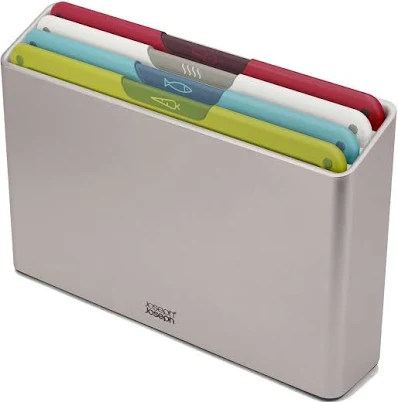
Joseph Joseph · Silicone Cutting & Prep Boards
Joseph Joseph Icon Cutting Board Set, Is It Non-Toxic?
Plastic boards carry lower PFAS risk than nonstick cookware.
Joseph Joseph Icon boards are polypropylene plastic without known PFAS treatments, though the brand shares no safety details.
The better-graded swap
Fiskars
Functional Form Cutting Board Set, 3-Piece
85/100 safety
Same rubric that flunked this product. The swap earned Excellent.
Still want this one anyway? Check the price on Amazon. We’d swap it.
Material
Polypropylene plastic cutting boards
Brand disclosure
Brand is silent on PFAS
Lab data
No public lab test
You may also be interested in
Top-graded picks in the categories readers replace first, every one scored on the same rubric.

- polypropylene filter housing, carbon/sediment cartridge
- We found no PFAS statement from the brand
- Bacterial growth in spent cartridges
3 hazards checked on this product, all on its full breakdown.

Aquasure
Premier Series 75 GPD Under Sink Reverse Osmosis Water Filtration System
- RO membrane, carbon filters, stainless steel housing
- We found no PFAS statement from the brand
- Bacterial and microbial growth in housing and filters
4 hazards checked on this product, all on its full breakdown.

Avocado
Vegan Mattress
- organic cotton, natural latex, coconut coir, recycled steel coils
- The brand calls it PFAS-free, which we have not verified
- Heavy metals
2 hazards checked on this product, all on its full breakdown.
Is Joseph Joseph Icon Cutting Board Set non-toxic? What it is made of
These cutting boards are injection-molded polypropylene (PP), a thermoplastic with a melting point around 130-171°C. PP does not contain lead, cadmium, or ceramic glazes that require concern for leaching. The material is inherently rigid and does not off-gas formaldehyde or volatile organics the way wood composites or foam do. PP's main exposure pathway is migration of unreacted monomers or additives (stabilizers, colorants) if boards contact very hot foods, but cutting boards are typically not exposed to sustained high heat.
What’s concerning
Category baseline
The starting point for this type of product, before anything specific to this product is counted.
No PFAS disclosure
No public statement from the brand about PFAS in this product.
Monomer/additive migration at elevated temperature
Polypropylene can release trace unreacted propylene monomers or processing additives if exposed to sustained heat above 70°C. Cutting boards are not typically used for hot foods, so risk is lower concern; dishwasher cycles (65-75°C) present lower concern.
Colorant or stabilizer leaching
Joseph Joseph boards are often colored (red, green, blue) for visual differentiation. If colorants or UV stabilizers (common in PP) are not FDA-compliant, trace migration into fatty or acidic foods is theoretically possible. No recalls or test data are public for this brand.
Microplastic shedding from surface degradation
All plastic cutting boards shed small particles with normal use (knives create micro-scratches). This is documented in food science but not classified as an acute toxicity hazard; long-term ingestion effects are unknown. Replacement every 1-2 years minimizes exposure.
Bacterial biofilm in surface gouges
Not a chemical hazard but a hygiene issue, PP boards are more prone to deep knife marks than glass or stainless steel, and bacteria can lodge in crevices. This is a functional durability issue, not a material safety failure specific to Joseph Joseph.
What’s reassuring
Base material not linked to PFAS
The main material recorded for this product is not one associated with PFAS.
Lead
Polypropylene is not glazed or enameled, so lead/cadmium contamination pathways common in ceramic or enamelware do not apply. No recalls or test results suggest this is a concern for this product.
Source, ATSDR ↗How is this PFAS grade calculated?
The brand's record and disclosure
Joseph Joseph is a UK-based housewares brand known for design and functionality. The company has not published public material safety data sheets, PFAS declarations, or third-party certifications (BPA-free, FDA compliance statements) for this product line. No recalls or safety incidents involving Joseph Joseph cutting boards are documented in FDA or CPSC databases. The silence on chemical composition is typical for cookware brands in this price tier but limits transparency.
How it compares in its category
Polypropylene cutting boards occupy the middle ground, lower concern than some melamine or bamboo composites with unknown binders, but offering less durability and antimicrobial properties than glass or stainless steel. Most major kitchen brands (OXO, Rubbermaid, Victorinox) use PP for budget-to-mid-range boards and face the same disclosure gaps. Joseph Joseph's branded sets emphasize ergonomic handles and nesting design rather than material purity, which is neither a red flag nor a strength.
If you buy it
Keep boards away from heat sources above 70°C (hot water rinses are fine; dishwasher safe models can handle standard cycles). Inspect for gouges or discoloration over time; deep cuts trap bacteria and degrade the board's utility faster than toxicity concerns. Replace every 1-2 years or when visibly worn. Hand wash if worried about durability; do not use for very hot foods or leave in direct sunlight for extended periods, as UV exposure and heat can accelerate minor leaching of stabilizers.
What is not known about PFAS in this product?
- Basis
- Model estimate, 72% confidence, not a lab result
- Lab test
- None on record for this exact product
- Brand statement
- Joseph Joseph has made none
Formulations change between production runs, so check the current label. How we grade.
What are the PFAS-free alternatives to Joseph Joseph Icon Cutting Board Set?
- Polypropylene or similar plastic; no nonstick or waterproof coating disclosed
- We found no PFAS statement from the brand
- Microplastic shedding from cutting action
4 hazards checked on this product, all on its full breakdown.
More silicone cutting & prep boards grades
How we score, every product runs through the same public 0-100 rubric based on materials, coatings, brand disclosure, lab findings, and recalls. See the full methodology → Spotted a mistake? Report an error.