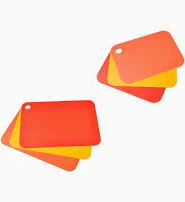
Joseph Joseph · Silicone Cutting & Prep Boards
Pop 6-piece Sunrise Cutting Mat Set, Is It Non-Toxic?
Cutting mats are lower concern for PFAS exposure; no coating signals identified.
Joseph Joseph Pop mats are bare elastomer or rubber without nonstick, water-resistant, or Teflon-family coating documented. No brand PFAS disclosure exists, but the material class carries lower inherent PFAS risk than treated cookware.
The better-graded swap
Fiskars
Functional Form Cutting Board Set, 3-Piece
85/100 safety
Same rubric that flunked this product. The swap earned Excellent.
Still want this one anyway? Check the price on Amazon. We’d swap it.
Material
TPE (thermoplastic elastomer) or rubber; non-coated base
Brand disclosure
Brand is silent on PFAS
Lab data
No public lab test
You may also be interested in
Top-graded picks in the categories readers replace first, every one scored on the same rubric.

- polypropylene filter housing, carbon/sediment cartridge
- We found no PFAS statement from the brand
- Bacterial growth in spent cartridges
3 hazards checked on this product, all on its full breakdown.

Aquasure
Premier Series 75 GPD Under Sink Reverse Osmosis Water Filtration System
- RO membrane, carbon filters, stainless steel housing
- We found no PFAS statement from the brand
- Bacterial and microbial growth in housing and filters
4 hazards checked on this product, all on its full breakdown.

Avocado
Vegan Mattress
- organic cotton, natural latex, coconut coir, recycled steel coils
- The brand calls it PFAS-free, which we have not verified
- Heavy metals
2 hazards checked on this product, all on its full breakdown.
Is Pop 6-piece Sunrise Cutting Mat Set non-toxic? What it is made of
This set uses TPE (thermoplastic elastomer), a synthetic rubber polymer that does not require protective coatings like Teflon-type coating or ceramic glazes. TPE is inherently non-porous and does not leach metals such as lead or cadmium since it contains no glazes, enamels, or ceramic finishes. The non-coated base means there is no degrading coating layer to shed particles into food over time, which is a known risk with some cookware.
What’s concerning
Category baseline
The starting point for this type of product, before anything specific to this product is counted.
No PFAS disclosure
No public statement from the brand about PFAS in this product.
TPE off-gassing (volatile organic compounds)
New TPE and rubber products commonly release minor odors in the first few days to weeks; this is typically not a health hazard but indicates volatile organic compounds present. Ventilation and washing reduce this quickly.
Microplastic shedding from surface wear
Repeated cutting and scraping on TPE surfaces can shed microscopic elastomer particles; while food-contact risk is low during normal cutting (most particles land on cutting surface rather than food), very fine particles may enter food in rare cases over extended use.
Thermal degradation at high temperatures
Placing hot cookware directly on TPE mats or using near high heat can soften the material and potentially release oligomers (uncrosslinked polymer chains); this risk is low in normal cutting board use but increases if mat is positioned near stove burners.
Bacterial growth in grooves if improperly cleaned
Like all cutting mats, deep knife marks create crevices where bacteria can survive if the mat is not thoroughly washed and dried; this is a hygiene concern rather than a chemical one, managed by proper cleaning.
What’s reassuring
Base material not linked to PFAS
The main material recorded for this product is not one associated with PFAS.
Lead
No recalls or test reports document heavy metal presence in Joseph Joseph TPE mats. Colored TPE products can theoretically contain heavy-metal-based pigments, but major kitchenware brands typically use approved azo or organic dyes.
Source, ATSDR ↗How is this PFAS grade calculated?
The brand's record and disclosure
Joseph Joseph is a UK-based kitchenware brand with a solid track record for consumer safety and no major cookware-related recalls or contamination incidents on public record. The company does not publish detailed PFAS avoidance statements for this product category, though the choice of TPE base rather than Teflon-type coating-coated surfaces suggests PFAS exposure is not a design pathway. No certifications such as FDA food-contact approval or third-party safety testing are widely advertised for this specific mat set.
How it compares in its category
Cutting mats as a category present lower chemical hazard risk than coated cookware because they do not typically reach high temperatures or have protective coatings that can degrade. TPE mats present lower concern than PVC-based alternatives, which may release phthalates under stress or heat. Compared to silicone or rubber mats, TPE offers comparable safety with slightly better durability and less odor off-gassing in new products.
If you buy it
Wash before first use to remove any manufacturing residue and minor odor common to new TPE products. Avoid prolonged exposure to direct heat above 60 degrees Celsius (140°F) to prevent material softening, and do not use under hot cookware directly from stovetop. Hand wash with mild soap; dishwasher use is not recommended as heat cycles may accelerate material degradation. Replace if surface develops cracks, deep grooves, or odor that persists after washing, as these signal material breakdown.
What is not known about PFAS in this product?
- Basis
- Model estimate, 78% confidence, not a lab result
- Lab test
- None on record for this exact product
- Brand statement
- Joseph Joseph has made none
Formulations change between production runs, so check the current label. How we grade.
What are the PFAS-free alternatives to Pop 6-piece Sunrise Cutting Mat Set?
- Polypropylene or similar plastic; no nonstick or waterproof coating disclosed
- We found no PFAS statement from the brand
- Microplastic shedding from cutting action
4 hazards checked on this product, all on its full breakdown.
More silicone cutting & prep boards grades
How we score, every product runs through the same public 0-100 rubric based on materials, coatings, brand disclosure, lab findings, and recalls. See the full methodology → Spotted a mistake? Report an error.