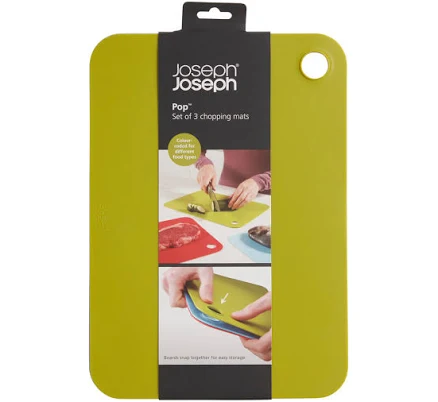
Joseph Joseph · Silicone Cutting & Prep Boards
World Market Joseph Joseph Pop Reversible Chopping Mats, Are They Non-Toxic?
Silicone with no coating described, and no PFAS statement from the brand.
The product information we reviewed describes silicone and polypropylene mats, with no applied coating named. Silicone releases food on its own, so a non-stick claim on a silicone product describes the material rather than a coating. The brand has published no PFAS statement for it.
The better-graded swap
Fiskars
Functional Form Cutting Board Set, 3-Piece
85/100 safety
Same rubric that flunked this product. The swap earned Excellent.
Still want this one anyway? Check the price on Amazon. We’d swap it.
Material
Silicone and polypropylene mats
Brand disclosure
Brand is silent on PFAS
Lab data
No public lab test
You may also be interested in
Top-graded picks in the categories readers replace first, every one scored on the same rubric.

- polypropylene filter housing, carbon/sediment cartridge
- We found no PFAS statement from the brand
- Bacterial growth in spent cartridges
3 hazards checked on this product, all on its full breakdown.

Aquasure
Premier Series 75 GPD Under Sink Reverse Osmosis Water Filtration System
- RO membrane, carbon filters, stainless steel housing
- We found no PFAS statement from the brand
- Bacterial and microbial growth in housing and filters
4 hazards checked on this product, all on its full breakdown.

Avocado
Vegan Mattress
- organic cotton, natural latex, coconut coir, recycled steel coils
- The brand calls it PFAS-free, which we have not verified
- Heavy metals
2 hazards checked on this product, all on its full breakdown.
Are World Market Joseph Joseph Chopping Mats non-toxic? What it is made of
These mats combine food-grade silicone (the main cutting surface) with polypropylene (PP) backing. Silicone is a high-molecular-weight polymer that does not leach BPA, phthalates, or other typical plastic endocrine disruptors because its backbone is silicon-oxygen bonds, not carbon chains. Polypropylene is a thermoplastic with a higher heat tolerance than many plastics (around 120C continuous use) and has not been associated with leaching of hazardous chemicals under normal food-prep conditions.
What’s concerning
Category baseline
The starting point for this type of product, before anything specific to this product is counted.
No PFAS disclosure
No public statement from the brand about PFAS in this product.
Polypropylene degradation or additive leaching
Polypropylene backing may contain stabilizers or colorants not disclosed on packaging. In normal room-temperature or warm-water contact, PP presents lower concern, but migration of proprietary additives has not been tested or disclosed for this specific product.
Surface contamination or bacterial trapping
Silicone can harbor bacteria in surface texture or seams if not cleaned regularly and thoroughly dried. While not a manufacturing defect, the reversible design and dual-sided use mean cross-contamination risk is present if mats are not separated between raw and cooked foods.
What’s reassuring
Base material not linked to PFAS
The main material recorded for this product is not one associated with PFAS.
Silicone leaching (thermal stress)
Food-grade silicone is chemically stable up to high temperatures and does not leach toxic breakdown products under normal kitchen use. No documented cases of silicone cutting mat leaching have been reported in peer or consumer literature.
Microplastics
Silicone mats do not shed microplastics during normal use or cutting because silicone does not fragment like rigid plastics. Wear occurs only after years of heavy use and manifests as visible tears or stickiness, not invisible particle release.
Source, EPA ↗Formaldehyde / VOCs
No formaldehyde-based finishes are typical of silicone or PP food-contact articles. If present, adhesive between silicone and PP layers could theoretically contain formaldehyde resin, but no disclosure or alert exists for this product.
Source, ATSDR ↗How is this PFAS grade calculated?
The brand's record and disclosure
Joseph Joseph does not publicly issue PFAS statements or detailed material safety disclosures for this product line. The brand is known for design-forward kitchen and storage products but has not faced documented recall or safety controversy for silicone mats. World Market's private-label sourcing adds a layer of supply-chain opacity, but no third-party testing or complaints specific to these mats have been widely reported.
How it compares in its category
Silicone cutting mats have lower concern than vinyl or PVC alternatives because silicone chemistry avoids phthalate plasticizers. They are also more durable and easier to sanitize than rubber or wood. Joseph Joseph's reversible design is a functional standard in this segment; competitors (OXO, Oxo, generic brands) use identical silicone-plus-backing constructions with similar material profiles.
If you buy it
Hand wash or place on the top rack of a dishwasher; silicone tolerates normal dishwasher cycles well. Do not expose to direct flame or prolonged heat above 200C (400F), though normal stovetop or oven prep remains well below that threshold. Replace the mat if silicone becomes sticky, develops visible tears, or odor changes appear (very rare). Store flat or rolled loosely to prevent permanent creasing.
What is not known about PFAS in this product?
- Basis
- Model estimate, 35% confidence, not a lab result
- Lab test
- None on record for this exact product
- Brand statement
- Joseph Joseph has made none
Formulations change between production runs, so check the current label. How we grade.
What are the PFAS-free alternatives to World Market Joseph Joseph Pop Reversible Chopping Mats?
- Polypropylene or similar plastic; no nonstick or waterproof coating disclosed
- We found no PFAS statement from the brand
- Microplastic shedding from cutting action
4 hazards checked on this product, all on its full breakdown.
More silicone cutting & prep boards grades
How we score, every product runs through the same public 0-100 rubric based on materials, coatings, brand disclosure, lab findings, and recalls. See the full methodology → Spotted a mistake? Report an error.