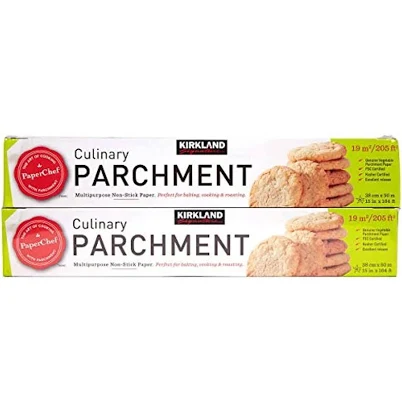
Kirkland · Parchment Paper & Baking Liners
Kirkland Signature Culinary Parchment Paper Non Stick 205+205 Sq Ft 2
Skip until Kirkland discloses non-stick coating chemistry.
Parchment paper's non-stick coating is typically Teflon-family coating-based but Kirkland provides no ingredient disclosure. Without transparency or third-party verification, PFAS risk cannot be ruled out.
The better-graded swap
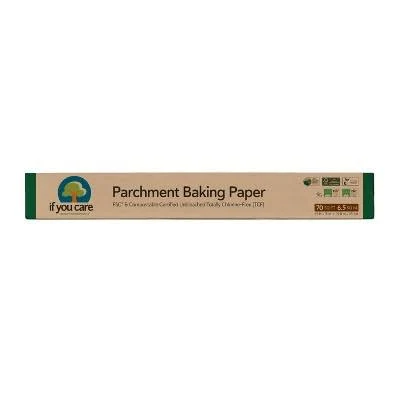
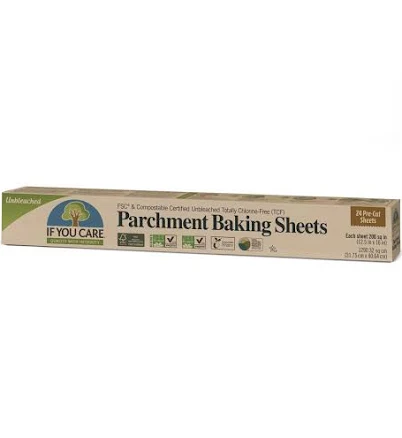
If You Care
If You Care Parchment Baking Paper
90/100 safety
Same rubric that flunked this product. The swap earned Excellent.
Still want this one anyway? Check the price on Amazon. We’d swap it.
Material
cellulose paper with unspecified non-stick coating
Brand disclosure
Brand is silent on PFAS
Lab data
No public lab test
You may also be interested in
Top-graded picks in the categories readers replace first, every one scored on the same rubric.

- polypropylene filter housing, carbon/sediment cartridge
- We found no PFAS statement from the brand
- Bacterial growth in spent cartridges
3 hazards checked on this product, all on its full breakdown.

Aquasure
Premier Series 75 GPD Under Sink Reverse Osmosis Water Filtration System
- RO membrane, carbon filters, stainless steel housing
- We found no PFAS statement from the brand
- Bacterial and microbial growth in housing and filters
4 hazards checked on this product, all on its full breakdown.

Avocado
Vegan Mattress
- organic cotton, natural latex, coconut coir, recycled steel coils
- The brand calls it PFAS-free, which we have not verified
- Heavy metals
2 hazards checked on this product, all on its full breakdown.
What Kirkland Signature Stick 205+205 Sq is made of, ingredients and materials
This product is cellulose paper (wood pulp base) coated with an unspecified non-stick agent. Kirkland does not publicly identify the coating chemistry on packaging or their website. Most food-grade parchment uses either silicone or fluorocarbon-based coatings; the lack of transparency here prevents confirmation that fluorocarbons (PFAS compounds) are absent. The paper substrate itself has no hazard of this kind on record, but the coating is where PFAS concern concentrates.
What’s concerning
Category baseline
The starting point for this type of product, before anything specific to this product is counted.
No PFAS disclosure
No public statement from the brand about PFAS in this product.
Non-stick, chemistry undisclosed
Marketed as non-stick without stating the coating chemistry.
Non-stick coating identity (fluorocarbon risk)
Kirkland does not disclose whether the non-stick coating is silicone or fluorocarbon-based. If fluorocarbon, it likely contains PFAS compounds (covered separately in PFAS grade). This opacity is the primary safety concern for this product.
Coating degradation and micro-particle shedding
Parchment papers with poorly adhered or low-quality coatings can shed micro-fragments into food when heated or cut. No recalls are on record for Kirkland parchment specifically, but degradation risk increases with temperature and acidic foods.
Migration of coating binders into fatty or oily foods
Fats and oils are known to accelerate leaching of coating polymers from food-contact surfaces. Without knowing the specific binder chemistry, risk cannot be ruled out for high-fat applications (roasting meats, baking pastries with butter).
What’s reassuring
Bleach and brightening agents in paper substrate
Kirkland does not specify whether this cellulose is chlorine-bleached or oxygen-bleached. Food-contact grades are regulated to residue limits in most jurisdictions, but unbleached or oxygen-bleached alternatives exist if this is a concern.
Thermal stability of coating at common baking temperatures
Standard food-grade parchment coatings are rated to 420 F; no information suggests Kirkland's coating differs. Testing data specific to this product is not publicly available.
How is this PFAS grade calculated?
The brand's record and disclosure
Kirkland Signature (Costco's house brand) maintains minimal public disclosure on chemical composition for most food-contact products. No independent certifications (e.g., Nordic Swan, Green Seal) appear on this parchment product. Costco has not published a PFAS policy or commitment to phasing out fluorinated coatings in cookware or food-contact items. This silence is notable given industry movement toward disclosure, particularly after PFOA/Teflon-type coating scrutiny in non-stick cookware.
How it compares in its category
Kirkland parchment is standard commodity parchment. Competitors like If You Care and Regency offer certified compostable or silicone-coated alternatives with public transparency about non-PFAS coatings. Pre-cut parchment papers from major brands vary widely, some explicitly state silicone coating; others (including some store brands) remain silent. Price is Kirkland's advantage; safety transparency is not.
If you buy it
Use below 420 F to avoid thermal stress on the coating. Replace the roll if you see browning, tears, or flaking of the non-stick layer, as coating breakdown may release unknowns into food. Store in a cool, dry place; moisture can degrade cellulose. Do not use in direct contact with acidic foods (vinegar, citrus, tomato) for extended periods, as acids can weaken both paper and coating adhesion. Consider contacting Kirkland/Costco to request coating chemistry disclosure before purchasing bulk.
What is not known about PFAS in this product?
- Basis
- Model estimate, 35% confidence, not a lab result
- Lab test
- None on record for this exact product
- Brand statement
- Kirkland has made none
Formulations change between production runs, so check the current label. How we grade.
What are the PFAS-free alternatives to Kirkland Signature Culinary Parchment Paper Non Stick 205+205 Sq Ft 2?
- silicone-coated parchment paper
- The brand calls it PFAS-free, which we have not verified
- Paper degradation and particulate shedding
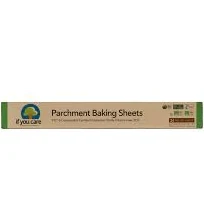
- unbleached paper with silicone coating
- The brand calls it PFAS-free, which we have not verified
- Silicone coating degradation at high heat
- bleached paper with silicone coating
- The brand calls it PFAS-free, which we have not verified
- Paper degradation and fragmentation
More parchment paper & baking liners grades
How we score, every product runs through the same public 0-100 rubric based on materials, coatings, brand disclosure, lab findings, and recalls. See the full methodology → Spotted a mistake? Report an error.