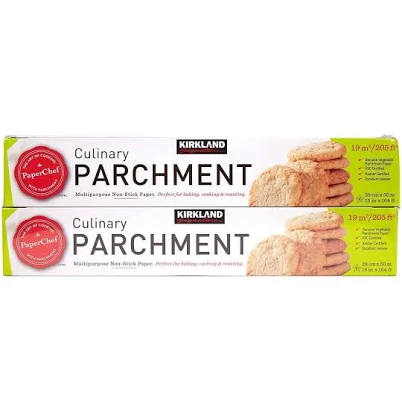
Kirkland · Parchment Paper & Baking Liners
Kirkland Signature Kirkland Non-Stick Parchment Paper
Skip until Kirkland discloses coating chemistry and PFAS status.
Parchment paper with unspecified non-stick treatment raises PFAS concern. Kirkland provides no coating details or safety claims, limiting consumer confidence in this product.
The better-graded swap
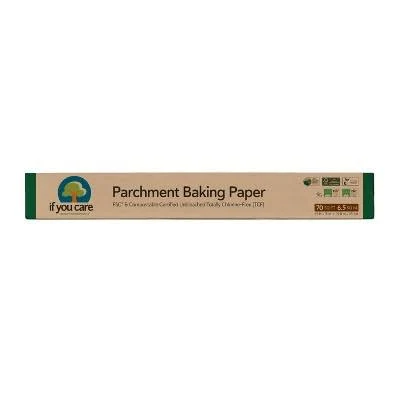
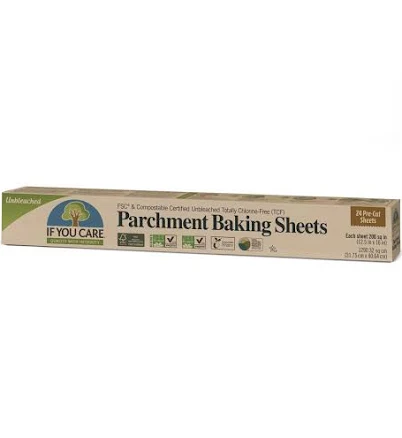
If You Care
If You Care Parchment Baking Paper
90/100 safety
Same rubric that flunked this product. The swap earned Excellent.
Still want this one anyway? Check the price on Amazon. We’d swap it.
Material
paper with non-stick coating, composition unspecified
Brand disclosure
Brand is silent on PFAS
Lab data
No public lab test
You may also be interested in
Top-graded picks in the categories readers replace first, every one scored on the same rubric.

- polypropylene filter housing, carbon/sediment cartridge
- We found no PFAS statement from the brand
- Bacterial growth in spent cartridges
3 hazards checked on this product, all on its full breakdown.

Aquasure
Premier Series 75 GPD Under Sink Reverse Osmosis Water Filtration System
- RO membrane, carbon filters, stainless steel housing
- We found no PFAS statement from the brand
- Bacterial and microbial growth in housing and filters
4 hazards checked on this product, all on its full breakdown.

Avocado
Vegan Mattress
- organic cotton, natural latex, coconut coir, recycled steel coils
- The brand calls it PFAS-free, which we have not verified
- Heavy metals
2 hazards checked on this product, all on its full breakdown.
What Kirkland Signature Parchment Paper is made of, ingredients and materials
Kirkland Non-Stick Parchment Paper is cellulose paper substrate coated with an undisclosed non-stick treatment. The coating chemistry, whether fluorinated (PFAS), silicone-based, or other, is not publicly specified by Kirkland on packaging or marketing materials. This opacity is the core safety problem, parchment's safety hinges entirely on what that coating is and how stable it remains under heat and moisture.
What’s concerning
Category baseline
The starting point for this type of product, before anything specific to this product is counted.
No PFAS disclosure
No public statement from the brand about PFAS in this product.
Non-stick, chemistry undisclosed
Marketed as non-stick without stating the coating chemistry.
Coating thermal degradation and fume release
Unknown coating composition means unknowable fume profile above safe temperatures. If coating contains perfluorinated compounds (PFAS-based), heating above polymer decomposition point (typically 500F+, but micro-emissions can occur lower) risks inhalation exposure; no testing data for this specific product is public.
Microplastic or coating particle shedding into food
Worn, degraded, or improperly stored parchment can shed particles of coating into oily or wet foods. Kirkland provides no guidance on coating durability or replacement intervals, so users may reuse past recommended lifespan.
Migration of coating additives into fatty foods
Non-stick coatings often include slip agents, adhesion promoters, or hydrophobic compounds. Without disclosed chemistry, the migration risk under typical baking (especially with fatty foods like meats or pastries) cannot be ruled out, though paper-coating migration is generally lower than plastic-film risk.
What’s reassuring
Mold or bacterial growth on stored rolls
Parchment paper itself resists microbial growth, but if stored in damp conditions, the paper substrate can support mold. This is a storage/use issue, not a manufacturing hazard specific to Kirkland.
Bleach or processing chemical residues in paper substrate
Kirkland does not specify whether the paper is chlorine-bleached or oxygen-bleached. Residual chlorine compounds (dioxins) in bleached paper are rare in food-contact products meeting FDA standards, but the lack of transparency extends to substrate choice as well.
How is this PFAS grade calculated?
The brand's record and disclosure
Kirkland (Costco's house brand) has not publicly committed to PFAS-free non-stick coatings or disclosed the chemistry of this product's treatment. No third-party certifications (e.g., SFI, FSC, or PFAS-free claims) appear on product documentation. Kirkland's silence on non-stick coating composition is standard for many parchment brands but reflects an industry-wide lack of transparency rather than Kirkland-specific misconduct.
How it compares in its category
Kirkland parchment occupies the mid-market tier. Competing products (If You Care, Unbleached by Nature) explicitly market PFAS-free or fluorocarbon-free coatings; premium brands sometimes cite silicone or mineral-based treatments. Kirkland's refusal to specify is more evasive than leading alternatives but not unique among grocery-store parchment. Uncoated parchment or wax paper exist as lower-risk alternatives, though they lack non-stick convenience.
If you buy it
Use only below 420F (paper charring risk above that). Never use directly on open flame or under broilers. Store in cool, dry conditions; moisture can degrade the coating and promote mold. Replace rolls showing visible coating wear, discoloration, or grease staining that resists cleaning. Consider it a convenience item, not a daily staple, until Kirkland discloses coating type; if PFAS exposure is a household concern, seek explicitly PFAS-free-labeled alternatives.
What is not known about PFAS in this product?
- Basis
- Model estimate, 35% confidence, not a lab result
- Lab test
- None on record for this exact product
- Brand statement
- Kirkland has made none
Formulations change between production runs, so check the current label. How we grade.
What are the PFAS-free alternatives to Kirkland Signature Kirkland Non-Stick Parchment Paper?
- silicone-coated parchment paper
- The brand calls it PFAS-free, which we have not verified
- Paper degradation and particulate shedding
- unbleached paper with silicone coating
- The brand calls it PFAS-free, which we have not verified
- Silicone coating degradation at high heat
- bleached paper with silicone coating
- The brand calls it PFAS-free, which we have not verified
- Paper degradation and fragmentation
More parchment paper & baking liners grades
How we score, every product runs through the same public 0-100 rubric based on materials, coatings, brand disclosure, lab findings, and recalls. See the full methodology → Spotted a mistake? Report an error.