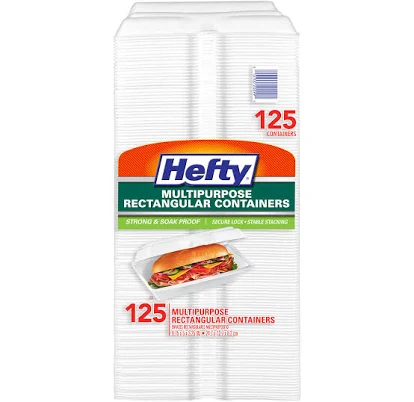
Hefty · Disposable Food Containers
Hefty Food Service Containers Rectangle 9 3/4" x 5" x 3 1/4" 125 ct
Lower concern, but brand provides no PFAS disclosure either way.
Hefty polypropylene food containers don't typically require intentional PFAS coatings. The brand hasn't published any PFAS confirmation or testing information.
We flunk more products than we pass. This one earned its grade. How we grade
Material
Polypropylene (disposable food containers)
Brand disclosure
Brand is silent on PFAS
Lab data
No public lab test
You may also be interested in
Top-graded picks in the categories readers replace first, every one scored on the same rubric.

- polypropylene filter housing, carbon/sediment cartridge
- We found no PFAS statement from the brand
- Bacterial growth in spent cartridges
3 hazards checked on this product, all on its full breakdown.

Aquasure
Premier Series 75 GPD Under Sink Reverse Osmosis Water Filtration System
- RO membrane, carbon filters, stainless steel housing
- We found no PFAS statement from the brand
- Bacterial and microbial growth in housing and filters
4 hazards checked on this product, all on its full breakdown.

Avocado
Vegan Mattress
- organic cotton, natural latex, coconut coir, recycled steel coils
- The brand calls it PFAS-free, which we have not verified
- Heavy metals
2 hazards checked on this product, all on its full breakdown.
What Hefty Food Service Containers Rectangle is made of, ingredients and materials
These containers are polypropylene (PP, #5 plastic), a thermoplastic polymer chosen for food service because it resists moisture and is FDA-approved for food contact. PP is inherently more chemically stable than softer plastics like PVC or PET and does not contain BPA or phthalates by design. The material becomes a concern only when heated above its softening point (around 160°C / 320°F), at which point it can leach oligomers and other degradation products into food.
What’s concerning
Category baseline
The starting point for this type of product, before anything specific to this product is counted.
No PFAS disclosure
No public statement from the brand about PFAS in this product.
Polymer degradation and oligomer leaching
Polypropylene can release low-molecular-weight oligomers when exposed to heat, light, or extended storage, especially if the resin was not fully polymerized. No specific testing on Hefty's formulation is publicly available, but this is a known mechanism in all PP food contact applications.
Microplastic shedding from wear
Disposable containers may shed microscopic plastic fragments if repeatedly flexed, stacked, or scratched during handling. Single-use products limit this exposure compared to reusable plastics, but long-term environmental and human health effects of microplastic ingestion remain under study.
Migration of recycled plastic contaminants
If Hefty's containers use post-consumer recycled polypropylene (not independently confirmed for this product), unknown contaminants from prior uses could theoretically be present. No public testing or certification statement on recycled content is available for these specific containers.
What’s reassuring
Base material not linked to PFAS
The main material recorded for this product is not one associated with PFAS.
BPA & bisphenols
Polypropylene does not require BPA or phthalates in its formulation and is not known to contain them. Legacy PVC or older plastics are the primary sources; these containers carry no established risk for these compounds.
Source, FDA ↗Lead
FDA-compliant PP food containers are not known to contain added lead, cadmium, or other heavy metals. Pigments and processing aids are regulated; Hefty's clear and opaque formulations carry no documented history of contamination.
Source, ATSDR ↗How is this PFAS grade calculated?
The brand's record and disclosure
Hefty (owned by Landokeep, formerly Pactiv Evergreen) does not publicly disclose PFAS content or mitigation strategy for this product line. The brand has no known recalls or documented contamination incidents specific to these rectangular food containers. Standard food service disposables from major manufacturers typically undergo basic FDA compliance testing but rarely exceed minimum requirements for transparency on emerging contaminants.
How it compares in its category
Polypropylene disposables occupy the middle ground of food container concern, lower concern than PVC or legacy polystyrene (which may contain flame retardants), comparable to other PP clamshells, and slightly less durable than heavy-duty reusable glass or ceramic alternatives. Hefty's containers are priced and positioned as single-use convenience products, not as premium or eco-certified options, so expectations for material sourcing or advanced testing should be modest. Direct competitors (Dart, Solo, store brands) use identical or nearly identical PP formulations with equivalent disclosure gaps.
If you buy it
Use these containers for cold or room-temperature foods only; do not microwave or place in hot ovens. Discard any container showing visible cracks, cloudiness, or warping, as these signs indicate polymer degradation and increased leaching risk. Store in a cool, dry place away from sunlight and strong-smelling substances (PP can absorb odors). For frequent food handlers or institutional kitchens, rotating stock and replacing containers every 1-2 years is reasonable practice even without visible damage.
What is not known about PFAS in this product?
- Basis
- Model estimate, 72% confidence, not a lab result
- Lab test
- None on record for this exact product
- Brand statement
- Hefty has made none
Formulations change between production runs, so check the current label. How we grade.
What are the PFAS-free alternatives to Hefty Food Service Containers Rectangle 9 3/4" x 5" x 3 1/4" 125 ct?
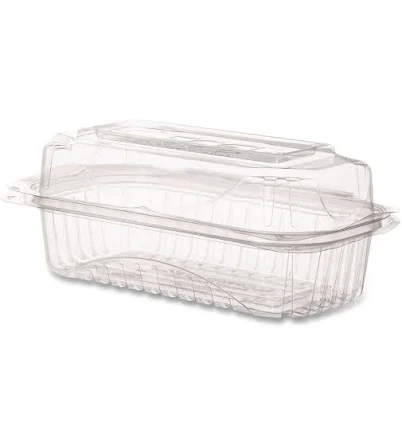
Eco-Products
Compostable Clear Clamshell Hinged Food
- Compostable resin (PLA/PBAT blend, plant-based)
- A third party reports verifying it as PFAS-free
- Thermal degradation and chemical release at use temperatures
More disposable food containers grades
How we score, every product runs through the same public 0-100 rubric based on materials, coatings, brand disclosure, lab findings, and recalls. See the full methodology → Spotted a mistake? Report an error.