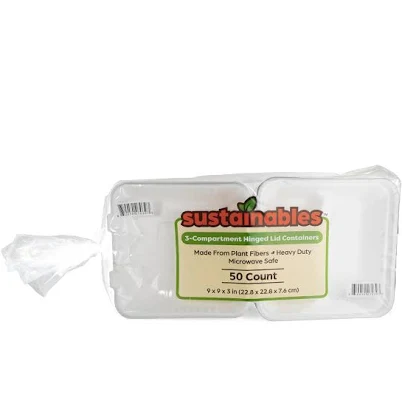
Sustainables 3 Compartment Hinged Lid To Go Food Container
Lower concern, molded fiber food containers rarely contain PFAS.
The brand's molded fiber container comes from plant pulp, a material not typically requiring PFAS treatment. No public PFAS testing or claims exist, but the material itself suggests lower risk than plastic alternatives.
We flunk more products than we pass. This one earned its grade. How we grade
Material
Molded fiber/pulp (plant-based)
Brand disclosure
Brand is silent on PFAS
Lab data
No public lab test
You may also be interested in
Top-graded picks in the categories readers replace first, every one scored on the same rubric.

- polypropylene filter housing, carbon/sediment cartridge
- We found no PFAS statement from the brand
- Bacterial growth in spent cartridges
3 hazards checked on this product, all on its full breakdown.

Aquasure
Premier Series 75 GPD Under Sink Reverse Osmosis Water Filtration System
- RO membrane, carbon filters, stainless steel housing
- We found no PFAS statement from the brand
- Bacterial and microbial growth in housing and filters
4 hazards checked on this product, all on its full breakdown.

Avocado
Vegan Mattress
- organic cotton, natural latex, coconut coir, recycled steel coils
- The brand calls it PFAS-free, which we have not verified
- Heavy metals
2 hazards checked on this product, all on its full breakdown.
What Sustainables 3 Compartment Food Container is made of, ingredients and materials
This container is molded fiber, a plant-based pulp material typically made from recycled paper or virgin wood fiber compressed under heat and pressure. Unlike polystyrene or polycarbonate food packaging, molded fiber contains no synthetic polymers, plasticizers (BPA, BPS, phthalates), or monomers that leach into food. The hinged lid is also fiber-based, avoiding plastic hinges that can degrade or shed microplastics. The main structural risk is water absorption and breakdown if exposed to prolonged moisture or heat, not chemical migration.
What’s concerning
Category baseline
The starting point for this type of product, before anything specific to this product is counted.
No PFAS disclosure
No public statement from the brand about PFAS in this product.
Degradation and food contact integrity
Molded fiber weakens when exposed to heat, extended moisture, or acidic contents. While breakdown yields organic fiber particles rather than toxins, structural failure can allow food spillage or mold colonization on degraded surfaces.
Mold or bacterial growth from moisture retention
Molded fiber is hygroscopic and absorbs water, creating conditions for mold if stored wet or damp. Not a direct chemical hazard, but a food-safety and material durability concern, particularly in high-humidity environments.
What’s reassuring
Base material not linked to PFAS
The main material recorded for this product is not one associated with PFAS.
BPA & bisphenols
Molded fiber contains no synthetic plasticizers or monomers. No BPA, BPS, or phthalate precursors are present in the material class.
Source, FDA ↗Microplastics
Fiber structure does not fragment into microplastics when used at appropriate temperatures and conditions. Risk only arises if material degrades from prolonged moisture or heat exposure, releasing fiber particles, not synthetic polymers.
Source, EPA ↗Ink or dye transfer from container printing
No specific reports of ink leaching from molded fiber containers. Industry standard is food-grade inks, but disclosure is absent; risk is low if containers are used for dry goods or short-term cold items.
How is this PFAS grade calculated?
The brand's record and disclosure
The brand is a UK homewares retailer with no documented safety controversies or product recalls for food containers. The company does not publish detailed ingredient or sourcing disclosures for this product line, but molded fiber containers are inherently low-risk from a chemical composition standpoint. No third-party certifications (e.g., FDA approval statements, BPA-free labels) are visibly associated with this specific product in public records, though the material class itself is unregulated precisely because it poses minimal contamination risk.
How it compares in its category
Molded fiber has not been linked to the chemical concerns associated with polystyrene foam (potential styrene leaching), polypropylene (additive migration risk at heat), and unlined cardboard (potential ink transfer). It is less durable than rigid plastic or glass but eliminates the chemical hazards associated with synthetic polymers. Many commercial food services and eco-conscious retailers favor molded fiber precisely for this reason; it is a recognized low-toxicity alternative.
If you buy it
Use for cold or room-temperature foods only; do not microwave, freeze, or expose to hot oils or extended heat, as fiber structure can soften or fragment. Replace after 10-15 uses or if the surface becomes visibly degraded, warped, or water-logged. Store dry in a cool place to prevent mold or decomposition. Not suitable for acidic foods over extended periods (more than a day) as pulp can absorb liquids and weaken; use for takeout within hours of packing.
What is not known about PFAS in this product?
- Basis
- Model estimate, 72% confidence, not a lab result
- Lab test
- None on record for this exact product
- Brand statement
- has made none
Formulations change between production runs, so check the current label. How we grade.
What are the PFAS-free alternatives to Sustainables 3 Compartment Hinged Lid To Go Food Container?
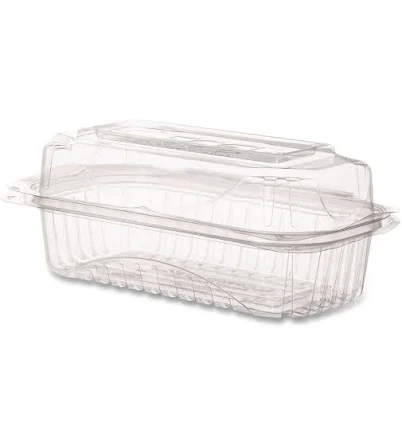
Eco-Products
Compostable Clear Clamshell Hinged Food
- Compostable resin (PLA/PBAT blend, plant-based)
- A third party reports verifying it as PFAS-free
- Thermal degradation and chemical release at use temperatures
More disposable food containers grades
How we score, every product runs through the same public 0-100 rubric based on materials, coatings, brand disclosure, lab findings, and recalls. See the full methodology → Spotted a mistake? Report an error.