Le Creuset · Non-Stick Kitchen Gadgets
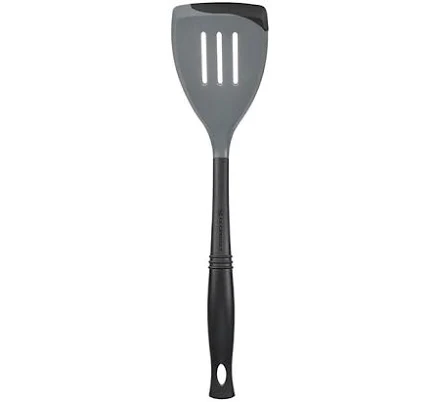
Le Creuset Revolution Bi-Material Slotted Spatula, Is It Non-Toxic?
Lower concern, but silicone coating source unclear, no disclosure.
This spatula combines silicone and nylon without public PFAS transparency. Silicone carries lower risk, though the brand makes no source or composition commitments.
The better-graded swap
Our Place
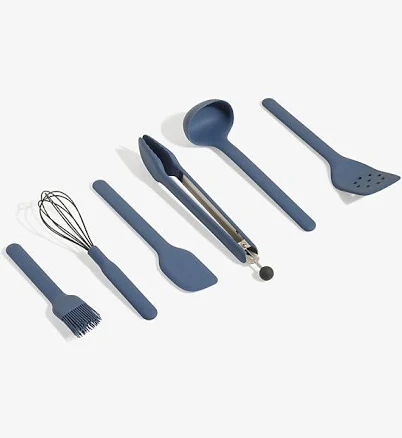
Our Place Utensil Essentials 6-Piece Silicone Utensil Set
90/100 safety
Same rubric that flunked this product. The swap earned Excellent.
Still want this one anyway? Check the price on Amazon. We’d swap it.
Material
Silicone head, nylon handle (bi-material)
Lab data
No public lab test
You may also be interested in
Top-graded picks in the categories readers replace first, every one scored on the same rubric.

- polypropylene filter housing, carbon/sediment cartridge
- We found no PFAS statement from the brand
- Bacterial growth in spent cartridges
3 hazards checked on this product, all on its full breakdown.

Aquasure
Premier Series 75 GPD Under Sink Reverse Osmosis Water Filtration System
- RO membrane, carbon filters, stainless steel housing
- We found no PFAS statement from the brand
- Bacterial and microbial growth in housing and filters
4 hazards checked on this product, all on its full breakdown.

Avocado
Vegan Mattress
- organic cotton, natural latex, coconut coir, recycled steel coils
- The brand calls it PFAS-free, which we have not verified
- Heavy metals
2 hazards checked on this product, all on its full breakdown.
Is Le Creuset Revolution Slotted Spatula non-toxic? What it is made of
The spatula head is food-grade silicone, a synthetic polymer that does not leach BPA, phthalates, or other common plasticizer concerns when used as intended. The nylon handle is a thermoplastic polymer generally considered stable and non-leaching under normal cookware temperatures. Bi-material construction avoids metal utensil contact with non-stick coatings on cookware, reducing wear and coating debris.
What’s concerning
Category baseline
The starting point for this type of product, before anything specific to this product is counted.
No PFAS disclosure
No public statement from the brand about PFAS in this product.
Silicone degradation at extreme heat
Food-grade silicone is stable to approximately 600°F; use above this temperature may cause material breakdown and potential microparticle release, though standard stovetop and oven use poses negligible risk.
Microplastic shedding from silicone wear
Prolonged contact with abrasive cookware surfaces or dishwasher wear may cause fine silicone particles to shed; this is primarily a food-contamination concern rather than toxicological hazard, as silicone itself is inert when ingested.
What’s reassuring
Base material not linked to PFAS
The main material recorded for this product is not one associated with PFAS.
Nylon handle thermal stability
Nylon handles on cooking utensils are common and widely used; no documented leaching or chemical release on record under standard temperatures (below 350°F handle exposure).
Lead
Silicone and nylon utensils do not incorporate ceramic glazes, enamels, or pigments typically associated with heavy metal contamination in cookware; Le Creuset's premium manufacturing does not suggest risk in this product.
Source, ATSDR ↗How is this PFAS grade calculated?
The brand's record and disclosure
Le Creuset, a premium cookware manufacturer owned by Groupe SEB, maintains strong certification records for cookware safety (including Teflon-free and lead-free ceramic coating claims on cast-iron products). However, the company has not publicly disclosed testing or material sourcing transparency for silicone utensils specifically. No documented recalls or safety controversies involving this spatula model are on record.
How it compares in its category
Silicone spatulas show lower concern for documented leaching hazards compared to plastic or wood alternatives. This Le Creuset version is positioned in the premium tier, suggesting tighter quality control than budget silicone utensils, though functional safety differences are minimal. High-end alternatives (e.g., OXO, Victorinox) offer similar material profiles without significant safety differentiation.
If you buy it
Use only with cookware below 600°F (silicone degrades at higher heat, though food-contact silicone is stable well into normal cooking ranges). Hand wash or place on dishwasher's upper rack to avoid prolonged exposure to high heat cycles. Inspect periodically for visible tears, discoloration, or sticky residue on the silicone head, which would signal replacement. Store away from direct sunlight and heat sources to extend material lifespan.
What is not known about PFAS in this product?
- Basis
- Model estimate, 72% confidence, not a lab result
- Lab test
- None on record for this exact product
- Brand statement
- Le Creuset has made a specific claim
Formulations change between production runs, so check the current label. How we grade.
What are the PFAS-free alternatives to Le Creuset Revolution Bi-Material Slotted Spatula?
- Silicone utensils, no coating
- The brand calls it PFAS-free, which we have not verified
- Microplastic generation
2 hazards checked on this product, all on its full breakdown.
- Stainless steel utensils
- The brand calls it PFAS-free, which we have not verified
- Nickel leaching from stainless steel
2 hazards checked on this product, all on its full breakdown.
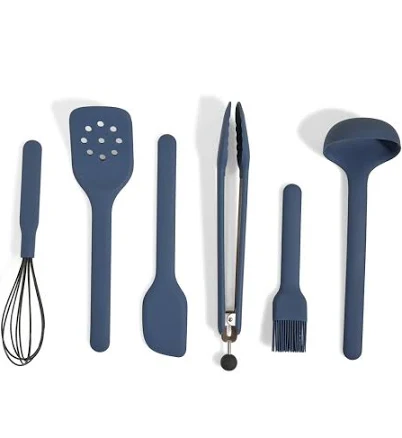
- Stainless steel utensils, material unclear
- The brand calls it PFAS-free, which we have not verified
- Handle material degradation (if present)
2 hazards checked on this product, all on its full breakdown.
More non-stick kitchen gadgets grades
How we score, every product runs through the same public 0-100 rubric based on materials, coatings, brand disclosure, lab findings, and recalls. See the full methodology → Spotted a mistake? Report an error.