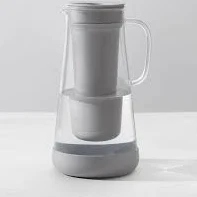
LifeStraw Home Award-Winning Glass Water Filter Pitcher
Materials themselves carry minimal PFAS risk without brand transparency.
Borosilicate glass and activated carbon are both established low-risk materials. LifeStraw hasn't publicly tested for PFAS or committed to avoiding it.
We flunk more products than we pass. This one earned its grade. How we grade
Material
borosilicate glass pitcher, activated carbon + ion-exchange filter
Lab data
No public lab test
You may also be interested in
Top-graded picks in the categories readers replace first, every one scored on the same rubric.

- polypropylene filter housing, carbon/sediment cartridge
- We found no PFAS statement from the brand
- Bacterial growth in spent cartridges
3 hazards checked on this product, all on its full breakdown.

Aquasure
Premier Series 75 GPD Under Sink Reverse Osmosis Water Filtration System
- RO membrane, carbon filters, stainless steel housing
- We found no PFAS statement from the brand
- Bacterial and microbial growth in housing and filters
4 hazards checked on this product, all on its full breakdown.

Avocado
Vegan Mattress
- organic cotton, natural latex, coconut coir, recycled steel coils
- The brand calls it PFAS-free, which we have not verified
- Heavy metals
2 hazards checked on this product, all on its full breakdown.
What LifeStraw Home Filter Pitcher is made of, ingredients and materials
The LifeStraw Home pitcher uses borosilicate glass, a chemically inert material that does not leach harmful substances into water under normal use. The filter cartridge contains activated carbon and ion-exchange resin, both widely used in drinking water treatment and approved for food contact. Borosilicate glass is resistant to thermal shock and does not degrade when exposed to hot or cold water, eliminating the risk of microplastics or coating breakdown common in plastic pitchers.
What’s concerning
No PFAS disclosure
No public statement from the brand about PFAS in this product.
Bacterial growth in filter cartridge
If filter cartridges are not replaced on schedule or water sits in the pitcher for more than 48 hours without use, activated carbon can support bacterial colonization. Risk is mitigated by regular replacement intervals and cold storage.
Glass breakage and sharp edges
Borosilicate glass pitchers can crack or shatter if dropped or exposed to rapid temperature changes, creating a physical hazard. This is a known limitation of glass, not a chemical hazard, but relevant to household safety.
Activated carbon dust ingestion
New filter cartridges may shed fine carbon particles into the first few pitchers of filtered water. Rinsing the cartridge or running water through it before use is recommended to minimize particle shedding.
What’s reassuring
Bare uncoated material
Recorded as a bare, uncoated material with no surface coating or treatment.
Ion-exchange resin leachables
FDA-approved ion-exchange resins used in drinking water pitchers are not documented to leach harmful substances at typical use concentrations. No recalls or adverse events specifically tied to resin leaching in this product line are on record.
Housing material leachables (pitcher lid/spout)
The lid and spout may be made of polypropylene or silicone seals; no documented leaching of BPA or phthalates has been reported for LifeStraw pitcher lids under normal use conditions.
How is this PFAS grade calculated?
The brand's record and disclosure
LifeStraw (owned by Vestergaard) has published third-party test data showing their carbon filters remove common contaminants including chlorine, sediment, and some volatile organic compounds. The company does not make explicit public commitments regarding PFAS removal, though activated carbon can remove some PFAS compounds depending on contact time and cartridge type. No major product recalls or safety controversies have been publicly documented for this pitcher model. Certification status under NSF/ANSI standards for this specific product line is not widely advertised in marketing materials.
How it compares in its category
Glass pitchers like this one pose lower chemical leaching risk than polycarbonate or polypropylene alternatives, which may leach BPA or other polymers over time. Compared to pitcher filters with activated carbon alone, the ion-exchange resin in this model addresses hardness minerals and some ions, providing broader treatment than carbon-only designs. The main trade-off is that glass is heavier and breakable, whereas plastic pitchers are more durable for high-traffic households. Filter replacement costs and availability are competitive with Brita and similar brands.
If you buy it
Replace filter cartridges every 2 months or 40 gallons (as per manufacturer guidance) to prevent bacterial growth in saturated carbon and maintain ion-exchange resin effectiveness. Store the pitcher in a cool, dark place to avoid algae growth in the glass reservoir; do not leave filled pitcher in direct sunlight for extended periods. Rinse the pitcher and lid with hot water before first use and wash the reservoir monthly to prevent biofilm. Do not use boiling water in the pitcher immediately; allow hot water to cool slightly, as extreme thermal shock can crack glass even in borosilicate.
What is not known about PFAS in this product?
- Basis
- Model estimate, 72% confidence, not a lab result
- Lab test
- None on record for this exact product
- Brand statement
- LifeStraw has made a specific claim
Formulations change between production runs, so check the current label. How we grade.
More water filters grades
How we score, every product runs through the same public 0-100 rubric based on materials, coatings, brand disclosure, lab findings, and recalls. See the full methodology → Spotted a mistake? Report an error.