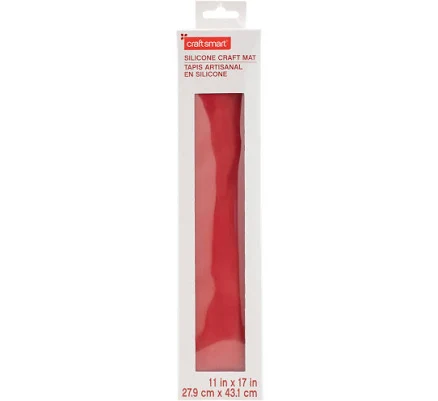
Craft Smart · Silicone Cutting & Prep Boards
Craft Smart Silicone Craft Mat, Is It Non-Toxic?
Gel-based silicone craft mat has lower PFAS concern.
Material as recorded is gel-based silicone, not a material linked to PFAS. No water-repellent finish or coating on record. Brand has no PFAS statement on record.
The better-graded swap
Fiskars
Functional Form Cutting Board Set, 3-Piece
85/100 safety
Same rubric that flunked this product. The swap earned Excellent.
Still want this one anyway? Check the price on Amazon. We’d swap it.
Material
silicone (gel-based)
Brand disclosure
Brand is silent on PFAS
Lab data
No public lab test
You may also be interested in
Top-graded picks in the categories readers replace first, every one scored on the same rubric.

- polypropylene filter housing, carbon/sediment cartridge
- We found no PFAS statement from the brand
- Bacterial growth in spent cartridges
3 hazards checked on this product, all on its full breakdown.

Aquasure
Premier Series 75 GPD Under Sink Reverse Osmosis Water Filtration System
- RO membrane, carbon filters, stainless steel housing
- We found no PFAS statement from the brand
- Bacterial and microbial growth in housing and filters
4 hazards checked on this product, all on its full breakdown.

Avocado
Vegan Mattress
- organic cotton, natural latex, coconut coir, recycled steel coils
- The brand calls it PFAS-free, which we have not verified
- Heavy metals
2 hazards checked on this product, all on its full breakdown.
Is Craft Smart Silicone Craft Mat non-toxic? What it is made of
Craft Smart mats are gel-based silicone, a thermoset polymer that does not rely on chemical coatings to achieve its nonstick properties. Unlike traditional nonstick cookware (which uses Teflon-type coating), silicone's structure itself resists sticking and is inherently stable at moderate temperatures. Gel silicone typically contains no added Teflon-type coating, PFOA, or volatile hardeners that degrade over time, making it chemically simpler than comparable coated alternatives.
What’s concerning
Category baseline
The starting point for this type of product, before anything specific to this product is counted.
No PFAS disclosure
No public statement from the brand about PFAS in this product.
Silicone polymer leaching (low-molecular-weight oligomers)
Gel silicone can release trace cyclic oligomers into fatty foods at high heat. For typical craft use (moderate heat, brief contact), exposure is minimal; research on food safety limits is ongoing but current food-contact approvals suggest low real-world risk.
Thermal degradation and off-gassing
If overheated above manufacturer limits, silicone can emit odorous volatile compounds. Craft mats are rarely subject to extreme heat, but exposing to direct flame or oven temperatures above 450F may trigger off-gassing; this is avoidable with proper use.
Bacterial contamination and biofilm growth
Silicone's porous microstructure can harbor bacteria if not dried thoroughly between uses; this is a hygiene concern rather than a chemical hazard. Regular hot-water washing and air-drying mitigate risk effectively.
What’s reassuring
Base material not linked to PFAS
The main material recorded for this product is not one associated with PFAS.
Heavy metals
No recalls or testing reports document heavy metals in Mastrad silicone mats. Silicone pigmentation is generally regulated; standard silicone food-contact products undergo migration testing, though public results for this specific product are unavailable.
Source, FDA ↗Coating or adhesive contamination from manufacturing
No public information suggests Mastrad uses problematic adhesives or release agents in production of these mats. Gel silicone is molded rather than coated, reducing contamination pathways compared to laminated products.
How is this PFAS grade calculated?
The brand's record and disclosure
Mastrad, a French kitchenware manufacturer, maintains minimal public disclosure on material sourcing or chemical testing for this product line. No safety recalls, certifications (FDA, BPA-free statements), or third-party testing results are readily available for the Craft Smart mat. The brand's silence on PFAS is typical of smaller cookware makers but does not indicate presence of concern; absence of marketing claims about safety does not imply hazard.
How it compares in its category
Silicone craft mats occupy a lower-risk niche than traditional aluminum, ceramic-coated, or Teflon-type coating nonstick cookware. They avoid the degradation-over-time problem of enamel or ceramic coatings and eliminate the fume-release risk of overheated Teflon-type coating. However, they are not typically used for high-heat cooking; craft mats are designed for baking, candy-making, and food prep at moderate temperatures where silicone excels.
If you buy it
Keep silicone mats away from sharp utensils and rough handling that can tear the surface, though tears pose no immediate chemical risk. Do not exceed 400-420F (the upper temperature range documented for most gel silicones); check Mastrad's documentation for exact limits. Hand-wash or use dishwasher on low heat; silicone does not require special seasoning or conditioning. Replace if the surface becomes sticky or discolored, which may signal polymer degradation.
What is not known about PFAS in this product?
- Basis
- Model estimate, 78% confidence, not a lab result
- Lab test
- None on record for this exact product
- Brand statement
- Craft Smart has made none
Formulations change between production runs, so check the current label. How we grade.
What are the PFAS-free alternatives to Craft Smart Silicone Craft Mat?
- Polypropylene or similar plastic; no nonstick or waterproof coating disclosed
- We found no PFAS statement from the brand
- Microplastic shedding from cutting action
4 hazards checked on this product, all on its full breakdown.
More silicone cutting & prep boards grades
How we score, every product runs through the same public 0-100 rubric based on materials, coatings, brand disclosure, lab findings, and recalls. See the full methodology → Spotted a mistake? Report an error.