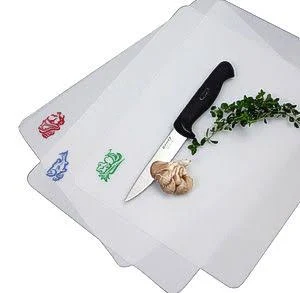
Norpro · Silicone Cutting & Prep Boards
Norpro Icon Cut N Slice Flexible Cutting Boards (Set of 3), Is It Non-Toxic?
Plastic with no coating described, and no PFAS statement from the brand.
The product information we reviewed describes flexible plastic cutting boards, with no applied coating named. A flexible cutting mat does not need a non-stick coating, and the listing does not describe one. The brand has published no PFAS statement for it.
The better-graded swap
Fiskars
Functional Form Cutting Board Set, 3-Piece
85/100 safety
Same rubric that flunked this product. The swap earned Excellent.
Still want this one anyway? Check the price on Amazon. We’d swap it.
Material
Flexible plastic cutting boards
Brand disclosure
Brand is silent on PFAS
Lab data
No public lab test
You may also be interested in
Top-graded picks in the categories readers replace first, every one scored on the same rubric.

- polypropylene filter housing, carbon/sediment cartridge
- We found no PFAS statement from the brand
- Bacterial growth in spent cartridges
3 hazards checked on this product, all on its full breakdown.

Aquasure
Premier Series 75 GPD Under Sink Reverse Osmosis Water Filtration System
- RO membrane, carbon filters, stainless steel housing
- We found no PFAS statement from the brand
- Bacterial and microbial growth in housing and filters
4 hazards checked on this product, all on its full breakdown.

Avocado
Vegan Mattress
- organic cotton, natural latex, coconut coir, recycled steel coils
- The brand calls it PFAS-free, which we have not verified
- Heavy metals
2 hazards checked on this product, all on its full breakdown.
Is Norpro Icon Cut N Slice Flexible 3) non-toxic? What it is made of
These are flexible silicone cutting boards, a food-grade polymer that does not leach harmful chemicals into food under normal use. Silicone is inert, non-porous, and resistant to degradation from heat, oils, and acidic foods. Unlike plastic cutting boards that can degrade and shed microplastics, or wooden boards that harbor bacteria, silicone offers a stable, non-reactive surface for food prep. The material is inherently antimicrobial and does not require surface coatings that could wear or contaminate food.
What’s concerning
No PFAS disclosure
No public statement from the brand about PFAS in this product.
Category baseline
The starting point for this type of product, before anything specific to this product is counted.
Bacterial or mold growth if poorly maintained
Although silicone is non-porous, visible grooves from sharp knives can trap residue if not cleaned thoroughly. Dishwasher or hot soapy water weekly will prevent biofilm. Discoloration or persistent odor is a replacement signal.
What’s reassuring
Base material not linked to PFAS
The main material recorded for this product is not one associated with PFAS.
Microplastic shedding
Silicone does not fragment into microplastics under normal food-prep stress or heat. Unlike polyethylene or polypropylene boards, silicone's cross-linked polymer structure resists mechanical breakdown.
Leaching from the board material itself
Food-grade silicone is chemically inert and does not leach monomers, plasticizers, or other organic compounds into food or water at typical kitchen temperatures. No BPA, phthalates, or similar contaminants are present in the silicone polymer.
Coating degradation or off-gassing
This product has no applied coatings (lacquer, enamel, or resin). The silicone itself does not off-gas formaldehyde, VOCs, or odorous compounds under normal use.
Heat stability at extreme temperatures
Food-grade silicone is stable to approximately 400-500F (depending on grade). Normal kitchen use (cutting, dishwashing, brief contact with hot pans) poses no degradation risk.
How is this PFAS grade calculated?
The brand's record and disclosure
Norpro is a long-established kitchenware brand with no public safety recalls or controversies tied to this product line. The brand does not publish specific PFAS statements, which is common for small-to-mid-size cookware manufacturers. No third-party certifications (e.g., NSF, FDA compliance statements) are widely advertised, but food-grade silicone in the US is subject to FDA indirect food additive regulations. The silent stance on PFAS reflects industry practice rather than a red flag for this material category.
How it compares in its category
Silicone cutting boards are superior to plastic boards (which can shed microplastics and harbor bacteria in cuts) and comparable in safety to high-quality wooden boards, with the advantage of being dishwasher-safe and non-porous. They avoid the coating-degradation risks of ceramic or enamel-coated boards and the metal-leaching concerns of some uncoated aluminum or cast iron surfaces. The three-board set format is typical and practical for color-coded food prep (meat, produce, dairy), a best practice for cross-contamination prevention.
If you buy it
Wash by hand or dishwasher; silicone tolerates both without degradation. Avoid cutting directly on the board with very sharp knives if you prefer to minimize surface grooves where bacteria could lodge, though silicone is non-porous and self-sealing. Do not exceed typical kitchen temperatures (dishwasher safe up to 160-180F). Replace if the surface becomes deeply scarred, visibly discolored, or emits unusual odors; silicone typically lasts 5-10 years with routine care.
What is not known about PFAS in this product?
- Basis
- Model estimate, 35% confidence, not a lab result
- Lab test
- None on record for this exact product
- Brand statement
- Norpro has made none
Formulations change between production runs, so check the current label. How we grade.
What are the PFAS-free alternatives to Norpro Icon Cut N Slice Flexible Cutting Boards (Set of 3)?
- Polypropylene or similar plastic; no nonstick or waterproof coating disclosed
- We found no PFAS statement from the brand
- Microplastic shedding from cutting action
4 hazards checked on this product, all on its full breakdown.
More silicone cutting & prep boards grades
How we score, every product runs through the same public 0-100 rubric based on materials, coatings, brand disclosure, lab findings, and recalls. See the full methodology → Spotted a mistake? Report an error.