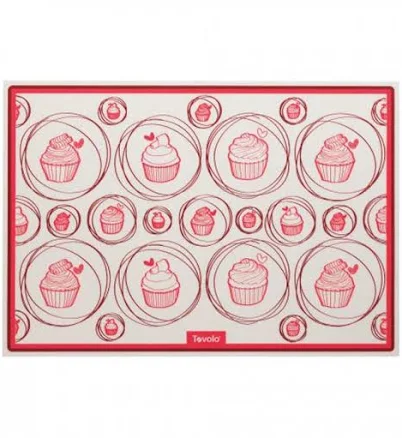
Tovolo · Silicone Cutting & Prep Boards
Tovolo Silicone Baking Mat, Is It Non-Toxic?
Silicone baking mat with no coating on record and lower PFAS concern than Teflon-family coating nonstick.
Tovolo's silicone baking mat is made from silicone elastomer, a material not linked to PFAS. The brand has no PFAS statement on record. No water-repellent finish or coating is recorded for this product.
The better-graded swap
Fiskars
Functional Form Cutting Board Set, 3-Piece
85/100 safety
Same rubric that flunked this product. The swap earned Excellent.
Still want this one anyway? Check the price on Amazon. We’d swap it.
Material
silicone (elastomer)
Brand disclosure
Brand is silent on PFAS
Lab data
No public lab test
You may also be interested in
Top-graded picks in the categories readers replace first, every one scored on the same rubric.

- polypropylene filter housing, carbon/sediment cartridge
- We found no PFAS statement from the brand
- Bacterial growth in spent cartridges
3 hazards checked on this product, all on its full breakdown.

Aquasure
Premier Series 75 GPD Under Sink Reverse Osmosis Water Filtration System
- RO membrane, carbon filters, stainless steel housing
- We found no PFAS statement from the brand
- Bacterial and microbial growth in housing and filters
4 hazards checked on this product, all on its full breakdown.

Avocado
Vegan Mattress
- organic cotton, natural latex, coconut coir, recycled steel coils
- The brand calls it PFAS-free, which we have not verified
- Heavy metals
2 hazards checked on this product, all on its full breakdown.
Is Tovolo Silicone Baking Mat non-toxic? What it is made of
Tovolo baking mats are made from food-grade silicone elastomer, a polymer backbone of silicon and oxygen with organic side chains. Unlike nonstick coatings (Teflon-type coating, PFOA), silicone does not require fluorinated compounds and is mechanically stable across typical oven temperatures (up to 500°F). The material is non-porous, chemically inert at normal baking conditions, and does not degrade into microparticles or leach reactive monomers into food the way some plastics do.
What’s concerning
No PFAS disclosure
No public statement from the brand about PFAS in this product.
Category baseline
The starting point for this type of product, before anything specific to this product is counted.
Silicone leaching (oligomers)
Food-grade silicone can release low-molecular-weight siloxane oligomers into food under high heat or with fatty/acidic foods; levels are generally far below regulatory concern thresholds, but no standardized migration testing is published for Tovolo specifically.
Surface degradation and particle shedding
Prolonged exposure to oils and repeated heating can cause silicone to become sticky or lose elasticity, but does not typically fragment into dangerous particles; mechanical wear from sharp utensils poses a theoretical cutting risk but is rare in practice.
Brand transparency and third-party verification
Tovolo does not provide independent certifications, material safety data sheets, or public sourcing documentation; purchasers must rely on material class reputation rather than product-specific assurance.
What’s reassuring
Base material not linked to PFAS
The main material recorded for this product is not one associated with PFAS.
Coating or filler contamination
No reports of heavy metal fillers (lead, cadmium) in Tovolo silicone mats; silicone elastomers used in food contact do not typically require lead-based stabilizers like PVC does, and no public safety alerts exist for this brand.
Thermal stability at extreme temperature
Food-grade silicone is stable to 500°F (260°C); exceeding this with broiler or direct flame may cause surface hardening or brittleness, but no toxic fume emissions or degradation products are established for consumer oven use.
How is this PFAS grade calculated?
The brand's record and disclosure
Tovolo does not publish detailed material safety data or third-party certifications (e.g., NSF, FDA formal approval statements) on their website. The brand has not issued public statements on PFAS use or avoidance. No product recalls, safety warnings, or regulatory actions against Tovolo silicone baking mats are on public record. The company operates as a private kitchenware line without extensive transparency infrastructure, typical of mid-tier consumer goods brands.
How it compares in its category
Silicone baking mats are functionally superior to parchment paper (not a material linked to PFAS, reusable, eliminates bleach/chlorine residue risk from processing) and present lower concern than nonstick metal baking sheets with ceramic or Teflon-type coating coatings, which can shed particles if scratched. Compared to glass or stainless steel pans, silicone offers no heat conduction advantage but avoids metal ion leaching entirely. Tovolo's mat is mid-market; competitors like Silpat (higher price, EU-made, similar material) and generic silicone mats (lower cost, same hazard profile) exist at either price tier.
If you buy it
Use on oven racks only; avoid direct contact with heating elements or broiler coils above 500°F to prevent edge hardening. Hand-wash with mild soap and avoid scouring pads that can abrade the surface (though silicone is durable). Replace if visible cracks, tears, or permanent discoloration appear, though properly maintained mats last 3-5 years. Avoid contact with sharp utensils while in use; silicone resists tearing but can be cut by knives, potentially creating loose fragments.
What is not known about PFAS in this product?
- Basis
- Model estimate, 82% confidence, not a lab result
- Lab test
- None on record for this exact product
- Brand statement
- Tovolo has made none
Formulations change between production runs, so check the current label. How we grade.
What are the PFAS-free alternatives to Tovolo Silicone Baking Mat?
- Polypropylene or similar plastic; no nonstick or waterproof coating disclosed
- We found no PFAS statement from the brand
- Microplastic shedding from cutting action
4 hazards checked on this product, all on its full breakdown.
More silicone cutting & prep boards grades
How we score, every product runs through the same public 0-100 rubric based on materials, coatings, brand disclosure, lab findings, and recalls. See the full methodology → Spotted a mistake? Report an error.