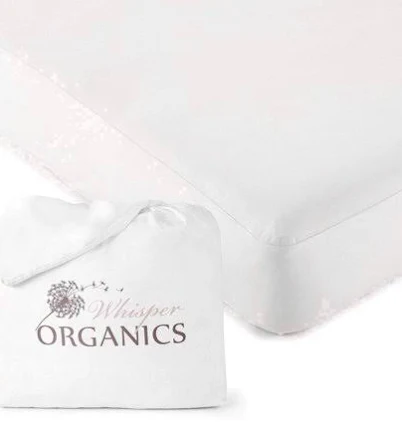
Organic Waterproof Jersey Knit Mattress Cover, Is It Non-Toxic?
Avoid until the brand discloses its waterproofing formula.
Waterproof mattress covers almost always rely on water-repellent coating treatments, many containing PFAS, but this brand gives no information. The organic label applies only to the knit base, not the waterproofing.
The better-graded swap
Avocado Green Mattress
Organic Cotton Mattress Pad Protector
85/100 safety
Same rubric that flunked this product. The swap earned Excellent.
Still want this one anyway? Check the price on Amazon. We’d swap it.
Material
Jersey knit with waterproof coating (unspecified)
Brand disclosure
Brand is silent on PFAS
Lab data
No public lab test
You may also be interested in
Top-graded picks in the categories readers replace first, every one scored on the same rubric.

- polypropylene filter housing, carbon/sediment cartridge
- We found no PFAS statement from the brand
- Bacterial growth in spent cartridges
3 hazards checked on this product, all on its full breakdown.

Aquasure
Premier Series 75 GPD Under Sink Reverse Osmosis Water Filtration System
- RO membrane, carbon filters, stainless steel housing
- We found no PFAS statement from the brand
- Bacterial and microbial growth in housing and filters
4 hazards checked on this product, all on its full breakdown.

Avocado
Vegan Mattress
- organic cotton, natural latex, coconut coir, recycled steel coils
- The brand calls it PFAS-free, which we have not verified
- Heavy metals
2 hazards checked on this product, all on its full breakdown.
Is Organic Waterproof Jersey Mattress Cover non-toxic? What it is made of
The product combines a jersey knit fabric (soft, breathable cotton or cotton-blend base) with an unspecified waterproof coating applied to one side. Jersey knit itself is a standard, low-hazard textile. The critical unknown is the waterproof layer, industry-standard coatings for mattress protectors typically use either Teflon-type coating (Teflon-type), polyurethane, or fluorochemical compounds (PFAS-based). Without disclosure, the coating chemistry cannot be assessed for leaching, off-gassing, or degradation risks.
What’s concerning
Category baseline
The starting point for this type of product, before anything specific to this product is counted.
No PFAS disclosure
No public statement from the brand about PFAS in this product.
Waterproof / stain-resistant treatment
Water-repellent coating treatments have historically used PFAS.
PFAS
Unspecified coating is statistically likely fluorinated given the mattress protector category and brand silence. No label or third-party test data available to confirm or rule out PFAS.
Source, ATSDR ↗Polyurethane coating off-gassing and degradation
If the waterproof layer is polyurethane-based (a common alternative), new covers may release volatile organic compounds (VOCs) with a chemical odor. Degradation over time can increase leachate exposure to the sleeper.
Teflon-type coating (Teflon) fume risk at elevated temperature
If Teflon-type coating-coated, the product presents lower concern under normal use; however, machine drying above 140 degrees Fahrenheit or accidental heat exposure can trigger off-gassing. Risk is low in typical laundering but worth awareness.
What’s reassuring
Formaldehyde / VOCs
Jersey knit does not typically require formaldehyde-based finishing, and the organic claim suggests avoidance of such chemistry for the base fabric. No specific reports for this brand.
Source, ATSDR ↗Heavy metals
No data suggests this product uses problematic dyes. Jersey knit is typically undyed or lightly dyed; the organic claim reduces likelihood of heavy metal pigments.
Source, FDA ↗How is this PFAS grade calculated?
The brand's record and disclosure
The brand markets this as organic, which applies only to the base jersey knit fabric, not the waterproof coating. The brand has not publicly disclosed the waterproofing formula, manufacturing standards for the coating, or certifications (such as OEKO-TEX or Cradle to Cradle) that would verify coating safety. This silence is a red flag in a category where PFAS use is common and increasingly scrutinized. No major recalls are on record, but absence of disclosure prevents independent verification of coating safety.
How it compares in its category
Mattress protectors vary widely in coating choice. Premium brands (e.g., Allswell, Helix) have begun disclosing PFAS-free or low-fluorine coatings; some use Teflon-type coating with transparency on replacement intervals. Budget and mid-tier brands often use undisclosed fluorochemical waterproofing, making the brand' silence typical but not defensible for a product marketed as organic. Comparing on disclosed safety is difficult; this product ranks lower than competitors with explicit PFAS-free claims.
If you buy it
Before purchase, contact the brand directly and request the waterproofing agent name and any third-party test reports. Wash the cover separately in cool water before first use to reduce any volatile off-gassing. Avoid machine drying on high heat, as it may degrade the coating and increase leaching. Replace every 3-5 years or if the waterproof layer shows peeling, flaking, or reduced water resistance; degraded coatings are a leaching risk.
What is not known about PFAS in this product?
- Basis
- Model estimate, 45% confidence, not a lab result
- Lab test
- None on record for this exact product
- Brand statement
- has made none
Formulations change between production runs, so check the current label. How we grade.
What are the PFAS-free alternatives to Organic Waterproof Jersey Knit Mattress Cover?
- organic cotton
- We found no PFAS statement from the brand
- No PFAS statement found from the brand
- Organic cotton
- We found no PFAS statement from the brand
- Waterproofing chemical exposure
2 hazards checked on this product, all on its full breakdown.
- 100% linen, no reported coating
- We found no PFAS statement from the brand
- Heavy metals
3 hazards checked on this product, all on its full breakdown.
More mattress protectors grades
How we score, every product runs through the same public 0-100 rubric based on materials, coatings, brand disclosure, lab findings, and recalls. See the full methodology → Spotted a mistake? Report an error.