OXO · Parchment Paper & Baking Liners
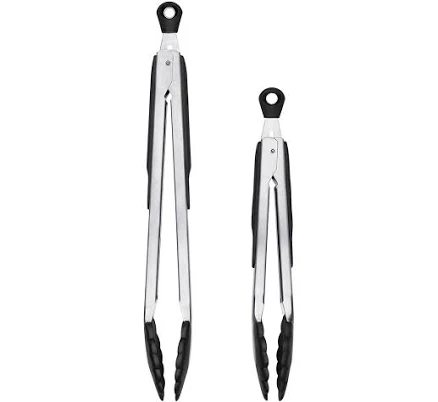
OXO Good Grips 2-Piece Tongs with Nylon Heads
Reduced risk from nylon and stainless steel materials that naturally avoid PFAS.
Stainless steel and nylon don't typically house PFAS chemicals. OXO makes no public commitment to PFAS avoidance, but materials alone suggest limited worry.
The better-graded swap
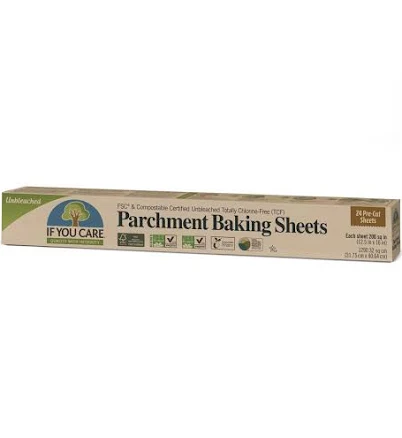
If You Care
If You Care Parchment Baking Sheets
90/100 safety
Same rubric that flunked this product. The swap earned Excellent.
Still want this one anyway? Check the price on Amazon. We’d swap it.
Material
Stainless steel tongs with nylon heads
Lab data
No public lab test
What OXO Good Grips 2-Piece Tongs with Nylon is made of, ingredients and materials
These tongs pair stainless steel handles with nylon heads. Stainless steel is inherently inert and does not leach metals into food or cookware during normal use. Nylon is a thermoplastic polymer that softens above approximately 200°C (392°F), making it appropriate for non-extreme cooking tasks like tossing salads or serving. The nylon heads are not bonded with Teflon-type coating (Teflon) or other fluorinated coatings, eliminating fume risk from overheating.
What’s concerning
No PFAS disclosure
No public statement from the brand about PFAS in this product.
Category baseline
The starting point for this type of product, before anything specific to this product is counted.
Nylon thermal degradation
Nylon heads will soften and warp if exposed to sustained heat above 200°C or direct flame. At extreme temperatures, polymer chains can fragment, though food contact is unlikely during normal tossing or serving tasks.
Corrosion and microbial growth at handle-head joint
The junction between stainless steel and nylon can trap moisture if not dried thoroughly, potentially creating a site for mold or rust over extended storage. This is a durability issue rather than acute toxicity but can eventually compromise the tool.
What’s reassuring
Base material not linked to PFAS
The main material recorded for this product is not one associated with PFAS.
Stainless steel nickel content
Stainless steel contains nickel (typically 8-12% in 18/8 grades), but the tongs do not contact food directly; the nylon heads are the food-facing surface. No leaching or contact dermatitis risk is reported for this product.
Lead
OXO cookware and utensils are not known to contain lead or cadmium in their stainless steel components. No recalls or public warnings exist for this product line on heavy metal contamination.
Source, ATSDR ↗Polymerization residues or additives in nylon
Food-grade nylon typically contains minimal residual monomers or harmful plasticizers, and no specific contamination has been reported for OXO's tongs. The nylon head is not intended for prolonged direct food contact (unlike storage containers), reducing exposure risk.
The full breakdown
The brand's record and disclosure
OXO is owned by Helen of Troy Limited and has maintained a reputation for kitchen safety without major product recalls or disclosed chemical controversies in the cookware segment. The brand does not publicize detailed material safety certifications for this product, but stainless steel and nylon are commodity materials with well-understood safety profiles in food contact. OXO's silence on PFAS is typical for cookware brands using non-coated metals and standard polymers, as PFAS is primarily a concern in non-stick and water-resistant finishes that this product lacks.
How it compares in its category
Nylon-headed tongs present lower concern compared to silicone (which can leach oligomers when heated to high temperatures) or wooden handles (which can harbor bacteria if not dried properly). Stainless steel construction is standard for cookware hardware and shows lower concern for leaching compared to aluminum or ceramic-coated alternatives, with greater durability. This product is functionally equivalent to store-brand stainless steel tongs at similar or lower cost, with no material disadvantage.
If you buy it
Avoid using these tongs with temperatures exceeding 200°C or directly over open flame, as the nylon heads will degrade. Hand-wash promptly and dry fully after use to prevent water pooling at the nylon-steel joint, which can cause corrosion or mold growth over years of use. Replace the tongs if the nylon becomes cracked, discolored, or brittle, as degraded polymer fragments may shed into food. Stainless steel handles require no special maintenance but can develop fingerprints or discoloration that does not affect safety.
What we don’t know
- Basis
- Model estimate, 78% confidence, not a lab result
- Lab test
- None on record for this exact product
- Brand statement
- OXO has made a specific claim
Formulations change between production runs, so check the current label. How we grade.
Better-graded alternatives in Parchment Paper & Baking Liners
If You Care
Baking Paper, Parchment, 70 Square Feet
- silicone-coated parchment paper
- The brand calls it PFAS-free, which we have not verified
- Paper degradation and particulate shedding
If You Care
Parchment Baking Sheets
- unbleached paper with silicone coating
- The brand calls it PFAS-free, which we have not verified
- Silicone coating degradation at high heat
If You Care
Parchment Baking Sheets
- bleached paper with silicone coating
- The brand calls it PFAS-free, which we have not verified
- Paper degradation and fragmentation
More parchment paper & baking liners grades
How we score, every product runs through the same public 0-100 rubric based on materials, coatings, brand disclosure, lab findings, and recalls. See the full methodology → Spotted a mistake? Report an error.