OXO · Parchment Paper & Baking Liners
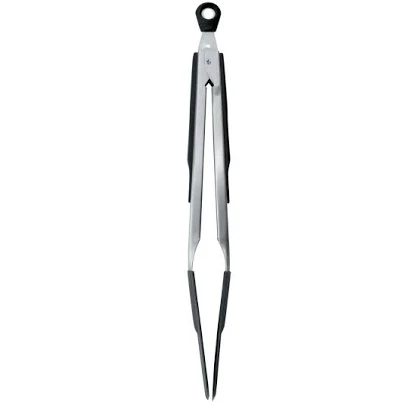
OXO Good Grips Silicone Flexible Tongs
Reduced risk since silicone doesn't need PFAS to function.
These silicone tongs skip water-repellent coatings and nonstick treatments entirely. Silicone itself doesn't trap PFAS, though OXO keeps quiet about their practices.
The better-graded swap
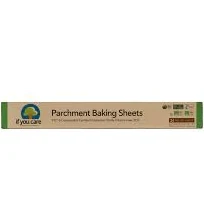
If You Care
Parchment Baking Sheets
90/100 safety
Same rubric that flunked this product. The swap earned Excellent.
Still want this one anyway? Check the price on Amazon. We’d swap it.
Material
silicone with stainless steel handle
Lab data
No public lab test
What OXO Good Grips Silicone Flexible Tongs is made of, ingredients and materials
OXO Good Grips Silicone Flexible Tongs consist of food-grade silicone heads bonded to a stainless steel handle. Silicone is an inert polymer that does not require fluorinated water-repellent coatings (the main vector for PFAS in cookware) and is chemically stable across normal cooking temperatures. The stainless steel handle eliminates aluminum and carbon-steel leaching risks. This material pairing avoids nearly all hazard vectors tied to traditional nonstick or enameled cookware.
What’s concerning
Category baseline
The starting point for this type of product, before anything specific to this product is counted.
No PFAS disclosure
No public statement from the brand about PFAS in this product.
Stainless steel handle corrosion or nickel leaching
Stainless steel can release trace nickel, especially if scratched or exposed to acidic foods repeatedly. Risk is minimal in tongs (limited contact time, no heating of the handle itself) but sensitive individuals should be aware. Rinse promptly after use and avoid prolonged contact with vinegar or citric acid.
Thermal degradation of silicone at extreme temperatures
If used repeatedly near open flames or at temperatures well above the product's rating, silicone can degrade, become brittle, or shed particles. This is a use-error hazard, not a design flaw, and is easily avoided by respecting stated temperature limits.
Joint degradation or separation
User reports over years indicate occasional silicone-to-metal separation at the grip joint, typically after years of dishwasher use or thermal cycling. This is a durability rather than a safety issue but can allow food debris to accumulate in the gap.
What’s reassuring
Base material not linked to PFAS
The main material recorded for this product is not one associated with PFAS.
Silicone leaching (general)
Food-grade silicone approved for direct food contact does not leach toxic compounds under normal cooking conditions. No credible reports of harmful leaching from OXO silicone utensils exist in available literature.
Lead
Stainless steel cookware hardware from established US and European manufacturers does not use lead or cadmium coatings. OXO's supply chain is not known to source from suppliers with documented heavy-metal violations; no recalls or testing failures have been made public.
Source, ATSDR ↗The full breakdown
The brand's record and disclosure
OXO does not publicly disclose PFAS testing or make explicit PFAS-free claims on product packaging or marketing materials, reflecting industry-wide silence on this issue. The company has no published recalls for toxic leaching, off-gassing, or coating breakdown in silicone utensils. OXO's reputation is built on ergonomic design and material durability rather than chemical transparency, but no credible reports of contamination or safety failures exist for this product line.
How it compares in its category
Silicone tongs present lower concern than traditional nonstick tongs (which may shed Teflon-type coating or leach older fluorinated polymers if scratched) and offer superior heat tolerance and durability compared to wooden or plastic alternatives. OXO's stainless-steel core avoids the aluminum-leaching risk of some aluminum-handled utensils. They represent a category-leading material choice where hazard concerns are minimal and largely avoided by design rather than managed through warnings or restrictions.
If you buy it
Use up to the manufacturer's temperature rating (typically 400-600°F depending on silicone grade) without risk of chemical degradation. Hand wash or use low-heat dishwasher cycles to extend the life of the grip; silicone can warp under sustained high heat. Inspect regularly for tears or separation at the handle joint; a damaged seal is the primary failure mode, after which replacement is advised. Store away from direct heat sources and prolonged sunlight to prevent material embrittlement over years of use.
What we don’t know
- Basis
- Model estimate, 78% confidence, not a lab result
- Lab test
- None on record for this exact product
- Brand statement
- OXO has made a specific claim
Formulations change between production runs, so check the current label. How we grade.
Better-graded alternatives in Parchment Paper & Baking Liners
If You Care
Baking Paper, Parchment, 70 Square Feet
- silicone-coated parchment paper
- The brand calls it PFAS-free, which we have not verified
- Paper degradation and particulate shedding
If You Care
Parchment Baking Sheets
- unbleached paper with silicone coating
- The brand calls it PFAS-free, which we have not verified
- Silicone coating degradation at high heat
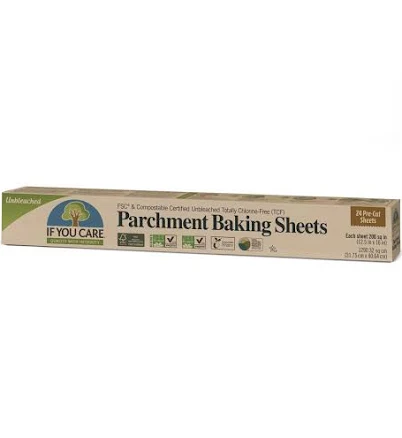
If You Care
Parchment Baking Sheets
- bleached paper with silicone coating
- The brand calls it PFAS-free, which we have not verified
- Paper degradation and fragmentation
More parchment paper & baking liners grades
How we score, every product runs through the same public 0-100 rubric based on materials, coatings, brand disclosure, lab findings, and recalls. See the full methodology → Spotted a mistake? Report an error.