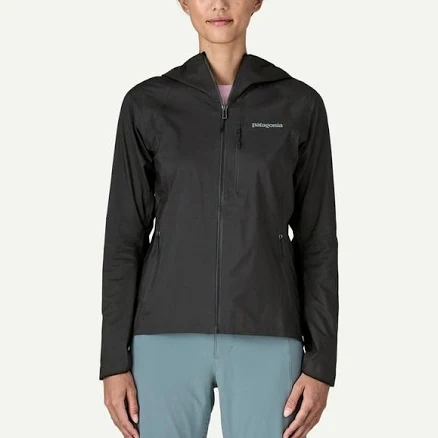
Patagonia · Cycling Rain Jackets
Patagonia Trail Craft Jacket Women's
A water-repellent or grease-resistant treatment of unstated chemistry, with a brand PFAS statement we have not verified.
Patagonia says 100% of its new products from Spring 2025 are made without intentionally added PFAS. We record that as an unverified brand claim. Its record describes a water-repellent or grease-resistant treatment of unstated chemistry, which is still counted.
Brand says: “Patagonia says 100% of its new products from Spring 2025 are made without intentionally added PFAS.”
Still want this one anyway? Check the price on Amazon. We’d swap it.
Material
nylon with water-repellent coating finish
Brand disclosure
Brand claims PFAS-free
Lab data
No public lab test
What Patagonia Trail Craft Jacket Women's is made of, ingredients and materials
The Trail Craft Jacket is constructed from nylon with a water-repellent coating (water-repellent coating) finish. Nylon itself is a stable synthetic polymer with no documented leaching hazard under normal wear conditions. The water-repellent coating treatment is the chemistry in question, Patagonia claims PFAS-free formulation, but the specific replacement chemistry (likely fluorocarbon-free or silicone-based) is not disclosed, making independent verification of the water-repellency mechanism impossible from public information.
What’s concerning
Waterproof / stain-resistant treatment
Water-repellent coating treatments have historically used PFAS.
Category baseline
The starting point for this type of product, before anything specific to this product is counted.
water-repellent coating degradation and re-treatment chemical exposure
As the water-repellent coating finish wears, users may apply aftermarket water-repellent treatments, which may contain PFAS or other hazardous chemistry depending on the product chosen. The jacket itself poses no documented hazard from coating breakdown, but maintenance reapplication introduces variable exposure risk.
Heat sensitivity of nylon and water-repellent coating
Nylon melts above 260°C and synthetic water-repellent coating coatings degrade under sustained high heat. Machine drying on high heat or exposure to direct flame during cycling (rare but possible near grills or campfires) could damage the jacket and potentially release coating particles. Proper care instructions minimize this risk.
Unverified water-repellent coating chemistry hazard profile
The specific water-repellent coating agent is not disclosed, and Patagonia's PFAS-free claim lacks independent verification or certification label. Without naming the replacement chemistry, consumers cannot assess whether it poses alternative hazards such as silicone accumulation, non-PFAS fluorocarbons, or other emerging water-repellent compounds.
What’s reassuring
Brand-stated PFAS-free
The brand states this product is PFAS-free. We have not verified the claim.
Formaldehyde / VOCs
Nylon apparel sometimes undergoes finishes involving formaldehyde-based resins for wrinkle resistance or shape retention. No public recall or test data indicates this jacket contains such resins, and Patagonia's quality standards typically screen for this. No evidence suggests a hazard here, but it is a known category risk in textiles.
Source, ATSDR ↗Azo dyes in nylon coloring
Nylon can be dyed with azo colorants that break down into hazardous amines. Patagonia applies stricter dye standards than industry minimums, and no established recall or complaint data for this product indicates problematic dyes. Standard textile safety expectations are likely met.
The full breakdown
The brand's record and disclosure
Patagonia has publicly committed to phasing out PFAS from its product lines and has published some supply-chain transparency reports. However, the specific water-repellent coating agent in the Trail Craft Jacket is not named in publicly available product documentation, which prevents third-party verification of the PFAS-free claim. The brand has not faced a major recall related to this product for chemical hazards, but its general disclosure practices on coating chemistry lag behind full transparency standards.
How it compares in its category
Cycling rain jackets typically use either PFAS-based water-repellent coating (still industry standard), fluorocarbon alternatives not linked to PFAS, or silicone-based water repellents. The Trail Craft occupies the marketing middle ground, claiming PFAS avoidance while not specifying the replacement. Competitors such as Gore-Tex jackets often disclose their treatment chemistry more clearly, giving consumers more basis for informed choice.
If you buy it
Wash the jacket according to care instructions before first wear to remove any residual coating dust or processing chemicals. Avoid machine drying on high heat, as synthetic coatings can degrade; air-dry or use low heat. Reapply water-repellent coating treatment (using a PFAS-free alternative if available) every 1-2 years as the finish wears down. If the jacket loses water beading or shows visible coating wear, replacement of the water-repellent coating treatment is more practical than discarding the jacket.
What we don’t know
- Basis
- Model estimate, 42% confidence, not a lab result
- Lab test
- None on record for this exact product
- Brand statement
- Patagonia has made a specific claim
Formulations change between production runs, so check the current label. How we grade.
More cycling rain jackets grades
How we score, every product runs through the same public 0-100 rubric based on materials, coatings, brand disclosure, lab findings, and recalls. See the full methodology → Spotted a mistake? Report an error.