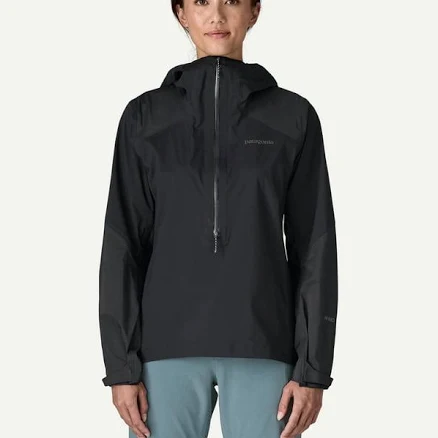
Patagonia · Cycling Rain Jackets
Patagonia Women's Dirt Roamer Storm Jacket
A water-repellent or grease-resistant treatment of unstated chemistry, with a brand PFAS statement we have not verified.
Patagonia says 100% of its new products from Spring 2025 are made without intentionally added PFAS. We record that as an unverified brand claim. Its record describes a water-repellent or grease-resistant treatment of unstated chemistry, which is still counted.
Brand says: “Patagonia says 100% of its new products from Spring 2025 are made without intentionally added PFAS.”
Still want this one anyway? Check the price on Amazon. We’d swap it.
Material
polyester shell with water-repellent coating finish
Brand disclosure
Brand claims PFAS-free
Lab data
No public lab test
What Patagonia Women's Dirt Roamer Storm Jacket is made of, ingredients and materials
The Dirt Roamer uses a polyester shell (likely woven or knit) treated with a water-repellent coating (water-repellent coating) finish. Polyester itself is chemically stable and does not leach under normal wear or laundering. The water-repellent coating finish is where chemical risk concentrates, it creates a hydrophobic barrier on fabric fibers. Patagonia states the jacket is PFAS-free, but the specific water-repellent coating chemistry (fluorocarbon-free alternative, silicone-based, or other) is not disclosed in public materials reviewed.
What’s concerning
Waterproof / stain-resistant treatment
Water-repellent coating treatments have historically used PFAS.
Category baseline
The starting point for this type of product, before anything specific to this product is counted.
Azo dyes and color fastness
Polyester shell is typically dyed with disperse or acid dyes. High-quality manufacturers like Patagonia generally avoid banned azo dyes, but color ingredients are not publicly itemized. Risk is low for skin contact in normal wear, moderate only if garment bleeds significantly onto skin in wet conditions.
Antimony in polyester fiber
Antimony trioxide is used as a catalyst in polyester synthesis and can remain as a residue in fiber. Levels in finished garments are typically low and non-bioavailable during wear. No specific data on Patagonia Dirt Roamer antimony content; risk increases only if garment is cut, burned, or heavily damaged and fibers enter skin or lungs.
water-repellent coating degradation and re-treatment chemicals
Over time, water-repellent coating finishes wear away through washing and abrasion. Commercial water-repellent coating reapplication products (sprays, washes) often contain PFAS or other fluorocarbons, creating secondary exposure if applied by the user. Patagonia does not explicitly guide consumers on re-treatment options that avoid PFAS-based chemistries.
Unverified water-repellent coating chemistry
The specific water-repellent treatment on this jacket is not named in Patagonia's public product literature. Alternatives to PFAS-based water-repellent coating finishes include silicone, wax, and other chemistries, each with different environmental and toxicological profiles. Without disclosure, consumers cannot assess the actual chemical safety or durability trade-offs of the alternative chosen.
What’s reassuring
Brand-stated PFAS-free
The brand states this product is PFAS-free. We have not verified the claim.
Formaldehyde / VOCs
Polyester does not require formaldehyde-based resins for structure or finishing. No formaldehyde finishing agents are standard in modern rain jacket manufacture unless explicitly added; no record of use in Patagonia products.
Source, ATSDR ↗The full breakdown
The brand's record and disclosure
Patagonia has made a public commitment to eliminate PFAS from all products by 2025 and has published detailed sustainability reports. However, independent verification of water-repellent coating chemistry for specific products like this jacket is not routinely available to consumers. The brand's reputation for environmental accountability is strong, but the claim remains unverified by third-party testing on this model. Consumers relying on the PFAS-free statement should request current technical specifications from the manufacturer if high assurance is needed.
How it compares in its category
Most cycling rain jackets in this segment use polyester with water-repellent coating treatments; many major brands still use legacy PFAS-based formulations. Patagonia's stated commitment to PFAS alternatives aligns it with market leaders seeking lower-concern chemistries. However, without independent confirmation of the water-repellent coating agent in this specific model, it sits in the middle of the category, better on brand promise than many competitors, but less transparent than brands publishing detailed material safety data sheets. Price and durability typically exceed competitors, offsetting some chemical uncertainty.
If you buy it
Wash separately in cool water with mild detergent to preserve the water-repellent coating finish; hot water and bleach can degrade it. Avoid prolonged heat (dryers) which may impair water repellency. Reapply water-repellent coating treatment every 1-2 years of regular use or after water-repellent coating performance visibly declines (water beading poorly). Before purchase, contact Patagonia directly to confirm the current water-repellent coating chemistry if you have PFAS sensitivity or allergy concerns, as formulations can change without public announcement.
What we don’t know
- Basis
- Model estimate, 72% confidence, not a lab result
- Lab test
- None on record for this exact product
- Brand statement
- Patagonia has made a specific claim
Formulations change between production runs, so check the current label. How we grade.
More cycling rain jackets grades
How we score, every product runs through the same public 0-100 rubric based on materials, coatings, brand disclosure, lab findings, and recalls. See the full methodology → Spotted a mistake? Report an error.