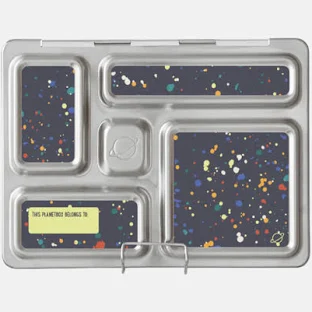
Rover Stainless Steel Lunch Box Set
No coating of concern recorded, and no PFAS statement from the brand.
The brand has published no PFAS statement for this product that we could find.
We flunk more products than we pass. This one earned its grade. How we grade
Material
stainless steel container, BPA-free plastic compartments
Brand disclosure
Brand is silent on PFAS
Lab data
No public lab test
What Rover Stainless Steel Lunch Box Set is made of, ingredients and materials
The Planetbox Rover uses a stainless steel outer container, which is chemically inert and does not leach metals or off-gas under normal food storage conditions. The compartment dividers are stated to be BPA-free plastic; stainless steel itself is food-safe and commonly used in food-contact applications without concerns for lead, cadmium, or aluminum leaching. The combination of these materials avoids the primary chemical hazards associated with coated cookware or polycarbonate food storage.
What’s concerning
No PFAS disclosure
No public statement from the brand about PFAS in this product.
Category baseline
The starting point for this type of product, before anything specific to this product is counted.
BPA & bisphenols
While BPA is absent, the specific replacement plastic additives (e.g., BPS, other bisphenols, or phthalates) are not disclosed by the brand. Repeated heating or scratching of the plastic compartments could increase leaching risk, though no specific failures are documented for this product.
Source, FDA ↗Plastic compartment seal failure and mold growth
If seals or compartments crack or do not dry fully between uses, moisture can accumulate and promote bacterial or mold growth in concealed areas. This is a maintenance and usage issue rather than a material hazard, but relevant to food safety over time.
What’s reassuring
Bare uncoated material
Recorded as a bare, uncoated material with no surface coating or treatment.
Stainless steel nickel content
Food-grade stainless steel (typically 300-series) contains nickel, which can migrate into acidic foods in trace amounts. Standard food-contact stainless does not pose a hazard for most consumers, and Planetbox does not indicate non-standard composition; nickel migration from lunch boxes is not a documented safety issue.
Lead
Food-grade stainless steel is regulated for food contact and does not intentionally contain lead or cadmium; no recalls or testing failures for this product exist on record. This is a hazard class for some cookware but not a documented concern for stainless lunch boxes.
Source, ATSDR ↗Off-gassing or volatile organic compounds (VOCs)
Stainless steel does not off-gas; the plastic compartments may emit trace VOCs during manufacturing and early use, but this is not specific to Planetbox and diminishes rapidly with airing. No strong odor complaints or off-gassing incidents are documented for this product.
The full breakdown
The brand's record and disclosure
Planetbox has not published explicit PFAS statements or third-party certifications (such as NSF or FDA food-contact testing) that are readily available in public records. The brand markets the product as BPA-free, which is a common baseline claim but does not address other plastic additives or manufacturing processes. No recalls or safety controversies specific to this product line are documented in FDA or CPSC databases.
How it compares in its category
Stainless steel lunch boxes are not a material linked to PFAS, unlike non-stick coatings, glazed ceramics, or some plastics that may contain these chemicals. Most competitors in the mid-range lunch box market either use plastic bodies (higher leaching and off-gassing risk) or coated aluminum (wear-through potential). The Planetbox Rover's all-stainless design and BPA-free plastics position it as a lower-risk option, though competing stainless brands (e.g., Klean Kanteen) may offer equivalent safety at similar price points.
If you buy it
Hand wash the stainless steel body and plastic compartments rather than using a dishwasher, as repeated high-heat cycles can degrade plastic seals over time. Avoid exposing the BPA-free plastic dividers to prolonged heat (above 140°F or 60°C) to prevent warping or potential leaching of replacement additives. Inspect plastic seals and compartments annually for cracks, discoloration, or deformation, and replace them if damage occurs. The stainless steel itself requires no special care beyond normal washing and occasional drying to prevent spotting.
What we don’t know
- Basis
- Model estimate, 78% confidence, not a lab result
- Lab test
- None on record for this exact product
- Brand statement
- Planetbox has made none
Formulations change between production runs, so check the current label. How we grade.
Better-graded alternatives in Lunch Boxes
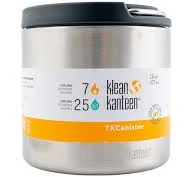
Klean Kanteen
Double Wall Vacuum Insulated Stainless Steel Food Canister Container with Leak Proof Lid
- Stainless steel body, silicone gasket lid seal
- The brand calls it PFAS-free, which we have not verified
- Silicone gasket degradation
3 hazards checked on this product. See all of them.
More lunch boxes grades
How we score, every product runs through the same public 0-100 rubric based on materials, coatings, brand disclosure, lab findings, and recalls. See the full methodology → Spotted a mistake? Report an error.