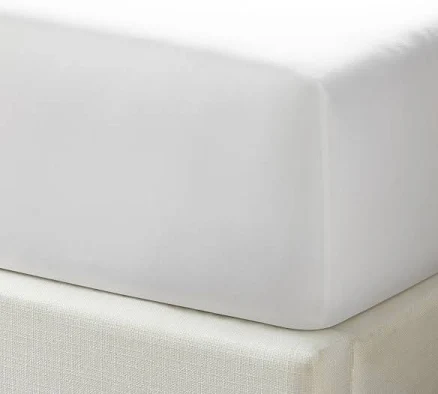
Pottery Barn · Stain-Resistant Bed Sheets
Pottery Barn Retreat Essential Percale Fitted Sheet
Lower PFAS concern; plain cotton sheets typically don't require chemical treatments.
Retreat Essential Percale uses 100% cotton in a standard weave with no applied water-resistant or stain-resistant coating disclosed. Plain woven cotton naturally avoids high PFAS exposure.
We flunk more products than we pass. This one earned its grade. How we grade
Material
100% cotton percale weave
Lab data
No public lab test
You may also be interested in
Top-graded picks in the categories readers replace first, every one scored on the same rubric.

- polypropylene filter housing, carbon/sediment cartridge
- We found no PFAS statement from the brand
- Bacterial growth in spent cartridges
3 hazards checked on this product, all on its full breakdown.

Aquasure
Premier Series 75 GPD Under Sink Reverse Osmosis Water Filtration System
- RO membrane, carbon filters, stainless steel housing
- We found no PFAS statement from the brand
- Bacterial and microbial growth in housing and filters
4 hazards checked on this product, all on its full breakdown.

Avocado
Vegan Mattress
- organic cotton, natural latex, coconut coir, recycled steel coils
- The brand calls it PFAS-free, which we have not verified
- Heavy metals
2 hazards checked on this product, all on its full breakdown.
What Pottery Barn Retreat Fitted Sheet is made of, ingredients and materials
Pottery Barn Retreat Essential sheets are 100% cotton in a percale weave, which is a tightly woven plain-weave fabric naturally crisp and durable. Percale cotton requires no chemical finishes to achieve its texture or performance, unlike sateen or wrinkle-resistant sheets that often carry durable-press resins (formaldehyde-based) or stain-resistant coatings (PFAS). The material chemistry here is straightforward, cellulose fibers with minimal synthetic treatment. This construction means fewer chemical additives migrating to skin during sleep or washing.
What’s concerning
Category baseline
The starting point for this type of product, before anything specific to this product is counted.
No PFAS disclosure
No public statement from the brand about PFAS in this product.
Azo dyes and colorant toxicity
The Retreat Essential sheets are available in multiple colors. Azo dyes used in cotton textiles can break down to aromatic amines under certain laundry conditions; however, Pottery Barn does not disclose dye chemistry, and no recalls for this product exist. Risk is typical for mass-market colored cotton and mitigated by pre-washing.
Pesticide residue
Pottery Barn does not specify whether cotton is organic or conventionally grown. Conventional cotton may carry trace pesticide residues; these are typically removed or degraded during manufacturing and washing, but cannot be ruled out without crop certification or third-party testing.
Source, EPA ↗Microplastic shedding or fiber degradation
Percale weave is tight and durable, so microplastic release is lower than for loose weaves or blended synthetics. Pilling may occur over time with friction, but this is a durability issue rather than a safety hazard specific to this product.
What’s reassuring
Base material not linked to PFAS
The main material recorded for this product is not one associated with PFAS.
Formaldehyde / VOCs
Percale weave requires no durable-press chemical finishes, so formaldehyde-releasing resins are not a known component of this product. Standard cotton percale achieves its texture through mechanical weaving, not chemistry.
Source, ATSDR ↗Heavy metals
No testing or recalls on record for Pottery Barn bedding. Cotton percale is not typically finished with pigment-based coatings that carry antimony or lead risk; natural and synthetic dyes used on cotton are generally heavy-metal-screened by manufacturers, though independent verification is absent for this brand.
Source, FDA ↗How is this PFAS grade calculated?
The brand's record and disclosure
Pottery Barn does not publicly disclose detailed chemical composition or testing results for its bedding line, nor does it hold third-party certifications like Oeko-Tex or GOTS that would independently verify absence of restricted substances. The brand has no documented recalls or contamination incidents for this sheet product line. Pottery Barn's silence on PFAS and formaldehyde testing is typical of mainstream home goods retailers and does not indicate problems, but it also means consumers lack transparency on finish treatments applied post-manufacturing.
How it compares in its category
Basic cotton percale sheets from mass-market retailers (Pottery Barn, Bed Bath & Beyond, Amazon Basics) have lower concern than heavily treated wrinkle-resistant or stain-resistant variants, but less verification than certified organic or third-party tested alternatives (Parachute, Avocado, Coyuchi). Percale's natural crisp hand means no chemical finishes are needed to market the product, unlike sateen sheets which often carry more processing. This product avoids the worst-case scenario (durable stain or wrinkle finishes) but offers no certification assurance either.
If you buy it
Wash sheets 2-3 times before first use to remove loose dyes and residual processing agents; warm water (not hot) is sufficient and extends fiber life. Avoid chlorine bleach, which can degrade cotton and strip treatments; use oxygen bleach if needed. Dry on low to medium heat or air-dry to prevent shrinkage and fiber stress. Replace when fitted corners no longer grip the mattress reliably or when pilling becomes visible, typically after 2-3 years of regular use. Store in a cool, dry place to prevent mold growth.
What is not known about PFAS in this product?
- Basis
- Model estimate, 78% confidence, not a lab result
- Lab test
- None on record for this exact product
- Brand statement
- Pottery Barn has made a specific claim
Formulations change between production runs, so check the current label. How we grade.
More stain-resistant bed sheets grades
How we score, every product runs through the same public 0-100 rubric based on materials, coatings, brand disclosure, lab findings, and recalls. See the full methodology → Spotted a mistake? Report an error.