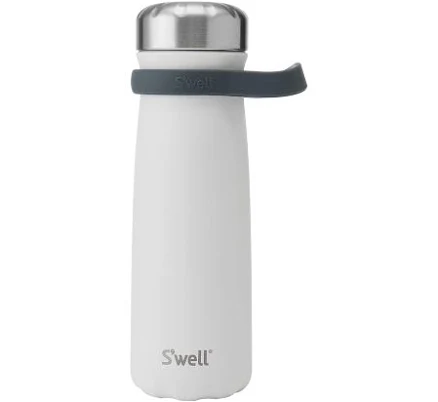
S'well · Insulated Travel Mugs
S'well 40 oz Stainless Steel Traveler
Lower concern. Stainless steel vessel with undisclosed lid chemistry.
The vessel is 18/8 stainless steel with no coating on record. Plastic lid components have undisclosed chemistry and are not linked to PFAS as a material. The brand has no PFAS statement on record.
We flunk more products than we pass. This one earned its grade. How we grade
Material
18/8 stainless steel interior and exterior, plastic lid components
Lab data
No public lab test
You may also be interested in
Top-graded picks in the categories readers replace first, every one scored on the same rubric.

- polypropylene filter housing, carbon/sediment cartridge
- We found no PFAS statement from the brand
- Bacterial growth in spent cartridges
3 hazards checked on this product, all on its full breakdown.

Aquasure
Premier Series 75 GPD Under Sink Reverse Osmosis Water Filtration System
- RO membrane, carbon filters, stainless steel housing
- We found no PFAS statement from the brand
- Bacterial and microbial growth in housing and filters
4 hazards checked on this product, all on its full breakdown.

Avocado
Vegan Mattress
- organic cotton, natural latex, coconut coir, recycled steel coils
- The brand calls it PFAS-free, which we have not verified
- Heavy metals
2 hazards checked on this product, all on its full breakdown.
What S'well 40 oz Stainless Steel Traveler is made of, ingredients and materials
The S'well 40 oz uses 18/8 (304) stainless steel for the vessel interior and exterior, which is food-grade and highly resistant to corrosion and leaching. The lid contains plastic components (material composition not clearly disclosed by brand) that will have direct contact with liquids and lips. 18/8 stainless steel is considered chemically inert under normal use; the main variability is in the plastic lid's durability and what polymers or additives it contains.
What’s concerning
Category baseline
The starting point for this type of product, before anything specific to this product is counted.
No PFAS disclosure
No public statement from the brand about PFAS in this product.
BPA & bisphenols
S'well does not disclose the specific plastic resin or additive chemistry of the lid. While many modern lids use BPA-free polymers, the brand's silence on this makes it impossible to rule out secondary plasticizers or manufacturing additives. Risk increases with hot liquid contact and age.
Source, FDA ↗Plastic lid degradation over time
All plastic lids degrade through repeated thermal cycling, UV exposure, and contact with oils/acids. Visible signs include cloudiness, brittleness, or odor changes. Microplastic shedding is theoretically possible but not documented for this specific product.
Lid seal integrity loss
The seal gasket (typically silicone or rubber) can deteriorate, crack, or harden over 12-24 months of regular use. Loss of seal does not pose a direct safety hazard but compromises the product's core function and may allow bacterial growth in the gasket itself if moisture is trapped.
What’s reassuring
Bare uncoated material
Recorded as a bare, uncoated material with no surface coating or treatment.
Stainless steel corrosion or pitting
18/8 stainless steel is highly corrosion-resistant under normal beverage use. Pitting is extremely rare in food-grade applications and no reported cases exist for S'well vessels. Risk only escalates in extreme chloride environments (salt water) or if the bottle is damaged.
Heavy metals
S'well uses bare stainless steel without enamels, glazes, or colored coatings on the interior, eliminating lead, cadmium, and chromium leaching risks common in lower-quality cookware or drinkware.
Source, FDA ↗How is this PFAS grade calculated?
The brand's record and disclosure
S'well does not publicly disclose detailed material specifications for plastic lid components or provide third-party certifications (BPA-free labeling, FDA compliance statements, etc.), which is uncommon transparency for a premium hydration brand. The company has no widely documented recalls or safety controversies tied to the stainless steel vessel itself. The silence on PFAS and plastic additive composition reflects a broader industry pattern rather than a specific red flag, but limits independent verification.
How it compares in its category
This product sits in the premium stainless steel drinkware segment alongside brands like Hydro Flask and YETI, which similarly use 18/8 stainless steel vessels and face the same plastic-lid transparency gaps. Unlike some lower-cost alternatives, S'well does not use aluminum or bare copper linings that carry leaching risks. The 40 oz size and sealed design reduce exposure to external contamination compared to open-mouth bottles, though the lid remains a potential weak point.
If you buy it
Hand-wash the lid regularly and inspect it for cracks or discoloration, as plastic degradation accelerates with repeated hot-water dishwashing and extended sunlight exposure. Avoid prolonged storage of acidic beverages (citrus, vinegar-based drinks) in contact with the plastic lid, as acidic conditions can leach additives. Replace the lid every 1-2 years if you use the bottle daily, as plastic does degrade; S'well sells replacement lids. The stainless steel vessel itself is durable and does not require replacement under normal use.
What is not known about PFAS in this product?
- Basis
- Model estimate, 78% confidence, not a lab result
- Lab test
- None on record for this exact product
- Brand statement
- S'well has made a specific claim
Formulations change between production runs, so check the current label. How we grade.
What are the PFAS-free alternatives to S'well 40 oz Stainless Steel Traveler?
- stainless steel exterior, ceramic lining interior
- Ceramic coating degradation over time
3 hazards checked on this product, all on its full breakdown.
- Stainless steel body, plastic lid
- We found no PFAS statement from the brand
- Plastic lid polymer identity and leaching potential
3 hazards checked on this product, all on its full breakdown.
More insulated travel mugs grades
How we score, every product runs through the same public 0-100 rubric based on materials, coatings, brand disclosure, lab findings, and recalls. See the full methodology → Spotted a mistake? Report an error.