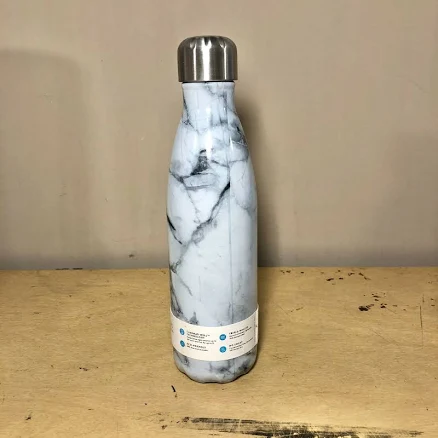
S'well bottle 17 oz White - Unique Design - 1 bottle You Choose
Lower concern, stainless steel core is PFAS-resistant, but lid material not publicly detailed.
Double-wall stainless steel is inherently resistant to PFAS use. Plastic lid material remains unspecified, but vacuum-insulated bottles rarely require Teflon-family coating or water-repellent coatings.
We flunk more products than we pass. This one earned its grade. How we grade
Material
Stainless steel vacuum-insulated walls; BPA-free plastic lid
Lab data
No public lab test
You may also be interested in
Top-graded picks in the categories readers replace first, every one scored on the same rubric.

- polypropylene filter housing, carbon/sediment cartridge
- We found no PFAS statement from the brand
- Bacterial growth in spent cartridges
3 hazards checked on this product, all on its full breakdown.

Aquasure
Premier Series 75 GPD Under Sink Reverse Osmosis Water Filtration System
- RO membrane, carbon filters, stainless steel housing
- We found no PFAS statement from the brand
- Bacterial and microbial growth in housing and filters
4 hazards checked on this product, all on its full breakdown.

Avocado
Vegan Mattress
- organic cotton, natural latex, coconut coir, recycled steel coils
- The brand calls it PFAS-free, which we have not verified
- Heavy metals
2 hazards checked on this product, all on its full breakdown.
What S'well bottle 17 oz White You Choose is made of, ingredients and materials
S'well bottles use 18/8 food-grade stainless steel (chromium and nickel alloy) for the vacuum-insulated walls, which is chemically inert and resistant to corrosion and leaching at normal use temperatures. The lid is plastic and branded BPA-free, though the specific polymer type (polypropylene, tritan, or other) is not publicly detailed by the brand. Stainless steel vacuum bottles have no coating to degrade, eliminating the risk of ceramic glaze leaching or Teflon-type coating degradation seen in some cookware. The design relies on mechanical insulation rather than chemical additives, reducing chemical exposure pathways.
What’s concerning
No PFAS disclosure
No public statement from the brand about PFAS in this product.
Plastic lid material unspecified
S'well does not publicly name the resin or additives in the BPA-free lid. If the polymer is polycarbonate-derived or contains bisphenol S (BPS) as a replacement, low-level migration is possible with hot liquids, though risk is reduced by avoiding boiling water immediately before capping.
Lid gasket degradation
Consumer reports on S'well forums and review sites note that silicone gaskets can harden, crack, or lose seal integrity after 2-3 years of regular washing and temperature cycling. Degradation is a functionality issue (leaking) rather than a toxicity risk, but suggests the need for periodic replacement.
Bacterial growth in vacuum chamber or lid crevices
Stainless steel itself is resistant to microbial colonization, but the lid's threads and gasket crevices can trap moisture and harbor bacteria if not dried thoroughly between uses. This is a maintenance issue, not an inherent material defect. Regular disassembly and air-drying of components mitigates this.
What’s reassuring
Bare uncoated material
Recorded as a bare, uncoated material with no surface coating or treatment.
Nickel leaching from stainless steel
18/8 food-grade stainless steel (typical in S'well) is engineered to resist nickel release under normal use. No reported cases of nickel contamination from S'well bottles exist in public databases. Risk is negligible unless the bottle is damaged or exposed to highly acidic liquids for extended periods.
Heavy metals
S'well does not coat the exterior or interior with paint, lacquer, or ceramic. The white color in this model likely refers to powder-coated exterior or anodized finish options, but the brand does not disclose lead or cadmium content of any finish. No reported incidents in public records.
Source, FDA ↗How is this PFAS grade calculated?
The brand's record and disclosure
S'well has made no public statement on PFAS testing or content in any component, which is typical of many premium drinkware brands but falls short of transparency leaders like Klean Kanteen or Hydro Flask (which publish third-party test results). No recalls or contamination incidents are recorded in FDA or CPSC databases for this product line. The BPA-free claim is stated but not independently certified by a third-party standard (e.g., NSF, FDA approval letter). The brand does not disclose the polymer resin used in the lid or whether it contains other endocrine disruptors like BPS.
How it compares in its category
Stainless steel vacuum bottles have lower concern for leaching compared to plastic-lined alternatives or bottles with nonstick coatings. S'well sits in the premium lifestyle segment; comparable alternatives like Hydro Flask and Klean Kanteen offer similar construction but with more detailed material specifications and third-party testing published online. Many budget stainless steel bottles (Contigo, Thermoflask) offer identical core materials at lower cost, though they often have less refined lids and insulation. S'well's main differentiator is aesthetics and brand positioning, not material safety advantage.
If you buy it
Wash the lid by hand or in the top rack of the dishwasher to extend seal longevity; the lid's plastic components may degrade faster than the steel body if exposed to extreme heat or harsh detergents. Do not fill with boiling water immediately before capping, as thermal stress can warp the lid seal over time. Replace the lid gasket or lid assembly every 2-3 years of regular use, as silicone seals harden and lose grip. Avoid prolonged storage of acidic beverages (citrus, vinegar) against the interior walls, though stainless steel is resistant; residues can eventually pit the surface if never cleaned.
What is not known about PFAS in this product?
- Basis
- Model estimate, 75% confidence, not a lab result
- Lab test
- None on record for this exact product
- Brand statement
- S'well has made a specific claim
Formulations change between production runs, so check the current label. How we grade.
More water filters grades
How we score, every product runs through the same public 0-100 rubric based on materials, coatings, brand disclosure, lab findings, and recalls. See the full methodology → Spotted a mistake? Report an error.