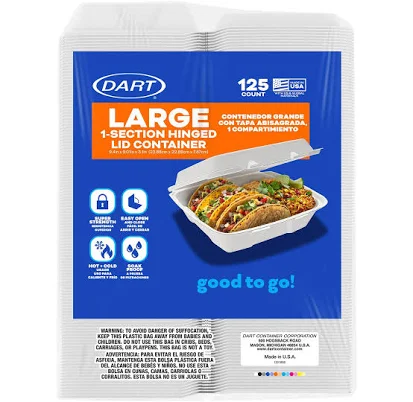
Dart Container · Disposable Food Containers
Dart Insulated Foam Hinged Lid Take Out Container
Probably lower PFAS risk, though coating composition unverified.
Solo foam hinged containers use expanded polystyrene with likely food-contact grease-resistant treatment inside. Composition remains unclear, yet PFOA phaseout makes legacy PFAS less probable. No brand PFAS disclosure exists.
The better-graded swap
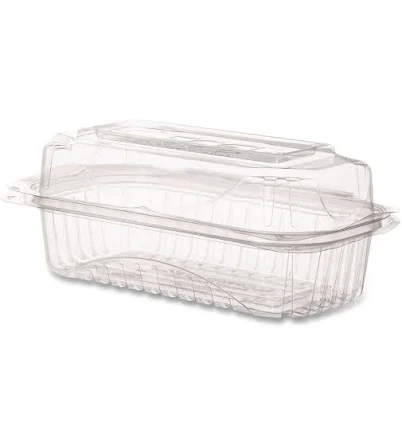
Eco-Products
Eco-Products Compostable Clear Clamshell Hinged Food
100/100 safety
Same rubric that flunked this product. The swap earned Excellent.
Still want this one anyway? Check the price on Amazon. We’d swap it.
Material
expanded polystyrene foam, likely PFOA-free Teflon-family coating grease-resistant coating on interior
Brand disclosure
Brand is silent on PFAS
Lab data
No public lab test
What Dart Insulated Foam Hinged Lid Take Out is made of, ingredients and materials
DART Solo foam hinged containers are expanded polystyrene (EPS), a closed-cell foam plastic commonly used in food service. The interior carries a grease-resistant coating, typically a Teflon-family coating designed to repel oil and moisture without direct PFOA or PFOS addition (though Teflon-family coating families can contain PFAS precursors). Expanded polystyrene itself is stable at room temperature and does not leach phthalates or BPA by formulation, but it is vulnerable to degradation when exposed to heat, oils, or solvents, which can release small plastic fragments.
What’s concerning
Category baseline
The starting point for this type of product, before anything specific to this product is counted.
No PFAS disclosure
No public statement from the brand about PFAS in this product.
Waterproof / stain-resistant treatment
Water-repellent coating treatments have historically used PFAS.
Polystyrene degradation and styrene release
Expanded polystyrene is known to degrade under heat, UV light, and contact with fats or organic solvents, releasing small amounts of styrene monomer and foam particles. This risk increases significantly if the container is microwaved, used for hot foods, or stored with oils; short-term room-temperature use presents minimal risk.
Teflon-family coating migration (unspecified composition)
The interior grease-resistant coating is not publicly identified by Solo beyond 'Teflon-family coating,' leaving open the possibility of minor PFAS precursor or degradation product migration under stress. No published data confirms unsafe migration levels, but coating durability and composition remain unverified.
Microplastic generation from foam fragmentation
Expanded polystyrene is brittle and prone to cracking and flaking, especially at edges or seams. Fragmentation during handling, storage, or food contact can release small polystyrene particles into food; risk is higher with rough handling or hot/acidic contents.
Bacterial contamination from porous foam structure
The microscopic pores and crevices in EPS foam can harbor bacteria if the container is not thoroughly cleaned before reuse (though single-use is recommended). If any reuse occurs, cleaning is difficult and pathogen risk increases.
What’s reassuring
BPA & bisphenols
Expanded polystyrene foam formulations do not require BPA or phthalates as additives and are not known to leach them in published studies. This is not a primary concern for this material class.
Source, FDA ↗The full breakdown
The brand's record and disclosure
Solo (Dart Container Corporation) has not published detailed ingredient or coating specifications for this product line to consumers. The company has faced scrutiny over years regarding food-contact foam safety but has not announced explicit PFAS phase-out commitments or third-party certification for this container. No major recalls specific to chemical leaching from DART foam hinged containers are documented in FDA or CPSC records, but the silent stance on coating composition leaves verification gaps.
How it compares in its category
Polystyrene foam containers occupy the low-cost, high-volume segment of single-use food packaging. They pose lower microplastic and BPA risks than some rigid plastics, but offer less chemical transparency than molded fiber (paper pulp) or PLA (plant-based plastic) alternatives. Compared to coated paperboard or uncoated aluminum, EPS foam containers provide less barrier information and invite more scrutiny around coating durability and migration under stress.
If you buy it
Use for cold or room-temperature foods only; do not microwave or expose to prolonged heat above 160-170°F, as foam degrades and may release styrene and foam particles. Store food for short periods (hours, not days) and inspect the container for visible cracks, brittleness, or discoloration before use. Discard immediately if the foam appears degraded or has been in contact with oils or acidic foods for extended periods. These containers are single-use by design; do not wash and reuse.
What we don’t know
- Basis
- Model estimate, 72% confidence, not a lab result
- Lab test
- None on record for this exact product
- Brand statement
- Dart Container has made none
Formulations change between production runs, so check the current label. How we grade.
Better-graded alternatives in Disposable Food Containers
Eco-Products
Compostable Clear Clamshell Hinged Food
- Compostable resin (PLA/PBAT blend, plant-based)
- A third party reports verifying it as PFAS-free
- Thermal degradation and chemical release at use temperatures
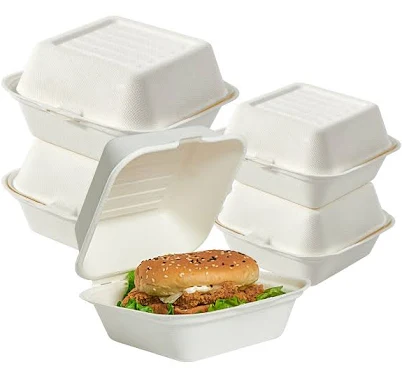
Lipak
ECO- Lipak Wholesale Sugarcane Clamshell To-Go Boxes
- Sugarcane bagasse (compostable fiber)
- We found no PFAS statement from the brand
- Bleaching agents and residual processing chemicals
3 hazards checked on this product. See all of them.
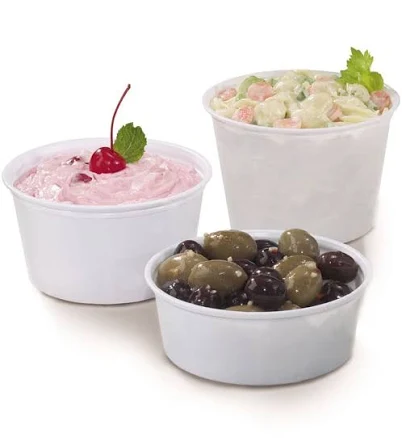
Fabri-Kal
Kal-Tainer 8 Ounce Squat White Container 10 / CS
- polypropylene (PP) container, uncoated
- We found no PFAS statement from the brand
- Microplastics
2 hazards checked on this product. See all of them.
More disposable food containers grades
How we score, every product runs through the same public 0-100 rubric based on materials, coatings, brand disclosure, lab findings, and recalls. See the full methodology → Spotted a mistake? Report an error.