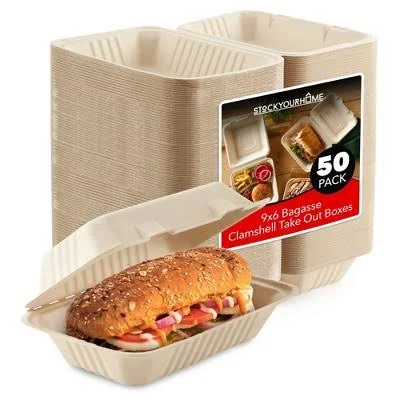
Stock Your Home · Disposable Food Containers
Stock Your Home 6-inch Clamshell Take Out Food Containers
Likely lower PFAS concern, but grease-resistant coating remains unverified.
Hefty clamshells are polypropylene with grease-resistant treatment typical of food packaging. No PFAS claims or third-party testing is disclosed.
The better-graded swap
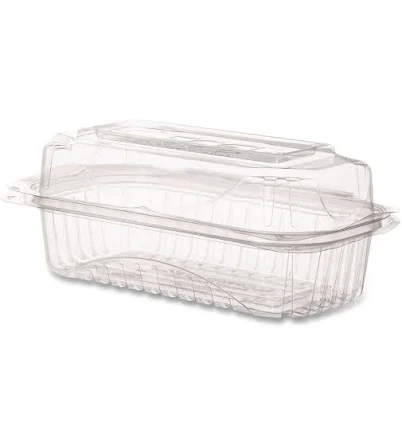
Eco-Products
Eco-Products Compostable Clear Clamshell Hinged Food
100/100 safety
Same rubric that flunked this product. The swap earned Excellent.
Still want this one anyway? Check the price on Amazon. We’d swap it.
Material
Polypropylene (PP) clamshell with grease-resistant coating
Brand disclosure
Brand is silent on PFAS
Lab data
No public lab test
You may also be interested in
Top-graded picks in the categories readers replace first, every one scored on the same rubric.

- polypropylene filter housing, carbon/sediment cartridge
- We found no PFAS statement from the brand
- Bacterial growth in spent cartridges
3 hazards checked on this product, all on its full breakdown.

Aquasure
Premier Series 75 GPD Under Sink Reverse Osmosis Water Filtration System
- RO membrane, carbon filters, stainless steel housing
- We found no PFAS statement from the brand
- Bacterial and microbial growth in housing and filters
4 hazards checked on this product, all on its full breakdown.

Avocado
Vegan Mattress
- organic cotton, natural latex, coconut coir, recycled steel coils
- The brand calls it PFAS-free, which we have not verified
- Heavy metals
2 hazards checked on this product, all on its full breakdown.
What Stock Your Home 6-inch Food Containers is made of, ingredients and materials
Hefty's 6-inch clamshells are polypropylene (PP, #5 plastic), a thermoplastic polymer that is one of the most chemically inert food-contact plastics. PP does not leach BPA, BPS, or phthalates under normal use because its molecular structure does not include those compounds. The "grease-resistant coating" applied to the container interior is not publicly specified by Hefty; if it contains Teflon-type coating (Teflon) or siloxane-based treatments, those are stable at room temperature and during cold storage but are not confirmed in available product literature.
What’s concerning
Category baseline
The starting point for this type of product, before anything specific to this product is counted.
No PFAS disclosure
No public statement from the brand about PFAS in this product.
Waterproof / stain-resistant treatment
Water-repellent coating treatments have historically used PFAS.
Microplastics
Repeated use, scratching, or thermal stress can degrade PP and any surface coating, potentially releasing microscopic polymer fragments into food. This is a general PP concern, not specific to Hefty, but design durability and coating adhesion are unknown.
Source, EPA ↗Grease-resistant coating stability
The grease-resistant treatment is unspecified by manufacturer. If Teflon-type coating or PFOA-related compounds are used, they are stable at room temperature but migration risk with high-fat foods or heat is not documented. Lack of transparency prevents full hazard assessment.
Heat-induced polymer breakdown
Polypropylene begins to soften and degrade above 130°C. Microwaving or hot-filling these containers can accelerate coating breakdown and potential leaching of additives into food. This is inherent to PP, not a Hefty-specific flaw.
Mold and bacterial growth if reused
These are single-use disposables; reuse for storage can trap bacteria in crevices or a degraded coating, though this is a user-practice issue rather than a manufacturing hazard.
What’s reassuring
BPA & bisphenols
Polypropylene does not contain BPA or phthalates in its base formulation; none reported in Hefty clamshells. Risk is absent unless coating additives are not disclosed.
Source, FDA ↗How is this PFAS grade calculated?
The brand's record and disclosure
Hefty (owned by Pactiv Evergreen) does not publish detailed chemical disclosures for its disposable food containers on packaging or website. The brand has no public history of recalls or litigation over leaching or chemical contamination in clamshells. Industry-wide, Hefty is a mainstream commodity manufacturer; the company does not claim PFAS-free status nor provide third-party testing results for this product line, leaving grease-resistance chemistry unverified.
How it compares in its category
PP clamshells are the standard baseline for disposable takeout containers and have lower concern for food contact compared to polystyrene (PS, #6). Most competitors (Dart, Solo, store brands) use identical PP formulations with similar unspecified coatings. Glass or stainless steel alternatives eliminate coating hazards entirely but are heavier and not disposable. This product occupies the middle ground, widely accepted chemistry with unresolved coating transparency.
If you buy it
Use these containers for cold, room-temperature, and lightly warm foods only; do not microwave or place in direct heat, as PP's melting point is around 130, 150°C and overheating can degrade the polymer and coating. Store dried foods or food without prolonged contact with oils or acidic liquids to minimize any coating migration risk. Replace containers if visible discoloration, warping, or scratching appears. Wash by hand in cool water rather than dishwasher heat if possible to extend coating integrity.
What is not known about PFAS in this product?
- Basis
- Model estimate, 62% confidence, not a lab result
- Lab test
- None on record for this exact product
- Brand statement
- Stock Your Home has made none
Formulations change between production runs, so check the current label. How we grade.
What are the PFAS-free alternatives to Stock Your Home 6-inch Clamshell Take Out Food Containers?
Eco-Products
Compostable Clear Clamshell Hinged Food
- Compostable resin (PLA/PBAT blend, plant-based)
- A third party reports verifying it as PFAS-free
- Thermal degradation and chemical release at use temperatures
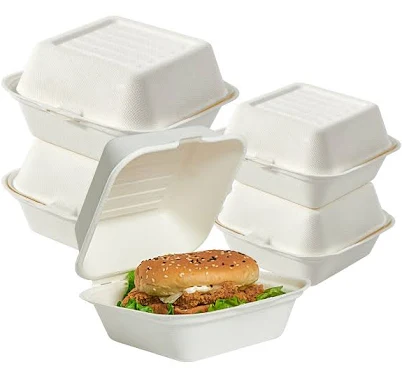
- Sugarcane bagasse (compostable fiber)
- We found no PFAS statement from the brand
- Bleaching agents and residual processing chemicals
3 hazards checked on this product, all on its full breakdown.
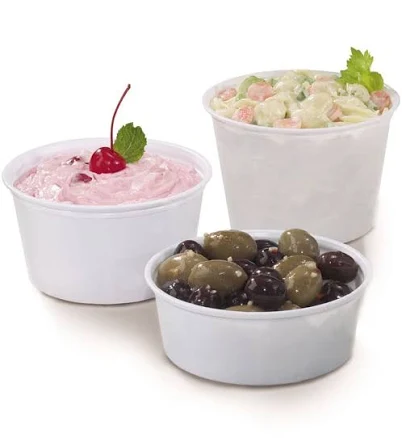
- polypropylene (PP) container, uncoated
- We found no PFAS statement from the brand
- Microplastics
2 hazards checked on this product, all on its full breakdown.
More disposable food containers grades
How we score, every product runs through the same public 0-100 rubric based on materials, coatings, brand disclosure, lab findings, and recalls. See the full methodology → Spotted a mistake? Report an error.