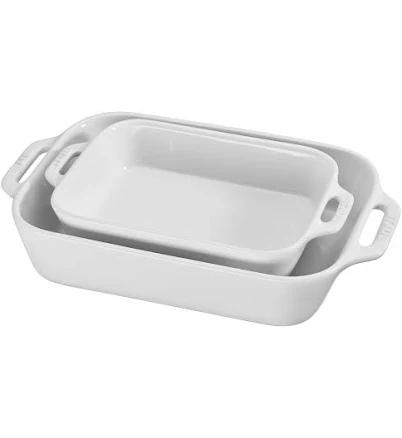
Staub 2-Piece Ceramic Rectangular Baking Dish Set
Lower PFAS concern; ceramic baking dish with no known coatings.
Staub ceramic baking dishes are plain ceramic cookware without non-stick coatings or surface treatments, presenting lower PFAS risk. Brand does not disclose PFAS status, but material itself is inherently low-concern.
The better-graded swap
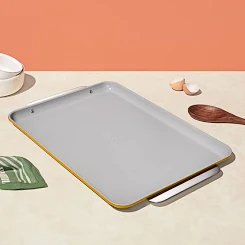
Caraway
Caraway Nonstick Ceramic Large Baking Sheet
90/100 safety
Same rubric that flunked this product. The swap earned Excellent.
Still want this one anyway? Check the price on Amazon. We’d swap it.
Material
Ceramic baking dish, uncoated
Brand disclosure
Brand is silent on PFAS
Lab data
No public lab test
Is Staub 2-Piece Ceramic Rectangular Baking non-toxic? What it is made of
This is uncoated ceramic, meaning the baking surface is the raw fired clay body without glaze, enamel, or nonstick polymer layers. Uncoated ceramic eliminates the primary degradation risks in ceramic cookware, flaking glazes, lead or cadmium in decorative glazes, and Teflon-type coating or other synthetic coating breakdown from heat cycling. The ceramic body itself is fired at high temperature, which chemically locks the silicate structure and makes leaching of trace metals into food unlikely under normal use.
What’s concerning
Category baseline
The starting point for this type of product, before anything specific to this product is counted.
No PFAS disclosure
No public statement from the brand about PFAS in this product.
Microcracking and ceramic particle shedding
Thermal shock or accidental drops can cause hairline cracks invisible to the eye. Continued use of cracked ceramic may allow fine ceramic particles to contaminate food. Inspect regularly and retire damaged pieces.
Bacterial colonization in cracks or chips
If the ceramic surface develops chips or cracks, bacteria can lodge in fissures and survive normal washing. Damaged dishes should be discarded for food safety.
What’s reassuring
Base material not linked to PFAS
The main material recorded for this product is not one associated with PFAS.
Lead
This product is explicitly uncoated ceramic with no glaze. Glazed ceramic bakeware can leach lead or cadmium, but uncoated ceramic does not carry this risk.
Source, ATSDR ↗Aluminum leaching
This is ceramic, not aluminum. Aluminum bakeware is a separate concern not relevant to this product.
Coating degradation over time
Uncoated ceramic has no synthetic coating to degrade. The fired ceramic body is chemically stable across the product lifespan under normal use.
The full breakdown
The brand's record and disclosure
Staub is a subsidiary of Zwilling J.A. Henckels and is known for premium cookware with a focus on enamel cast iron and ceramic bakeware. The brand does not publish detailed chemical composition or third-party safety certifications for individual products, which is typical (not unusual) for the ceramic cookware segment. No significant safety recalls or chemical contamination incidents have been publicly reported for Staub ceramic baking dishes. The company's transparency on materials is minimal but consistent with industry norms for this price tier.
How it compares in its category
Uncoated ceramic baking dishes show lower concern in the cookware category compared to glazed, enameled, or nonstick alternatives, which may present different hazard vectors. Most mass-market ceramic bakeware (e.g., from general retailers) uses glaze, which carries small but real risks of lead or cadmium if pigmented. Staub's uncoated ceramic approach trades visual finish for chemical simplicity, positioning it as a lower-risk choice compared to decorated or glossy ceramic competitors at similar price points.
If you buy it
Use at temperatures up to the manufacturer's stated limit (typically 400-500 F for ceramic; check product documentation). Avoid thermal shock by not moving directly from freezer to hot oven or vice versa, as ceramic can crack. Hand wash or use gentle machine cycles; abrasive scrubbers can scratch the surface but do not create food safety hazards. Inspect before each use for chips or cracks; a damaged piece should be retired, as small fractures can harbor bacteria or release ceramic particles into food.
What we don’t know
- Basis
- Model estimate, 78% confidence, not a lab result
- Lab test
- None on record for this exact product
- Brand statement
- Staub has made none
Formulations change between production runs, so check the current label. How we grade.
Better-graded alternatives in Bakeware
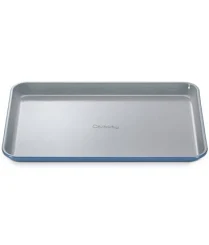
Caraway
Nonstick Ceramic Medium Baking Sheet
- ceramic nonstick coating
- A third party reports verifying it as PFAS-free
- Ceramic coating degradation over time
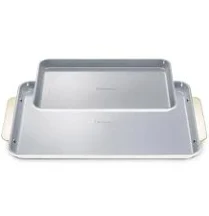
Caraway
Ceramic Nonstick Baking Sheet Duo
- ceramic nonstick coating
- A third party reports verifying it as PFAS-free
- Coating degradation and durability
2 hazards checked on this product. See all of them.
Caraway
Nonstick Ceramic Large Baking Sheet
- ceramic nonstick coating
- The brand calls it PFAS-free, which we have not verified
- Ceramic coating degradation and particle shedding
3 hazards checked on this product. See all of them.
More bakeware grades
How we score, every product runs through the same public 0-100 rubric based on materials, coatings, brand disclosure, lab findings, and recalls. See the full methodology → Spotted a mistake? Report an error.