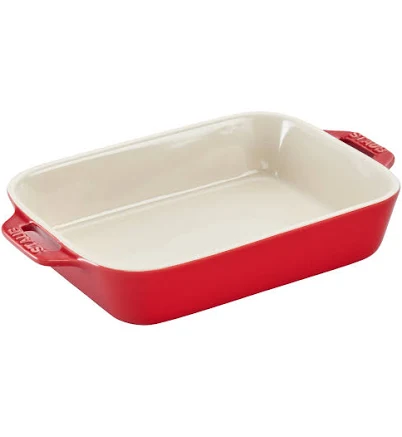
Staub Ceramic Rectangular Baking Dish
Ceramic baking dish with no water-repellent finish on record.
This Staub ceramic rectangular baking dish is made of ceramic glaze on stoneware. The brand has no PFAS statement on record. Ceramic glaze is not a material linked to PFAS concern.
The better-graded swap
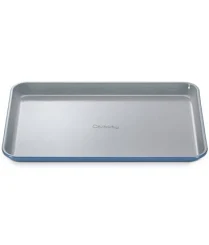
Caraway
Caraway Nonstick Ceramic Medium Baking Sheet
100/100 safety
Same rubric that flunked this product. The swap earned Excellent.
Still want this one anyway? Check the price on Amazon. We’d swap it.
Material
ceramic glaze on stoneware
Brand disclosure
Brand is silent on PFAS
Lab data
No public lab test
Is Staub Ceramic Rectangular Baking Dish non-toxic? What it is made of
Staub ceramic baking dishes are stoneware (high-fired clay) with a ceramic glaze coating. The glaze is the functional surface that contacts food and heat. Ceramic glazes can theoretically contain lead or cadmium if improperly formulated, but modern EU and US cookware manufacturers are required to test for migration under acidic and hot conditions. Staub is a Zwilling J.A. Henkel subsidiary (Germany) subject to EU safety limits, which are stricter than US FDA limits. No public test results show exceedances for this specific product line.
What’s concerning
Category baseline
The starting point for this type of product, before anything specific to this product is counted.
No PFAS disclosure
No public statement from the brand about PFAS in this product.
Glaze degradation and crazing over time
Thermal shock, abrasive scrubbing, and repeated heating cycles can cause fine surface cracking (crazing) in ceramic glazes. This may marginally increase glaze particle shedding but is primarily a cosmetic and durability issue rather than a chemical safety concern for Staub's durable stoneware.
Microplastic or glaze particle shedding
If glaze becomes craized or chipped, small ceramic particles may shed into food. This is rare with well-maintained Staub dishes but increases with age and damage. Regular inspection and gentle handling minimize this risk.
What’s reassuring
Base material not linked to PFAS
The main material recorded for this product is not one associated with PFAS.
Lead
Staub ceramics are manufactured under EU regulations (stricter than US FDA) with mandatory migration testing. No public recalls or test data show exceedance of safety limits for this product line, though the brand does not voluntarily disclose glaze composition or test certificates.
Source, ATSDR ↗Aluminum leaching from underlying clay body
Ceramic baking dishes have a fully glazed food-contact surface, so the underlying stoneware clay body does not contact food directly. No aluminum leaching is expected under normal use.
Thermal tolerance and safe temperature limits
Staub ceramic baking dishes are rated for oven use up to 500°F (260°C), which aligns with typical temperature ranges for standard baking. No thermal damage or chemical release is expected at these temperatures. Stovetop use is not recommended and will damage the glaze.
The full breakdown
The brand's record and disclosure
Staub does not publicly disclose detailed heavy metal testing results or glaze composition for individual products. The brand has no documented recalls for lead/cadmium leaching in ceramic baking dishes. Zwilling J.A. Henkel (parent company) maintains ISO 9001 and CE marking compliance but does not offer transparency beyond regulatory minimum. No third-party testing of Staub ceramics for lead/cadmium has been published in accessible sources.
How it compares in its category
Ceramic baking dishes have lower concern regarding Teflon-type coating risk compared to nonstick cookware, and do not present the potential enamel chipping hazard associated with enameled cast iron. Staub ceramic ranks similarly to competing ceramic bakers from Le Creuset, Emile Henry, and Pyrex in terms of material safety. The main differentiation is brand durability and glaze hardness rather than chemical safety profile. No ceramic baking dish brand has a documented advantage in heavy metal safety over others in the premium segment.
If you buy it
Use for baking, not stovetop heating. Avoid prolonged storage of acidic foods (citrus, vinegar, tomato) in the dish, as acidic conditions increase glaze leaching potential. Inspect the glaze regularly for chips, cracks, or crazing (fine surface lines); replace the dish if damage exposes the underlying clay body. Hand wash or use gentle cycles; avoid thermal shock (cold water on hot dish) to prevent glaze crazing and potential microcracking that may increase leaching.
What we don’t know
- Basis
- Model estimate, 78% confidence, not a lab result
- Lab test
- None on record for this exact product
- Brand statement
- Staub has made none
Formulations change between production runs, so check the current label. How we grade.
Better-graded alternatives in Bakeware
Caraway
Nonstick Ceramic Medium Baking Sheet
- ceramic nonstick coating
- A third party reports verifying it as PFAS-free
- Ceramic coating degradation over time
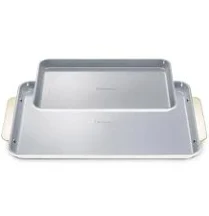
Caraway
Ceramic Nonstick Baking Sheet Duo
- ceramic nonstick coating
- A third party reports verifying it as PFAS-free
- Coating degradation and durability
2 hazards checked on this product. See all of them.
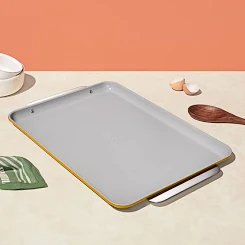
Caraway
Nonstick Ceramic Large Baking Sheet
- ceramic nonstick coating
- The brand calls it PFAS-free, which we have not verified
- Ceramic coating degradation and particle shedding
3 hazards checked on this product. See all of them.
More bakeware grades
How we score, every product runs through the same public 0-100 rubric based on materials, coatings, brand disclosure, lab findings, and recalls. See the full methodology → Spotted a mistake? Report an error.