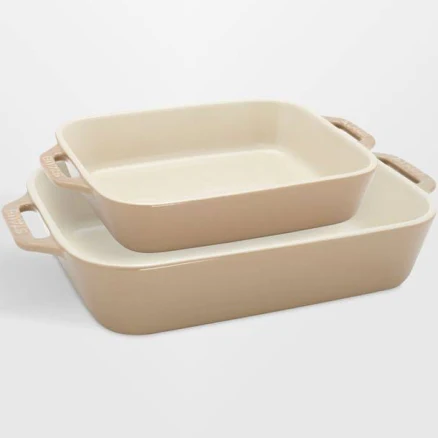
Staub Sesame 2 pcs Rectangular Baking Dish Set
Lower concern. Enameled cast iron has no inherent PFAS risk.
Staub baking dishes are enameled cast iron. Enamel coatings are not typically formulated with PFAS, though brand does not explicitly disclose coating chemistry.
The better-graded swap
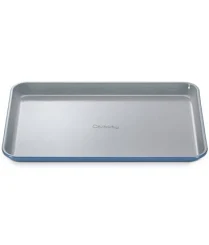
Caraway
Caraway Nonstick Ceramic Medium Baking Sheet
100/100 safety
Same rubric that flunked this product. The swap earned Excellent.
Still want this one anyway? Check the price on Amazon. We’d swap it.
Material
enameled cast iron
Brand disclosure
Brand is silent on PFAS
Lab data
No public lab test
Is Staub Sesame 2 pcs Rectangular Baking non-toxic? What it is made of
Staub Sesame baking dishes are enameled cast iron, a cast iron core coated with a vitreous enamel (glass-like finish). The enamel layer is chemically fused to the iron during manufacturing at high temperature, creating an inert surface that prevents direct contact between food and the underlying metal. This design eliminates the primary leaching pathways that affect bare cast iron or other cookware metals. The enamel itself is a silicate-based ceramic coating and does not contain Teflon-type coating or PFOA.
What’s concerning
Category baseline
The starting point for this type of product, before anything specific to this product is counted.
No PFAS disclosure
No public statement from the brand about PFAS in this product.
Enamel chip or crack exposure (bare iron leaching)
Enameled cast iron is susceptible to mechanical damage over time. If the enamel coating chips or cracks, bare cast iron underneath may contact acidic foods (tomatoes, vinegar, citrus), leading to iron leaching and discoloration. This is a degradation hazard, not a manufacturing defect, and is managed through careful handling and inspection.
Coating degradation and longevity
Enameled cast iron enamel can develop hairline crazing (fine surface cracks) or larger chips after decades of use, particularly if exposed to dishwasher cycles, thermal shock, or impact. Staub's enamel is durable, but not permanent. Monitoring for visual damage is the primary maintenance check.
What’s reassuring
Base material not linked to PFAS
The main material recorded for this product is not one associated with PFAS.
Lead
Modern enameled cast iron from reputable manufacturers like Staub is manufactured to exclude lead and cadmium from enamel formulations. No recall or detection records exist for Staub enameled baking dishes. Vintage or imported pieces from uncontrolled sources carry historical risk, but this current product line is not flagged.
Source, ATSDR ↗Teflon-type coating or fume inhalation risk
Enameled cast iron does not use Teflon-type coating (Teflon) coatings. The enamel is a durable silicate ceramic fused at high temperature and does not off-gas when heated normally. Risk is absent by material design.
Aluminum leaching
Staub enameled cast iron baking dishes do not contain aluminum as a primary material. The cast iron core and enamel coating do not leach aluminum.
The full breakdown
The brand's record and disclosure
Staub (owned by Zwilling J.A. Henckels) manufactures enameled cookware primarily in France and has maintained a reputation for quality control without documented recalls related to toxic leaching or enamel degradation. The brand does not publicly disclose detailed coating composition or submit to independent third-party safety certifications, which is typical for premium cookware makers. No established safety controversies specific to Staub enamel cookware exist in published consumer safety databases or regulatory records.
How it compares in its category
Enameled cast iron ranks among the lowest-risk baking dish materials. Unlike bare cast iron (which can leach small amounts of iron into acidic foods), bare aluminum (prone to leaching), or ceramic with lead-glazed finishes, enameled cast iron provides a sealed, non-reactive surface. It is comparable in safety to stainless steel but retains heat better. Most premium enameled cast iron cookware (Le Creuset, Staub, Smithey) operates under similar manufacturing standards with minimal differentiation in hazard profiles.
If you buy it
Hand wash with non-abrasive sponges to preserve enamel integrity; aggressive scouring or dishwasher cycles can chip or crack the coating over decades. Avoid extreme thermal shock (placing hot dishes in cold water), which stresses the enamel bond. If the enamel develops significant chips, cracks, or flaking exposing bare cast iron, discontinue use or have the piece professionally re-enameled. Baking dishes do not reach the high stovetop temperatures that stress enamel; these are lower-risk than enameled cookpots.
What we don’t know
- Basis
- Model estimate, 82% confidence, not a lab result
- Lab test
- None on record for this exact product
- Brand statement
- Staub has made none
Formulations change between production runs, so check the current label. How we grade.
Better-graded alternatives in Bakeware
Caraway
Nonstick Ceramic Medium Baking Sheet
- ceramic nonstick coating
- A third party reports verifying it as PFAS-free
- Ceramic coating degradation over time
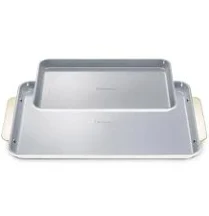
Caraway
Ceramic Nonstick Baking Sheet Duo
- ceramic nonstick coating
- A third party reports verifying it as PFAS-free
- Coating degradation and durability
2 hazards checked on this product. See all of them.
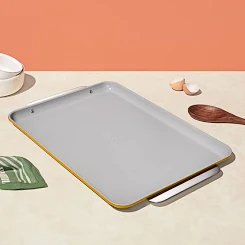
Caraway
Nonstick Ceramic Large Baking Sheet
- ceramic nonstick coating
- The brand calls it PFAS-free, which we have not verified
- Ceramic coating degradation and particle shedding
3 hazards checked on this product. See all of them.
More bakeware grades
How we score, every product runs through the same public 0-100 rubric based on materials, coatings, brand disclosure, lab findings, and recalls. See the full methodology → Spotted a mistake? Report an error.