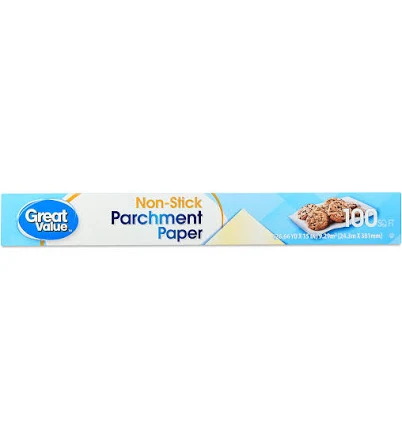
Great Value · Parchment Paper & Baking Liners
Great Value Non-Stick Parchment Paper Roll
Skip until coating ingredients disclosed or verified PFAS-free.
Parchment paper's non-stick and grease-resistant coatings are common PFAS sources. Great Value provides no ingredient disclosure or third-party verification, leaving composition unclear.
The better-graded swap
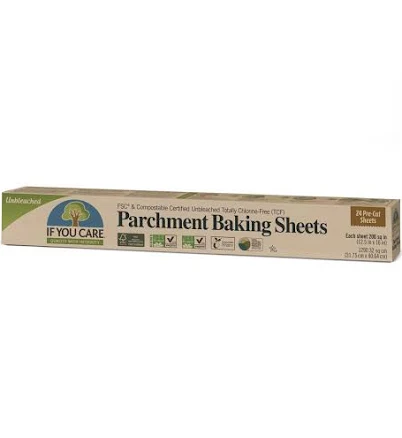
If You Care
If You Care Parchment Baking Sheets
90/100 safety
Same rubric that flunked this product. The swap earned Excellent.
Still want this one anyway? Check the price on Amazon. We’d swap it.
Material
cellulose paper with unspecified non-stick/water-resistant coating
Brand disclosure
Brand is silent on PFAS
Lab data
No public lab test
You may also be interested in
Top-graded picks in the categories readers replace first, every one scored on the same rubric.

- polypropylene filter housing, carbon/sediment cartridge
- We found no PFAS statement from the brand
- Bacterial growth in spent cartridges
3 hazards checked on this product, all on its full breakdown.

Aquasure
Premier Series 75 GPD Under Sink Reverse Osmosis Water Filtration System
- RO membrane, carbon filters, stainless steel housing
- We found no PFAS statement from the brand
- Bacterial and microbial growth in housing and filters
4 hazards checked on this product, all on its full breakdown.

Avocado
Vegan Mattress
- organic cotton, natural latex, coconut coir, recycled steel coils
- The brand calls it PFAS-free, which we have not verified
- Heavy metals
2 hazards checked on this product, all on its full breakdown.
What Great Value Non-Stick Parchment Paper Roll is made of, ingredients and materials
Great Value parchment paper is cellulose base stock treated with an undisclosed water-resistant and non-stick coating. The coating chemistry is not published by Walmart or the manufacturer. In this product category, such coatings are historically formulated with fluorinated compounds (PFAS) to achieve heat stability and grease repellency above 400F. Without ingredient transparency, the actual chemistry cannot be verified as PFAS-free or low-fluorine.
What’s concerning
Category baseline
The starting point for this type of product, before anything specific to this product is counted.
No PFAS disclosure
No public statement from the brand about PFAS in this product.
Non-stick, chemistry undisclosed
Marketed as non-stick without stating the coating chemistry.
PFAS
Unspecified fluorinated water-resistant coating is typical industry formulation for this product class; no PFAS-free claim made by brand or manufacturer.
Source, ATSDR ↗Coating degradation under heat or chemical stress
Undisclosed coating formulation makes heat and acid stability unknown; standard parchment coatings can release particles or fumes if overheated or exposed to prolonged contact with fatty/acidic foods.
Microparticle or powder shedding from worn coating
Budget parchment papers often use thinner or less durable coating layers; repeated use or creasing can cause visible coating fragments to transfer to food, especially in high-temperature baking.
Unlisted additives or processing residues
Walmart provides no ingredient list or processing disclosure; formulae may include antifoaming agents, pigments, or adhesion promoters not disclosed to consumers.
What’s reassuring
Chlorine residues from bleaching process
Great Value parchment appears to be standard bleached cellulose; chlorine levels are typically within regulatory limits for food contact, and no recalls or complaints specific to this product are on record.
How is this PFAS grade calculated?
The brand's record and disclosure
Walmart's Great Value line is a private label with no published chemical disclosure policy for parchment paper coatings. The brand has not responded to industry pressure for PFAS transparency in food-contact paper products, nor does it carry third-party certifications (e.g., GOTS, Cradle to Cradle) that would verify coating safety. This silence is standard for budget retailers, but leaves end users without assurance.
How it compares in its category
Parchment paper markets include branded alternatives (Kirkland, If You Care, Unbleached by Nature) that explicitly declare PFAS-free formulations or use silicone coatings instead of fluorinated resins. Great Value offers no such commitment. Standard bleached parchment (chlorine-processed) is common across price tiers; unbleached parchment avoids one chemical step but does not address the coating hazard.
If you buy it
Do not use above 420F, as heat can accelerate coating breakdown and fume release. Replace rolls every 6-12 months of typical use; do not reuse heavily stained or worn sheets. Avoid contact with acidic or fatty foods for extended periods (e.g., overnight storage), as some coatings can degrade under chemical stress. Hand-wash and inspect before each use; discard if surface shows peeling, discoloration, or damage.
What is not known about PFAS in this product?
- Basis
- Model estimate, 45% confidence, not a lab result
- Lab test
- None on record for this exact product
- Brand statement
- Great Value has made none
Formulations change between production runs, so check the current label. How we grade.
What are the PFAS-free alternatives to Great Value Non-Stick Parchment Paper Roll?
- silicone-coated parchment paper
- The brand calls it PFAS-free, which we have not verified
- Paper degradation and particulate shedding
- unbleached paper with silicone coating
- The brand calls it PFAS-free, which we have not verified
- Silicone coating degradation at high heat
- bleached paper with silicone coating
- The brand calls it PFAS-free, which we have not verified
- Paper degradation and fragmentation
More parchment paper & baking liners grades
How we score, every product runs through the same public 0-100 rubric based on materials, coatings, brand disclosure, lab findings, and recalls. See the full methodology → Spotted a mistake? Report an error.