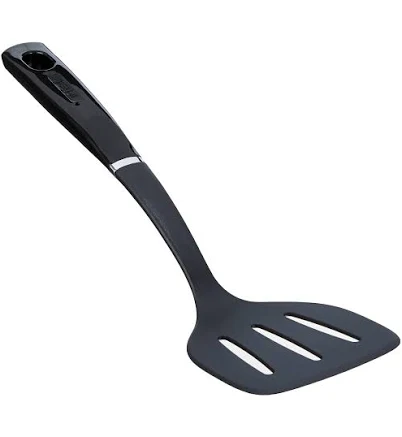
T-fal · Parchment Paper & Baking Liners
T-Fal Basics Turner
Turner uses bare material with reduced PFAS concern versus nonstick pans.
This turner has a nylon or silicone head, not a coated nonstick pan. Basic utensil materials carry lower risk than Teflon-family coating-coated cookware.
The better-graded swap
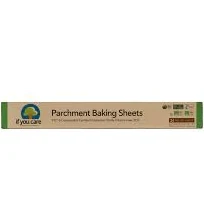
If You Care
Parchment Baking Sheets
90/100 safety
Same rubric that flunked this product. The swap earned Excellent.
Still want this one anyway? Check the price on Amazon. We’d swap it.
Material
Nylon head, silicone or nylon material, likely unfilled
Lab data
No public lab test
What T-Fal Basics Turner is made of, ingredients and materials
T-Fal Basics Turner has a nylon head (likely unfilled polyamide) bonded to a handle, typically plastic or silicone. Nylon is a synthetic polymer that does not naturally contain lead, cadmium, or other intentional heavy metal additives in food-contact applications. Unlike ceramic or enamel cookware, there is no glaze or coating that degrades over time and releases metals. The primary material risk with nylon is thermal stability above 200°C, beyond which it can soften or degrade.
What’s concerning
No PFAS disclosure
No public statement from the brand about PFAS in this product.
Category baseline
The starting point for this type of product, before anything specific to this product is counted.
Thermal degradation of nylon
Nylon softens above 150-200°C depending on grade and fill. Use only with cookware surfaces below 200°C; prolonged contact with cast iron or high-heat cookware may cause melting or warping. Risk increases if turner is left on pot rim.
Coating or material shedding into food
Microscopic nylon particles may shed under extreme wear or if the nylon head delaminates from the handle. This is a mechanical, not chemical, risk and occurs only when the tool is visibly damaged or very old.
Microplastic or micro-nylon leaching
Nylon utensils can shed minute particles over years of use, especially if scratched or degraded. This risk is theoretical for utensils and lower than for nylon cookware that directly contacts heated food, but long-term exposure to worn tools should be minimized.
What’s reassuring
Base material not linked to PFAS
The main material recorded for this product is not one associated with PFAS.
Lead
No recalls or test results indicating metal contamination in T-Fal utensil handles have been identified. Standard nylon and silicone food-contact materials do not require these metals, and FDA compliance implies screening.
Source, ATSDR ↗Allergen or irritant additives in plastic handle
No formaldehyde resins, azo dyes, or antimony compounds are typical in food-contact utensil plastics. However, T-Fal does not disclose full additive lists, so complete assurance is not available from public data.
The full breakdown
The brand's record and disclosure
T-fal (Groupe SEB subsidiary) has no major product safety recalls or public controversies specific to utensil lines on record in FDA or CPSC databases. The brand does not publicly disclose detailed chemical composition or third-party certifications for kitchen tools. No transparency statements regarding PFAS use in nylon formulations are available from T-fal, though many basic nylon utensils do not require PFAS additives.
How it compares in its category
This nylon turner has lower concern compared to many cookware utensils. It avoids the Teflon-type coating fume risk of silicone or nylon-coated metal turners, the lead/cadmium risk of glazed ceramic alternatives, and the durability concerns of wood. Nylon utensils are standard across brands (OXO, Rubbermaid, etc.) with similar chemical profiles. Cost and durability are the primary differentiators, not chemical safety.
If you buy it
Keep the turner away from stovetop direct flame and prolonged contact with surfaces above 200°C to prevent softening. Wash by hand and dry promptly to avoid prolonged water retention in seams. Replace if the head becomes discolored, warped, or begins to flake; these are signs of thermal or mechanical degradation. Store away from direct sunlight to slow polymer aging.
What we don’t know
- Basis
- Model estimate, 72% confidence, not a lab result
- Lab test
- None on record for this exact product
- Brand statement
- T-fal has made a specific claim
Formulations change between production runs, so check the current label. How we grade.
Better-graded alternatives in Parchment Paper & Baking Liners
If You Care
Baking Paper, Parchment, 70 Square Feet
- silicone-coated parchment paper
- The brand calls it PFAS-free, which we have not verified
- Paper degradation and particulate shedding
If You Care
Parchment Baking Sheets
- unbleached paper with silicone coating
- The brand calls it PFAS-free, which we have not verified
- Silicone coating degradation at high heat
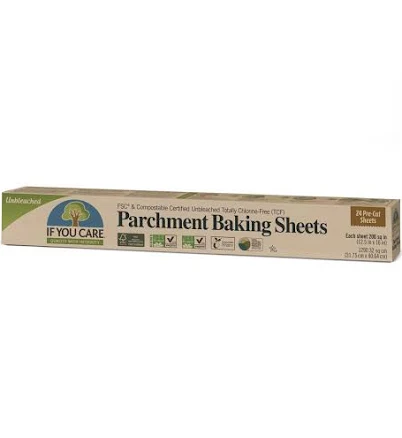
If You Care
Parchment Baking Sheets
- bleached paper with silicone coating
- The brand calls it PFAS-free, which we have not verified
- Paper degradation and fragmentation
More parchment paper & baking liners grades
How we score, every product runs through the same public 0-100 rubric based on materials, coatings, brand disclosure, lab findings, and recalls. See the full methodology → Spotted a mistake? Report an error.