T-fal · Parchment Paper & Baking Liners
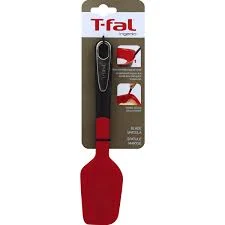
T-Fal Ingenio Spoon Spatula
Plastic with no coating described, and no PFAS statement from the brand.
The product information we reviewed describes nylon spoon spatula, with no applied coating named. A flexible cutting mat does not need a non-stick coating, and the listing does not describe one. The brand has published no PFAS statement for it.
We flunk more products than we pass. This one earned its grade. How we grade
Material
Nylon spoon spatula
Lab data
No public lab test
What T-Fal Ingenio Spoon Spatula is made of, ingredients and materials
This is a nylon (polyamide) spoon spatula, a thermoplastic polymer selected for kitchen utensils because it resists melting at moderate cooking temperatures and does not conduct heat like metal. Nylon itself does not contain lead, cadmium, or intentional Teflon-type coating coatings. The primary chemical stability concern with nylon is whether it sheds microplastics under high heat or abrasion, and whether any mold-release agents or processing residues remain on the surface.
What’s concerning
No PFAS disclosure
No public statement from the brand about PFAS in this product.
Category baseline
The starting point for this type of product, before anything specific to this product is counted.
Microplastic shedding under heat stress
Nylon utensils may release small plastic particles if used above their rated temperature or if abraded repeatedly. No recall or independent test of this specific spatula is on public record, but the risk is material-inherent to all nylon food contact items.
What’s reassuring
Base material not linked to PFAS
The main material recorded for this product is not one associated with PFAS.
Mold-release agent or processing residue
T-fal does not disclose mold-release compounds or post-production rinse protocols for this utensil. No contamination incident has been reported, and nylon typically requires minimal chemical processing compared to coated cookware.
Heavy metals
Nylon raw material does not inherently contain lead, cadmium, or antimony. No analysis or recall of this product indicates heavy metal loading, and nylon is not a common vehicle for such contaminants unless additives are intentionally blended.
Source, FDA ↗Leaching into food or liquids
Nylon is not listed in regulatory warnings as a food-contact leaching concern at normal cooking temperatures. This spatula is used as a utensil, not in prolonged contact with stored food, limiting exposure risk.
The full breakdown
The brand's record and disclosure
T-fal (Groupe SEB) has not made a public PFAS commitment or full transparency statement for this product line. The brand manufactures cookware and kitchen tools globally and has faced no documented recalls specific to nylon utensils for chemical leaching. T-fal's parent company operates quality programs, but independent third-party certification (e.g., NSF, FDA food-contact approval details) for this specific utensil is not publicly confirmed in accessible records.
How it compares in its category
Nylon spatulas are commonplace and generally regarded as lower-risk than silicone or melamine alternatives when used below their heat limit. Unlike rubber or silicone, nylon does not off-gas volatile organic compounds (VOCs) at room temperature. Wooden or stainless-steel utensils avoid polymer wear entirely, but nylon utensils are durable, dishwasher-compatible, and pose no reported advantage or disadvantage versus generic store-brand nylon spoons in terms of chemical hazard.
If you buy it
Keep the spoon below 200°C (392°F) to avoid nylon degradation and microplastic shedding. Do not use on direct flame or in very high-heat applications such as deep-frying. Wash by hand or dishwasher before first use to remove any manufacturing dust or residues. Replace if the surface becomes pitted, discolored, or brittle, as degraded nylon may fragment more readily.
What we don’t know
- Basis
- Model estimate, 35% confidence, not a lab result
- Lab test
- None on record for this exact product
- Brand statement
- T-fal has made a specific claim
Formulations change between production runs, so check the current label. How we grade.
Better-graded alternatives in Parchment Paper & Baking Liners
If You Care
Baking Paper, Parchment, 70 Square Feet
- silicone-coated parchment paper
- The brand calls it PFAS-free, which we have not verified
- Paper degradation and particulate shedding
If You Care
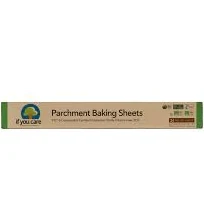
Parchment Baking Sheets
- unbleached paper with silicone coating
- The brand calls it PFAS-free, which we have not verified
- Silicone coating degradation at high heat
If You Care
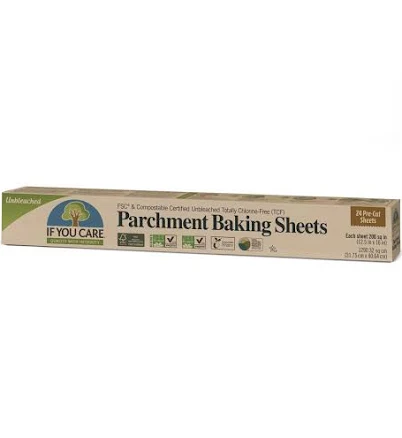
Parchment Baking Sheets
- bleached paper with silicone coating
- The brand calls it PFAS-free, which we have not verified
- Paper degradation and fragmentation
More parchment paper & baking liners grades
How we score, every product runs through the same public 0-100 rubric based on materials, coatings, brand disclosure, lab findings, and recalls. See the full methodology → Spotted a mistake? Report an error.