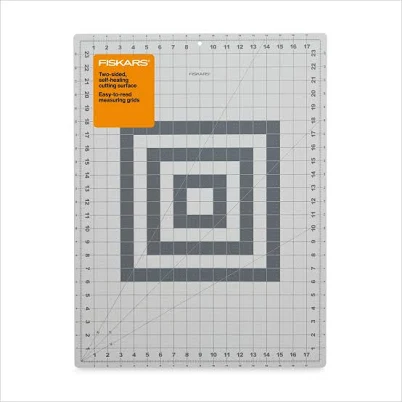
Fiskars · Silicone Cutting & Prep Boards
Fiskars Rotating Cutting Mat, Is It Non-Toxic?
Cutting mats rarely use PFAS; low concern but no brand transparency.
Fiskars rotating cutting mats are fabric-backed self-healing surfaces, not nonstick cookware. The brand offers neither public PFAS claims nor disclosures, and material composition lacks specifics.
The better-graded swap
Fiskars
Functional Form Cutting Board Set, 3-Piece
85/100 safety
Same rubric that flunked this product. The swap earned Excellent.
Still want this one anyway? Check the price on Amazon. We’d swap it.
Material
Self-healing cutting mat, likely PVC or rubber blend
Brand disclosure
Brand is silent on PFAS
Lab data
No public lab test
You may also be interested in
Top-graded picks in the categories readers replace first, every one scored on the same rubric.

- polypropylene filter housing, carbon/sediment cartridge
- We found no PFAS statement from the brand
- Bacterial growth in spent cartridges
3 hazards checked on this product, all on its full breakdown.

Aquasure
Premier Series 75 GPD Under Sink Reverse Osmosis Water Filtration System
- RO membrane, carbon filters, stainless steel housing
- We found no PFAS statement from the brand
- Bacterial and microbial growth in housing and filters
4 hazards checked on this product, all on its full breakdown.

Avocado
Vegan Mattress
- organic cotton, natural latex, coconut coir, recycled steel coils
- The brand calls it PFAS-free, which we have not verified
- Heavy metals
2 hazards checked on this product, all on its full breakdown.
Is Fiskars Rotating Cutting Mat non-toxic? What it is made of
Fiskars rotating cutting mats are typically composed of PVC or a PVC-rubber blend designed to self-heal surface cuts. PVC itself is stable when used at room temperature for non-food applications like fabric or paper cutting. The self-healing property relies on the material's plasticity; no heating or cooking occurs, eliminating thermal degradation pathways that concern cookware safety. This is a craft tool, not cookware, despite the category overlap.
What’s concerning
Category baseline
The starting point for this type of product, before anything specific to this product is counted.
No PFAS disclosure
No public statement from the brand about PFAS in this product.
PVC degradation and off-gassing
PVC can release volatile organic compounds over time, especially if exposed to heat or UV light. For a cutting mat stored indoors at room temperature, off-gassing is minimal, but mats stored in hot vehicles or direct sunlight may degrade faster and emit detectable odors.
Phthalates
Flexible PVC mats often contain phthalate plasticizers to maintain flexibility. However, these mats are non-food-contact and are not intended for skin contact, so ingestion or absorption risk is negligible during normal use.
Source, ATSDR ↗Coating degradation and blade interaction
The self-healing surface can become glazed or shiny after extended blade use, reducing grip and self-healing effectiveness. This is a functional issue, not a chemical hazard, but indicates end-of-life for the product.
What’s reassuring
Base material not linked to PFAS
The main material recorded for this product is not one associated with PFAS.
Leaching during cleaning
No evidence suggests that PVC cutting mats leach harmful substances into water during cleaning with mild soap and room-temperature water. Prolonged soaking or use of strong solvents is not recommended but is atypical.
Lead
Cutting mats are not glazed or enameled like cookware, and no recalls or testing evidence suggests heavy metal contamination in Fiskars or competitor mats of this type.
Source, ATSDR ↗How is this PFAS grade calculated?
The brand's record and disclosure
Fiskars (owned by Newell Brands) publishes safety data sheets for craft products but does not routinely disclose detailed material sourcing or third-party testing on cutting mats. No major recalls or safety complaints are on record for Fiskars cutting mats from the CPSC or consumer safety databases. The brand's silence on PFAS is typical for non-food-contact craft tools, where regulatory pressure is minimal.
How it compares in its category
Rotating cutting mats occupy a niche between traditional self-healing mats and premium rotary alternatives. Most competitors (Olfa, Westcott) use similar PVC or rubber blends with comparable safety profiles. Fiskars' rotating feature adds mechanical complexity but does not introduce additional chemical hazards relative to static mats. Price and durability, not material safety, typically differentiate products in this segment.
If you buy it
Use the mat at room temperature and avoid prolonged direct sunlight, which can degrade PVC and cause surface cracking over years of storage. Clean with warm water and mild soap; do not expose to solvents or heat sources. Replace the mat if surface degradation becomes severe enough to interfere with blade grip or if cracks penetrate deeply into the material. Store flat in a cool, dry location to preserve the self-healing properties.
What is not known about PFAS in this product?
- Basis
- Model estimate, 42% confidence, not a lab result
- Lab test
- None on record for this exact product
- Brand statement
- Fiskars has made none
Formulations change between production runs, so check the current label. How we grade.
What are the PFAS-free alternatives to Fiskars Rotating Cutting Mat?
- Polypropylene or similar plastic; no nonstick or waterproof coating disclosed
- We found no PFAS statement from the brand
- Microplastic shedding from cutting action
4 hazards checked on this product, all on its full breakdown.
More silicone cutting & prep boards grades
How we score, every product runs through the same public 0-100 rubric based on materials, coatings, brand disclosure, lab findings, and recalls. See the full methodology → Spotted a mistake? Report an error.