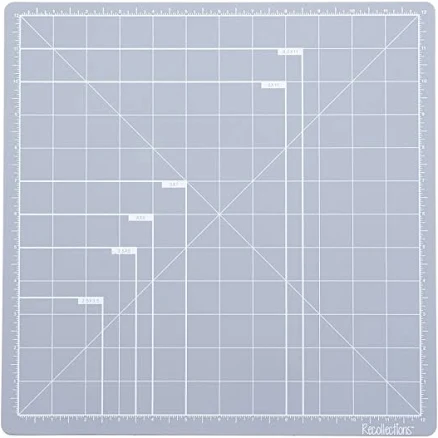
Recollections · Silicone Cutting & Prep Boards
Recollections Self-Healing Cutting Mat, Is It Non-Toxic?
Cutting mat likely lower concern; PFAS use uncommon here.
Recollections self-healing cutting mats are usually rubber or PVC without intentional PFAS coatings. The brand offers no public PFAS disclosure, but this material type normally carries minimal risk.
The better-graded swap
Fiskars
Functional Form Cutting Board Set, 3-Piece
85/100 safety
Same rubric that flunked this product. The swap earned Excellent.
Still want this one anyway? Check the price on Amazon. We’d swap it.
Material
Self-healing rubber or PVC mat
Brand disclosure
Brand is silent on PFAS
Lab data
No public lab test
You may also be interested in
Top-graded picks in the categories readers replace first, every one scored on the same rubric.

- polypropylene filter housing, carbon/sediment cartridge
- We found no PFAS statement from the brand
- Bacterial growth in spent cartridges
3 hazards checked on this product, all on its full breakdown.

Aquasure
Premier Series 75 GPD Under Sink Reverse Osmosis Water Filtration System
- RO membrane, carbon filters, stainless steel housing
- We found no PFAS statement from the brand
- Bacterial and microbial growth in housing and filters
4 hazards checked on this product, all on its full breakdown.

Avocado
Vegan Mattress
- organic cotton, natural latex, coconut coir, recycled steel coils
- The brand calls it PFAS-free, which we have not verified
- Heavy metals
2 hazards checked on this product, all on its full breakdown.
Is Recollections Self-Healing Cutting Mat non-toxic? What it is made of
Recollections self-healing cutting mats are typically composed of PVC or rubber-based polymers designed to reseal after blade cuts. These materials are chosen for durability and recovery, not food contact, which significantly reduces leaching risk compared to cookware that holds hot liquids or acidic foods. Self-healing formulations may include plasticizers (such as phthalates) and stabilizers, though PVC mats sold for craft use in North America increasingly meet restrictions on phthalate content. The mat sits on a work surface and does not contact food or beverages during normal use.
What’s concerning
Category baseline
The starting point for this type of product, before anything specific to this product is counted.
No PFAS disclosure
No public statement from the brand about PFAS in this product.
Phthalate plasticizers in PVC formulation
PVC self-healing mats may contain phthalates as softeners; however, US and EU regulations have restricted DEP, DBP, and DEHP in many PVC products since 2008. No published testing of Recollections mats for phthalate content is available. Non-food contact use and the absence of direct hand-mouth transfer pathways limit exposure risk.
Polymer off-gassing (VOCs) over product lifetime
PVC and rubber-based mats may emit volatile organic compounds (VOCs) during the first weeks and sporadically thereafter, producing odor. This is most pronounced in new products and poor ventilation; it does not pose acute hazard but may irritate sensitive individuals. Off-gassing intensity decreases significantly after initial cure period (1-2 weeks of airing).
Surface degradation and microparticle shedding
Heavy use over time causes the mat surface to crack, fray, or shed microscopic PVC or rubber particles, especially at edges and cut zones. If this mat were used directly in food preparation (which is not its intended purpose), shedding could introduce polymer fragments into food. Standard craft use on a work surface separates the mat from food contact.
What’s reassuring
Base material not linked to PFAS
The main material recorded for this product is not one associated with PFAS.
Stabilizer or colorant leaching under stress
Self-healing mats are formulated with stabilizers and pigments to maintain elasticity and appearance; no documented health incidents or leaching studies specific to Recollections mats are publicly available. Craft-use mats are not subject to food-contact material regulations and testing transparency is limited.
Lead
Heavy metal use in mat colorants is not a recognized issue in the self-healing craft mat category. US toy safety standards (CPSIA) apply to products marketed to children; Recollections mats marketed to adults are not subject to these limits, though manufacturer practices are unknown.
Source, ATSDR ↗How is this PFAS grade calculated?
The brand's record and disclosure
Recollections is owned by Michaels and primarily markets craft and art supplies. The brand does not publish detailed chemical composition or third-party safety certifications specific to this mat line. No major recalls or public health warnings are on record for Recollections self-healing mats. The parent company (Michaels) does not maintain a public PFAS stance or commitment, though craft-use mats fall outside typical PFAS application areas.
How it compares in its category
Self-healing cutting mats are not cookware and do not share hazard profiles with pans, bakeware, or food-storage containers. Compared to alternative cutting surfaces (glass, wood, metal rulers), PVC/rubber mats are chemically more complex but their non-food contact use limits exposure routes. Other brands in the craft mat segment (Fiskars, Olfa) use similar materials with comparable disclosure levels. The self-healing feature extends mat life, reducing replacement frequency and associated chemical turnover.
If you buy it
Store the mat flat or rolled in a cool, dry space away from direct sunlight to prevent accelerated polymer degradation and off-gassing. Avoid prolonged heat exposure (do not place near heat sources or use with hot objects). Wipe the mat regularly with a damp cloth to remove dust and cut debris; do not submerge or apply solvents. Replace the mat every 2-3 years or when surface cracking and persistent odor appear, as these signal polymer breakdown and increased leachate potential.
What is not known about PFAS in this product?
- Basis
- Model estimate, 70% confidence, not a lab result
- Lab test
- None on record for this exact product
- Brand statement
- Recollections has made none
Formulations change between production runs, so check the current label. How we grade.
What are the PFAS-free alternatives to Recollections Self-Healing Cutting Mat?
- Polypropylene or similar plastic; no nonstick or waterproof coating disclosed
- We found no PFAS statement from the brand
- Microplastic shedding from cutting action
4 hazards checked on this product, all on its full breakdown.
More silicone cutting & prep boards grades
How we score, every product runs through the same public 0-100 rubric based on materials, coatings, brand disclosure, lab findings, and recalls. See the full methodology → Spotted a mistake? Report an error.