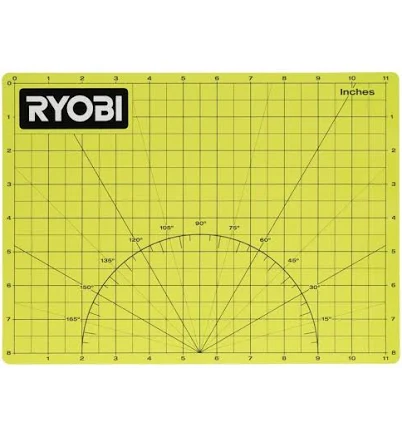
Ryobi · Silicone Cutting & Prep Boards
Ryobi Self-Healing Cutting Mat, Is It Non-Toxic?
Cutting mat, not cookware. Lower PFAS risk than nonstick pans.
This is a cutting mat, not cookware. Self-healing PVC or rubber mats typically present lower PFAS concern than Teflon-family coating nonstick coatings, though specific manufacturing details remain unclear.
The better-graded swap
Fiskars
Functional Form Cutting Board Set, 3-Piece
85/100 safety
Same rubric that flunked this product. The swap earned Excellent.
Still want this one anyway? Check the price on Amazon. We’d swap it.
Material
PVC or rubber cutting mat, self-healing polymer base
Brand disclosure
Brand is silent on PFAS
Lab data
No public lab test
You may also be interested in
Top-graded picks in the categories readers replace first, every one scored on the same rubric.

- polypropylene filter housing, carbon/sediment cartridge
- We found no PFAS statement from the brand
- Bacterial growth in spent cartridges
3 hazards checked on this product, all on its full breakdown.

Aquasure
Premier Series 75 GPD Under Sink Reverse Osmosis Water Filtration System
- RO membrane, carbon filters, stainless steel housing
- We found no PFAS statement from the brand
- Bacterial and microbial growth in housing and filters
4 hazards checked on this product, all on its full breakdown.

Avocado
Vegan Mattress
- organic cotton, natural latex, coconut coir, recycled steel coils
- The brand calls it PFAS-free, which we have not verified
- Heavy metals
2 hazards checked on this product, all on its full breakdown.
Is Ryobi Self-Healing Cutting Mat non-toxic? What it is made of
Ryobi self-healing cutting mats are typically composed of PVC or proprietary rubber-based polymers designed to reseal surface cuts and extend product life. Unlike nonstick cookware, these mats never contact food directly and are not heated during normal use, eliminating the primary pathways for chemical migration into food. The 'self-healing' property relies on the polymer's ability to flow back into cuts at room temperature rather than any chemical additive, reducing off-gassing risk compared to volatile-heavy foam mats.
What’s concerning
No PFAS disclosure
No public statement from the brand about PFAS in this product.
Category baseline
The starting point for this type of product, before anything specific to this product is counted.
BPA & bisphenols
PVC-based mats may contain phthalate plasticizers or BPA-family replacements to maintain flexibility. Since the mat does not contact food or high temperatures, migration risk is minimal; however, direct skin contact during extended cutting sessions or knife contact with cut mat particles could theoretically introduce residue.
Source, FDA ↗Microplastics
As the mat degrades over years of knife use, small PVC or rubber particles may shed onto cutting surfaces and food. This is a use-phase risk common to all polymer-based mats; proper maintenance and timely replacement mitigate exposure.
Source, EPA ↗Surface degradation and material breakdown
Self-healing mats can deteriorate in appearance (discoloration, permanent scarring) over 3-5 years with heavy use; visible degradation indicates polymer breakdown but does not necessarily mean safety threshold is crossed. Replace mats showing deep cracks, permanent discoloration, or loss of self-healing function.
What’s reassuring
Base material not linked to PFAS
The main material recorded for this product is not one associated with PFAS.
Off-gassing / volatile organic compounds (VOC)
No documented cases of significant VOC off-gassing from Ryobi self-healing mats. PVC mats typically off-gas more than silicone alternatives but only under heat or in enclosed spaces; a cutting mat at room temperature in normal ventilation poses negligible risk.
Lead
Heavy metal contamination in cutting mat dyes is not a documented issue for branded mats like Ryobi. Concern is higher for low-cost, dyed rubber products from unknown suppliers; Ryobi mats are typically solid-colored with minimal risk.
Source, ATSDR ↗How is this PFAS grade calculated?
The brand's record and disclosure
Ryobi (owned by TTM Industries) has not published detailed material safety datasheets or third-party certifications for cutting mat compositions. The company has been silent on PFAS use in non-nonstick products. No recalls or safety controversies specific to Ryobi cutting mats are on public record. Transparency on polymer sourcing and stabilizer chemistry remains limited for this product line.
How it compares in its category
Self-healing PVC/rubber mats occupy a middle ground, more durable than cork or wood alternatives but less chemically transparent than simple rubber or silicone mats. Competitors like Fiskars and some generic brands offer similar compositions with equally sparse disclosure. Self-healing formulations carry a slight premium for longevity, not safety differentiation. Overall, cutting mats pose far lower chemical exposure risk than any cookware because they are not heat- or food-contact intensive.
If you buy it
Store the mat flat in a cool, dry location away from direct sunlight to preserve the self-healing polymer integrity. Do not apply heat (cutting mat should never go near a stove or heat source). Replace when surface damage becomes deep enough to affect stability or when the mat no longer self-heals adequately. Wash with mild soap and water; avoid solvents or extreme abrasion that could accelerate polymer breakdown. Inspect periodically for visible cracks, discoloration, or odor changes indicating degradation.
What is not known about PFAS in this product?
- Basis
- Model estimate, 70% confidence, not a lab result
- Lab test
- None on record for this exact product
- Brand statement
- Ryobi has made none
Formulations change between production runs, so check the current label. How we grade.
What are the PFAS-free alternatives to Ryobi Self-Healing Cutting Mat?
- Polypropylene or similar plastic; no nonstick or waterproof coating disclosed
- We found no PFAS statement from the brand
- Microplastic shedding from cutting action
4 hazards checked on this product, all on its full breakdown.
More silicone cutting & prep boards grades
How we score, every product runs through the same public 0-100 rubric based on materials, coatings, brand disclosure, lab findings, and recalls. See the full methodology → Spotted a mistake? Report an error.