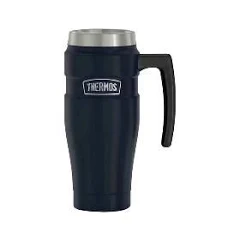
Thermos · Insulated Travel Mugs
THERMOS Stainless Steel King Travel Mug
Lower concern; bare stainless steel has minimal PFAS risk.
Thermos King mugs use stainless steel and plastic construction with no known nonstick or water-repellent coatings. No brand PFAS disclosure exists; standard materials pose lower risk than coated alternatives.
We flunk more products than we pass. This one earned its grade. How we grade
Material
Stainless steel interior and exterior, plastic lid
Brand disclosure
Brand is silent on PFAS
Lab data
No public lab test
You may also be interested in
Top-graded picks in the categories readers replace first, every one scored on the same rubric.

- polypropylene filter housing, carbon/sediment cartridge
- We found no PFAS statement from the brand
- Bacterial growth in spent cartridges
3 hazards checked on this product, all on its full breakdown.

Aquasure
Premier Series 75 GPD Under Sink Reverse Osmosis Water Filtration System
- RO membrane, carbon filters, stainless steel housing
- We found no PFAS statement from the brand
- Bacterial and microbial growth in housing and filters
4 hazards checked on this product, all on its full breakdown.

Avocado
Vegan Mattress
- organic cotton, natural latex, coconut coir, recycled steel coils
- The brand calls it PFAS-free, which we have not verified
- Heavy metals
2 hazards checked on this product, all on its full breakdown.
What THERMOS Stainless Steel King Travel Mug is made of, ingredients and materials
The Thermos King uses 18/8 stainless steel (304-grade), which is corrosion-resistant and chemically inert at normal use temperatures. The interior and exterior are both metal, eliminating ceramic glazes, non-stick coatings, and direct food-contact polymers that typically introduce heavy metals or synthetic compounds. The plastic lid is the sole polymer interface; typical travel mug lids use polypropylene or BPA-free copolyester, neither of which leaches measurably at cold or warm (not boiling) liquid temperatures.
What’s concerning
Category baseline
The starting point for this type of product, before anything specific to this product is counted.
No PFAS disclosure
No public statement from the brand about PFAS in this product.
Plastic lid polymer degradation
Repeated dishwasher cycles or exposure to very hot liquids can degrade the polypropylene lid over months to years, potentially releasing trace polymer particles. This is cosmetic and functional degradation rather than acute toxicity, but replacement becomes necessary.
Gasket/seal material composition
The rubber or silicone gasket in the lid lid is not disclosed by Thermos. Standard food-grade silicone or EPDM are used by most manufacturers and have no hazard of this kind on record, but trace off-gassing under heat is theoretically possible if non-food-grade material is substituted. No reported incidents.
Thermal shock stress on seals
Rapid temperature changes (hot liquid immediately sealed, then placed in freezer) can stress polymer gaskets and seals. This is unlikely to cause acute release of hazardous compounds but may accelerate degradation and eventual seal failure.
What’s reassuring
Bare uncoated material
Recorded as a bare, uncoated material with no surface coating or treatment.
Stainless steel corrosion (interior pitting)
304-grade stainless steel is highly resistant to corrosion from water, tea, coffee, and juice under normal conditions. No established recalls or complaints about interior rust or pitting in Thermos King models; risk only arises if left with salt water or strongly acidic liquids for weeks.
Lead
Stainless steel itself contains negligible lead or cadmium. The plastic lid and gaskets are not decorated with glazes or paints, so pigment-based heavy metal contamination is not a pathway for this product.
Source, ATSDR ↗How is this PFAS grade calculated?
The brand's record and disclosure
Thermos (owned by Groupe SEB) maintains minimal public chemical disclosure on their website but has no documented recalls for leaching, off-gassing, or coating failure in stainless steel travel mugs. The company does not actively promote third-party certification (e.g., NSF, BPA-free labeling) but stainless steel products face lower regulatory scrutiny than non-stick or ceramic lines. No established controversies specific to the King model exist in independent product safety databases.
How it compares in its category
All-stainless insulated mugs have lower concern in the drinkware category because they avoid ceramic glazes (lead/cadmium risk), Teflon-type coating coatings (fume risk if overheated), and aluminum-only construction (leaching at low pH). The plastic lid is standard across most competitors; cheaper alternatives sometimes use polycarbonate (BPA precursor) or lower-grade polymers that off-gas in sunlight. Thermos stainless models occupy the middle-to-premium tier and are materially equivalent to brands like Hydro Flask or Klean Kanteen in core safety.
If you buy it
Hand-wash the plastic lid with mild soap; dishwasher heat can degrade polymer seals over time. Do not leave boiling liquids in a sealed lid for extended periods, as pressure buildup and lid material stress may occur. Replace the lid if threads crack or seal gaskets become visibly degraded (typically 2-3 years with daily use). The stainless steel body is essentially permanent; the lid is the wear item.
What is not known about PFAS in this product?
- Basis
- Model estimate, 82% confidence, not a lab result
- Lab test
- None on record for this exact product
- Brand statement
- Thermos has made none
Formulations change between production runs, so check the current label. How we grade.
What are the PFAS-free alternatives to THERMOS Stainless Steel King Travel Mug?
- stainless steel exterior, ceramic lining interior
- Ceramic coating degradation over time
3 hazards checked on this product, all on its full breakdown.
- Stainless steel body, plastic lid
- We found no PFAS statement from the brand
- Plastic lid polymer identity and leaching potential
3 hazards checked on this product, all on its full breakdown.
More insulated travel mugs grades
How we score, every product runs through the same public 0-100 rubric based on materials, coatings, brand disclosure, lab findings, and recalls. See the full methodology → Spotted a mistake? Report an error.