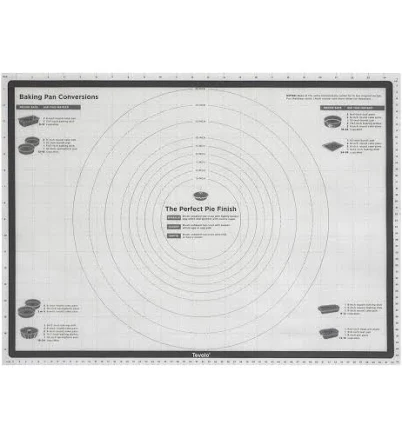
Tovolo · Silicone Cutting & Prep Boards
Tovolo Truebake Silicone Pastry Mat, Is It Non-Toxic?
Silicone pastry mat presents lower concern with no identified PFAS-linked materials.
Tovolo Truebake uses food-grade silicone, a material not linked to PFAS. No water-repellent coating on record. The brand has no PFAS statement on record.
The better-graded swap
Fiskars
Functional Form Cutting Board Set, 3-Piece
85/100 safety
Same rubric that flunked this product. The swap earned Excellent.
Still want this one anyway? Check the price on Amazon. We’d swap it.
Material
Silicone (food-grade)
Brand disclosure
Brand is silent on PFAS
Lab data
No public lab test
You may also be interested in
Top-graded picks in the categories readers replace first, every one scored on the same rubric.

- polypropylene filter housing, carbon/sediment cartridge
- We found no PFAS statement from the brand
- Bacterial growth in spent cartridges
3 hazards checked on this product, all on its full breakdown.

Aquasure
Premier Series 75 GPD Under Sink Reverse Osmosis Water Filtration System
- RO membrane, carbon filters, stainless steel housing
- We found no PFAS statement from the brand
- Bacterial and microbial growth in housing and filters
4 hazards checked on this product, all on its full breakdown.

Avocado
Vegan Mattress
- organic cotton, natural latex, coconut coir, recycled steel coils
- The brand calls it PFAS-free, which we have not verified
- Heavy metals
2 hazards checked on this product, all on its full breakdown.
Is Tovolo Truebake Silicone Pastry Mat non-toxic? What it is made of
This mat is food-grade silicone, a synthetic rubber polymer that has largely replaced PVC and other plastic alternatives in baking tools. Silicone is chemically inert at typical baking temperatures (up to around 500°F for most consumer-grade mats), meaning it does not leach monomers, plasticizers, or degradation byproducts into food under normal use. Unlike coated cookware, silicone has no ceramic, ceramic-nonstick, or Teflon-type coating that can flake or off-gas; the material itself is the functional surface.
What’s concerning
Category baseline
The starting point for this type of product, before anything specific to this product is counted.
No PFAS disclosure
No public statement from the brand about PFAS in this product.
Silicone degradation and leaching at extreme heat
While food-grade silicone is stable under normal baking, repeated exposure to temperatures near or above its rated limit (typically 500°F) can cause slow degradation. No studies document leaching of harmful siloxanes at home-baking temperatures, but degradation is theoretically possible if mat is misused in very high-heat applications or broilers.
Bacterial or mold growth if poorly maintained
Silicone's slight porosity can trap bacteria or mold if the mat is stored damp, not dried thoroughly, or left in warm conditions. This is a hygiene issue rather than a chemical hazard, but it underscores the need for proper cleaning and air-drying after use.
What’s reassuring
Base material not linked to PFAS
The main material recorded for this product is not one associated with PFAS.
Thermal conductivity and uneven baking
Silicone is not a direct safety hazard, but its insulating properties can result in slower or uneven browning, which is a performance complaint rather than a health concern.
Lead
Food-grade silicone for baking mats is not typically colored with pigments prone to heavy-metal contamination. No recalls or testing reports indicate lead or cadmium in Tovolo silicone mats specifically.
Source, ATSDR ↗Formaldehyde / VOCs
Silicone does not use formaldehyde-based binders or cure-release processes that would generate off-gassing typical of foamed or molded plastics. This is a known non-issue for cured silicone products in the cookware category.
Source, ATSDR ↗How is this PFAS grade calculated?
The brand's record and disclosure
Tovolo does not publish detailed material safety data sheets or third-party certifications (such as FDA food-contact clearance statements) on their product pages, which is common for small to mid-size kitchenware brands. No recalls or reported contamination incidents for Tovolo silicone mats appear in public records. The brand has not taken a public stance on PFAS use in manufacturing, though food-grade silicone formulations typically do not require PFAS for their function.
How it compares in its category
Silicone pastry mats are among the options with lower concern for baking surfaces, alongside parchment paper. They outperform non-stick ceramic-coated baking sheets (which can degrade and shed particles) and traditional Teflon-type coating non-stick cookware (which poses fume risk if overheated). Compared to bare metal or glass, silicone offers better release without coatings and requires no seasoning, making it a middle-ground choice for convenience and safety.
If you buy it
Hand-wash in warm soapy water rather than the dishwasher to extend mat life and avoid heat-cycling damage. Do not expose to sustained temperatures above 500°F; confirm your oven's actual temperature with a separate thermometer, as mats can warp or degrade at extremes. Replace the mat if you notice stickiness returning, surface cracks, or permanent discoloration, which may signal breakdown. Store flat or loosely rolled to prevent creasing that can trap food residue.
What is not known about PFAS in this product?
- Basis
- Model estimate, 78% confidence, not a lab result
- Lab test
- None on record for this exact product
- Brand statement
- Tovolo has made none
Formulations change between production runs, so check the current label. How we grade.
What are the PFAS-free alternatives to Tovolo Truebake Silicone Pastry Mat?
- Polypropylene or similar plastic; no nonstick or waterproof coating disclosed
- We found no PFAS statement from the brand
- Microplastic shedding from cutting action
4 hazards checked on this product, all on its full breakdown.
More silicone cutting & prep boards grades
How we score, every product runs through the same public 0-100 rubric based on materials, coatings, brand disclosure, lab findings, and recalls. See the full methodology → Spotted a mistake? Report an error.