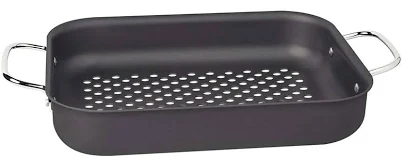
Tramontina Anodized Perforated Tray
Anodized aluminum doesn't typically involve PFAS.
Tramontina's anodized trays are aluminum with no nonstick layer, making PFAS unlikely. The brand doesn't discuss PFAS, but the material itself presents lower risk.
The better-graded swap
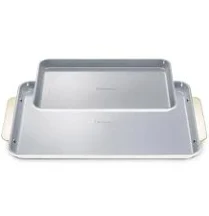
Caraway
Caraway Ceramic Nonstick Baking Sheet Duo
100/100 safety
Same rubric that flunked this product. The swap earned Excellent.
Still want this one anyway? Check the price on Amazon. We’d swap it.
Material
anodized aluminum, no nonstick coating
Lab data
No public lab test
Is Tramontina Anodized Perforated Tray non-toxic? What it is made of
This tray is anodized aluminum, meaning the aluminum surface has been electrochemically treated to create a hard, non-reactive oxide layer. Anodizing seals the aluminum and prevents direct contact between food and bare metal, which reduces leaching risk compared to untreated aluminum. Because there is no nonstick coating (Teflon-type coating, ceramic, or synthetic polymer), you avoid the thermal degradation and fume hazards associated with those coatings at high oven temperatures.
What’s concerning
Category baseline
The starting point for this type of product, before anything specific to this product is counted.
No PFAS disclosure
No public statement from the brand about PFAS in this product.
Aluminum leaching
Anodized coating protects against direct aluminum contact, but scratches, acidic foods, or degradation over time can breach the oxide layer. Risk is low under normal use but increases with age and wear.
Anodize layer degradation
Anodized surfaces can pit, flake, or thin with repeated heating, cooling, and washing. Tramontina products have not been subject to specific recall for this, but it is a known long-term risk for any anodized cookware used frequently.
What’s reassuring
Base material not linked to PFAS
The main material recorded for this product is not one associated with PFAS.
Teflon-type coating/nonstick coating fumes
This tray has no nonstick coating, so thermal fume hazard from Teflon-type coating or ceramic nonstick is not applicable. This is a material advantage over many modern bakeware alternatives.
Lead
Anodized aluminum does not use lead or cadmium in its oxide layer. No regulatory or independent testing has flagged heavy metal contamination in Tramontina anodized cookware.
Source, ATSDR ↗Perforated design structural failure
Perforations are a standard design feature and do not introduce brittleness or fracture risk beyond normal aluminum bakeware. No recalls or field reports of perforation-related failures are documented for this product.
The full breakdown
The brand's record and disclosure
Tramontina, a Brazilian kitchenware manufacturer, does not publicly disclose detailed material safety certifications or PFAS avoidance statements on this product line. The brand is widely sold in North America and Europe through mass retail without documented safety recalls specific to anodized bakeware. No independent testing or controversy regarding this specific tray model has been published in consumer safety databases.
How it compares in its category
Anodized aluminum perforated trays are among the lower-hazard options in commercial and home bakeware. They avoid the PFAS and thermal-degradation concerns of nonstick coatings and the lead/cadmium risks of some ceramic or glazed alternatives. The perforated design is standard for air circulation during baking and does not introduce additional safety concerns beyond the base material.
If you buy it
Hand wash rather than use high-temperature dishwasher cycles to preserve the anodized layer. Avoid prolonged contact with acidic foods (vinegar, tomato, citrus) on the surface, as acid can degrade anodizing over years of use. Do not use metal utensils or abrasive scrubbers that scratch the coating. Replace the tray if visible pitting, dark spots, or bare aluminum patches develop, as compromised anodizing may allow aluminum leaching.
What we don’t know
- Basis
- Model estimate, 82% confidence, not a lab result
- Lab test
- None on record for this exact product
- Brand statement
- Tramontina has made a specific claim
Formulations change between production runs, so check the current label. How we grade.
Better-graded alternatives in Bakeware
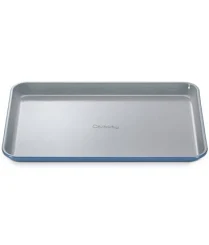
Caraway
Nonstick Ceramic Medium Baking Sheet
- ceramic nonstick coating
- A third party reports verifying it as PFAS-free
- Ceramic coating degradation over time
Caraway
Ceramic Nonstick Baking Sheet Duo
- ceramic nonstick coating
- A third party reports verifying it as PFAS-free
- Coating degradation and durability
2 hazards checked on this product. See all of them.

Caraway
Nonstick Ceramic Large Baking Sheet
- ceramic nonstick coating
- The brand calls it PFAS-free, which we have not verified
- Ceramic coating degradation and particle shedding
3 hazards checked on this product. See all of them.
More bakeware grades
How we score, every product runs through the same public 0-100 rubric based on materials, coatings, brand disclosure, lab findings, and recalls. See the full methodology → Spotted a mistake? Report an error.